Asesoría de arte gratuita

x
Comprar impresión Comprar impresiónComprar imagen en alta resolución Comprar imagen en alta resolución EnviarEnviar
DetallesDetalles Añadir a favoritos Añadir a favoritos DescargarDescargar SimilaresSimilares RadiografíaRadiografía Presentación de diapositivasPresentación de diapositivas

Pollo Amarillo

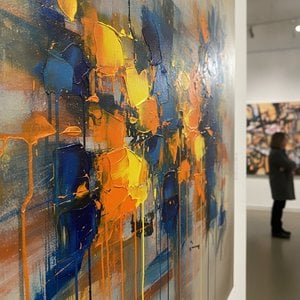
Una impresionante pintura gouache y lápiz de Bill Traylor, 'Pollo Amarillo', captura la esencia del expresionismo abstracto con referencias al folclore estadounidense. Descubre esta obra maestra única.

Descubre a Bill Traylor: un artista afroamericano autodidacta cuyos impactantes dibujos representan el folclore, la violencia y la vida cotidiana. ¡Explora su visión única!

Reproducción al óleo hecha a mano

Óleo sobre lienzo pintado a mano en el tamaño y marco de su elección, realizado por encargo por nuestros artistas.

P118B $10
P118H $10
P118W $10
P438Z $10
P508JH $12
P508YH $12
P805H $10
P805Z $10
P919BZ $10
P919G $10
P919XJ $10
P959ZH $10
P968JZ $12
W106C $8
W218G $10
W218JH $8
W218Y $10
W307PJ $10
W316G $10
W316PJ $8
W316Y $10
W398PJ $8
W4111J $10
W500HY $15
W500JH $15
W692G $12
W849H $8
W940BG $15
W953PJ $8

Standard
custom
CM
INCH

Elija entre nuestros tamaños predefinidos que respetan las proporciones originales de la obra.

ancho
altura

Puede ingresar sus propias dimensiones para adaptarse a un marco o espacio específico. Si el tamaño seleccionado no coincide con las proporciones de la imagen original, recortaremos la obra o extenderemos la pintura con elementos adicionales pintados a mano. Se le enviará una maqueta digital para su aprobación antes de comenzar la producción.
Tenga en cuenta que la vista previa en pantalla no refleja el recorte o la extensión reales. Solo la maqueta mostrará con precisión la composición final.
Si bien existen tamaños personalizados, recomendamos seleccionar una dimensión de la lista predefinida para preservar las proporciones originales.

Ejemplos de lo que se puede personalizar: Reemplace el rostro con una foto del cliente; Agregue una mascota (por ejemplo, cambie un gato por un perro); Incluya un mensaje oculto en el fondo; Cambie el paisaje o los elementos del fondo.
Tras realizar el pedido, el equipo de WahooArt.com enviará un correo electrónico al cliente para solicitar instrucciones y proporcionarle una vista previa del boceto.

Entrega mundial () en 3-4 semanas en lugar de las 5 semanas estándar. (8 julio). Sin compromisos con la calidad.

why_choose_icon
Envío exprés gratuito a todo el mundo
why_choose_icon
Lienzo de lino de alta calidad
why_choose_icon
Seguro de envío total
why_choose_icon
Garantía de reembolso de impuestos aduaneros
why_choose_icon
Garantía de fidelidad de color
why_choose_icon
Política de devolución de 60 días (solo por defectos)
why_choose_icon
Garantía de devolución del 100% del dinero
why_choose_icon
Descuento por pedido múltiple

Precio total

-

reproduction

Pollo Amarillo

Técnica de reproducción

Tamaño de la reproducción

-

Precio total final

-

Datos clave

  • Year: 1940
  • Medium: Gouache & Pencil
  • Title: Yellow Chicken
  • Subject or theme: Folklore; Playful absurdity
  • Artistic style: Stylized abstraction
  • Movement: Abstract Expressionism

Test de arte

Solo hay una respuesta correcta para cada pregunta.

Pregunta 1:
What artistic movement is Yellow Chicken primarily associated with?
Pregunta 2:
Who created the artwork Yellow Chicken?
Pregunta 3:
What medium was Bill Traylor primarily known for using in his art?
Pregunta 4:
Where is Yellow Chicken currently housed?
Pregunta 5:
Describe the overall impression conveyed by the artwork's composition.

Descripción de la obra

Yellow Chicken by Bill Traylor: A Study in Minimalism and Folklore

Bill Traylor’s “Yellow Chicken” (1940) stands as an arresting testament to the power of simplicity within abstract expressionism, encapsulating a profound connection to American folklore and capturing a moment frozen in time. Executed in gouache and pencil on cardboard—a humble material chosen by Traylor—the artwork eschews representational detail for a bold visual statement that resonates with both formal elegance and emotional depth. Its presence at the Museum of Modern Art, New York, Gift of Charles and Eugenia Shannon, underscores its significance within the canon of self-taught art and continues to fuel scholarly debate regarding Traylor’s life's journey and artistic legacy.

A Vision Born from Rural Alabama

William “Bill” Traylor (April 1, c. 1853 – October 23, 1949) remains an enigma to art historians—a self-taught African American artist whose extraordinary drawings emerged from the obscurity of rural Alabama during the Great Depression. Despite initial dismissals as “primitive” or “outsider,” Traylor’s work has undergone a dramatic reassessment in recent decades, securing its rightful place within the burgeoning fields of “self-taught” and modern art. This rediscovery owes much to Charles Shannon, who first encountered Traylor's captivating vision in 1940, bringing him to the attention of a wider artistic audience and sparking ongoing scholarly debate about his life’s journey and creative legacy. Born into slavery on the plantation of George Hartwell Traylor—a white cotton grower—Traylor’s formative years were marked by profound social upheaval. His parents, Sally (1815–), instilled in him a deep appreciation for storytelling and oral traditions prevalent within African American communities – elements that would profoundly influence his artistic output.

Formal Composition and Stylistic Influence

The artwork itself is characterized by a strikingly vertical composition centered around a stylized yellow chicken figure against a textured brown background. Traylor’s masterful use of gouache—a watercolor-based medium known for its luminous qualities—combined with pencil sketching creates a textural interplay that enhances the visual impact. Lines are fluid and gestural, conveying movement and energy while simultaneously establishing a sense of balance and restraint. The style leans heavily toward abstract expressionism, prioritizing emotional resonance over precise depiction; Traylor sought to convey feeling rather than factual representation. Influenced by artists like Franz Kline and Josef Albers—whose explorations of geometric abstraction captivated the artistic landscape of the era—Traylor distilled complex ideas into simplified forms, mirroring a broader trend towards reductive visual language during the mid-century period.

Symbolism Rooted in Folklore

Beyond its formal attributes, “Yellow Chicken” carries symbolic weight rooted in American folklore. The chicken itself—a recurring motif in African American storytelling—represents fertility, resilience, and transformation – themes central to narratives passed down through generations. Traylor’s deliberate choice of color—the vibrant yellow against the muted brown—further amplifies these connotations, suggesting optimism amidst hardship and highlighting the importance of preserving cultural heritage. The artwork's dreamlike quality—achieved through wet-on-wet blending—contributes to its evocative atmosphere, inviting viewers to contemplate deeper meanings beyond the surface appearance.

Concluding Reflection: An Artist’s Voice Amidst Uncertainty

Ultimately, “Yellow Chicken” embodies Traylor’s unwavering commitment to artistic expression in the face of adversity. It stands as a poignant reminder that beauty and significance can be found in unexpected places—even within seemingly mundane subjects rendered with extraordinary sensitivity and conviction. The artwork's enduring appeal lies not only in its visual elegance but also in its ability to communicate profound emotional truths – a testament to Traylor’s singular vision and his indelible contribution to the history of American art.

Obras similares


Biografía del artista

Bill Traylor: The Voice of Alabama Folklore

William “Bill” Traylor (April 1, c. 1853 – October 23, 1949) remains an enigma to art historians and critics alike—a self-taught African American artist whose extraordinary drawings emerged from the obscurity of rural Alabama during the Great Depression. Despite initial dismissals as “primitive” or “outsider,” Traylor’s work has undergone a dramatic reassessment in recent decades, securing its rightful place within the burgeoning fields of “self-taught” and modern art. This rediscovery owes much to the tireless efforts of Charles Shannon, who first encountered Traylor's captivating vision in 1940, bringing him to the attention of a wider artistic audience and sparking ongoing scholarly debate about his life’s journey and creative legacy.

Early Life and Family Roots

Born into slavery on the plantation of George Hartwell Traylor—a white cotton grower—Traylor's formative years were marked by profound social upheaval. His parents, Sally (1815–1880) and Bill Calloway (1805–1860+), endured the hardships inherent in the Jim Crow South, shaping Traylor’s understanding of resilience and perseverance from a young age. He possessed five siblings: Liza (1837), Henry (1845), Frank (1846), Jim (1847), and Emet (1854). The emancipation proclamation in 1865 irrevocably altered Traylor’s circumstances, yet he continued to grapple with the economic realities of post-bellum Alabama. He labored on the plantation as a sharecropper, facing systemic discrimination that would define much of his adult life. Despite this challenging backdrop, Traylor established a sizable family—approximately twenty children—a testament to his unwavering determination and familial devotion. His marriages to Larisa Dunklin (1872–) and Laura Williams (1870-) solidified his role as a patriarch within his community.

The Emergence of Artistic Expression

Traylor’s artistic career began unexpectedly in 1939, following his relocation to Montgomery, Alabama. Driven by an innate impulse to document his experiences and observations—a habit he cultivated with a simple pencil and scrap cardboard—he embarked on a prolific creative outpouring that yielded nearly 1,500 drawings during the Depression years. Shannon’s initial encounter in 1940 proved pivotal, introducing Traylor's distinctive style to a broader artistic sphere and initiating a transformative period of recognition. The Ross-Clayton Funeral Home provided him with modest financial support, allowing him to continue his work on Monroe Street. His drawings—characterized by bold lines, unsettling imagery, and evocative symbolism—captured the essence of Alabama folklore and everyday life, reflecting both personal trauma and profound artistic insight. Traylor’s technique was remarkably unconventional for its time. He eschewed formal training, relying instead on instinct and observation to translate his inner world onto paper. His drawings often depict grotesque figures—yawping women, pigs, skeletons—rendered with meticulous detail and imbued with palpable emotion. Recurring motifs included birds, skulls, and unsettling landscapes—elements that resonate with primal anxieties and celebrate the beauty of the natural world simultaneously. Traylor’s distinctive visual language distinguishes him from mainstream artistic conventions, establishing him as a pioneer of “self-taught” art and cementing his legacy as an artist who defied categorization.

Style and Technique: A Singular Vision

Traylor's drawings are marked by a remarkable simplicity—a deliberate rejection of academic standards that would have been unthinkable for artists of his era. He utilized readily available materials—discarded cardboard from Montgomery’s neighborhood—to create his artworks, transforming humble scraps into canvases brimming with vibrant color and unsettling imagery. His visual language is infused with symbolism—references to Alabama folklore and personal memories—that invite multiple interpretations and challenge conventional notions of artistic expression. Traylor's drawings are not merely representations of the world; they are embodiments of emotion and experience—a testament to his ability to convey complex narratives without relying on traditional stylistic approaches. He achieved a remarkable feat: he created art that is simultaneously childlike in its spontaneity and profound in its psychological depth. Like Picasso, Chagall and Klee, Traylor sought to express pure emotion—to capture the essence of human existence without resorting to intellectual abstraction.

Legacy and Recognition

Despite initial obscurity, Bill Traylor's work gained considerable acclaim in the late 1970s—thirty years after his death—thanks to renewed interest in American folk art and a growing appreciation for unconventional artistic voices. Critics recognized Traylor’s profound contribution to modern art, acknowledging his ability to convey complex emotions and narratives without relying on traditional stylistic approaches. His drawings continue to inspire artists today, demonstrating the enduring power of creativity born from lived experience and unwavering dedication—a testament to Bill Traylor's singular vision and lasting impact on the artistic landscape. He was undervalued in his own time and only achieved posthumous fame. By the time Traylor moved to Montgomery on his own around 1927 or 1928, he had left Traylor land for good and was living on the outskirts of Montgomery—a solitary existence punctuated by brief visits from his grown children. His drawings—collected and championed by Charles Shannon—became a cornerstone of American Folk Art, securing his place in art history as one of the most original and evocative artists of the 20th century.
Bill Traylor

Bill Traylor

1854 - 1949 , Estados Unidos

Datos clave

  • Artistic Movement Or Style: Arte Folk Self-Taught
  • Date Of Birth: April 1853
  • Date Of Death: October 23, 1949
  • Full Name: William Traylor
  • Nationality: Africano Americano
  • Notable Artworks:
    • Untitled (Construction with Yawping Woman)
    • Untitled (Pig)
    • Untitled (Legs Construction with Blue Man
  • Place Of Birth: Benton, Alabama
Explore obras de arte organizadas por temas, estilos y características.