Asesoría de arte gratuita

x
Comprar impresión Comprar impresiónComprar imagen en alta resolución Comprar imagen en alta resolución EnviarEnviar
DetallesDetalles Añadir a favoritos Añadir a favoritos DescargarDescargar SimilaresSimilares Rayos XRayos X Presentación de diapositivasPresentación de diapositivas

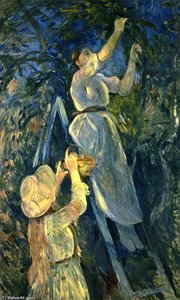
The Cherry Tree

Experience the serene beauty of Berthe Morisot's 'The Cherry Tree,' an Impressionist masterpiece capturing two women beneath a blossoming cherry blossom – explore its history and artistic significance.

Descubre Berthe Morisot (1841-1895), maestra impresionista francesa. Explora sus escenas íntimas, retratos y paisajes llenos de luz y sensibilidad.

Reproducción al óleo hecha a mano

Óleo sobre lienzo pintado a mano en el tamaño y marco de su elección, realizado por encargo por nuestros artistas.

P118B $10
P118H $10
P118W $10
P438Z $10
P508JH $12
P508YH $12
P805H $10
P805Z $10
P919BZ $10
P919G $10
P919XJ $10
P959ZH $10
P968JZ $12
W106C $8
W218G $10
W218JH $8
W218Y $10
W307PJ $10
W316G $10
W316PJ $8
W316Y $10
W398PJ $8
W4111J $10
W500HY $15
W500JH $15
W692G $12
W849H $8
W940BG $15
W953PJ $8

Standard
custom
CM
INCH

Elija entre nuestros tamaños predefinidos que respetan las proporciones originales de la obra.

ancho
altura

Puede ingresar sus propias dimensiones para adaptarse a un marco o espacio específico. Si el tamaño seleccionado no coincide con las proporciones de la imagen original, recortaremos la obra o extenderemos la pintura con elementos adicionales pintados a mano. Se le enviará una maqueta digital para su aprobación antes de comenzar la producción.
Tenga en cuenta que la vista previa en pantalla no refleja el recorte o la extensión reales. Solo la maqueta mostrará con precisión la composición final.
Si bien existen tamaños personalizados, recomendamos seleccionar una dimensión de la lista predefinida para preservar las proporciones originales.

Ejemplos de lo que se puede personalizar: Reemplace el rostro con una foto del cliente; Agregue una mascota (por ejemplo, cambie un gato por un perro); Incluya un mensaje oculto en el fondo; Cambie el paisaje o los elementos del fondo.
Tras realizar el pedido, el equipo de WahooArt.com enviará un correo electrónico al cliente para solicitar instrucciones y proporcionarle una vista previa del boceto.

Entrega mundial () en 3-4 semanas en lugar de las 5 semanas estándar. (2 julio). Sin compromisos con la calidad.

why_choose_icon
Envío exprés gratuito a todo el mundo
why_choose_icon
Lienzo de lino de alta calidad
why_choose_icon
Seguro de envío total
why_choose_icon
Garantía de reembolso de impuestos aduaneros
why_choose_icon
Garantía de fidelidad de color
why_choose_icon
Política de devolución de 60 días (solo por defectos)
why_choose_icon
Garantía de devolución del 100% del dinero
why_choose_icon
Descuento por pedido múltiple

Precio total

-

reproduction

The Cherry Tree

Técnica de reproducción

Tamaño de la reproducción

-

Precio total final

-

Datos clave

  • Dimensions: 152 x 85 cm
  • Movement: Impressionism
  • Location: Musée Marmottan Monet
  • Artist: Berthe Morisot
  • Influences: French Painting
  • Notable elements or techniques: Light Color Pastel Brushstrokes
  • Subject or theme: Women Garden Cherry Tree

Test de arte

Solo hay una respuesta correcta para cada pregunta.

Pregunta 1:
What artistic movement is Berthe Morisot associated with?
Pregunta 2:
Where is “The Cherry Tree” currently housed?
Pregunta 3:
What is a key characteristic of Morisot’s painting style?
Pregunta 4:
Describe the composition of “The Cherry Tree”.
Pregunta 5:
What does “The Cherry Tree” symbolize according to art historians?

Descripción de la obra

A Portrait of Tranquility Under Bloom

Berthe Morisot’s “The Cherry Tree,” painted in 1891, isn't merely a depiction of two women beneath a blossoming cherry tree; it’s an embodiment of the Impressionist ethos—a celebration of fleeting beauty and an intimate glimpse into domestic life. Situated within the Musée Marmottan Monet in Paris, this canvas transcends its physical dimensions to transport viewers back to a specific time and place, capturing the spirit of Belle Époque France.

Composition and Technique: Mastering Light’s Dance

Morisot skillfully employs loose brushstrokes—characteristic of Impressionism—to render the vibrant hues of the cherry blossoms and the subtle shades of skin tones. The artist eschews meticulous detail, prioritizing instead the impression of light filtering through the branches onto her subjects. Notice how Morisot captures the diffused glow emanating from the tree’s petals, creating an ethereal atmosphere that invites contemplation. Her technique—primarily oil paint applied in thin layers—allows for maximum luminosity and transparency, mirroring the Impressionists' fascination with capturing atmospheric conditions.

Symbolism: Blossoms of Hope and Female Connection

The cherry tree itself holds profound symbolic significance within Japanese culture, representing renewal, purity, and the ephemeral nature of life. In Morisot’s painting, it serves as a visual metaphor for femininity—the woman reaching upwards embodies aspiration and desire, while her companion anchors herself to the tree, symbolizing stability and connection to tradition. The gesture of picking fruit speaks to themes of nurturing and domestic responsibility, reflecting the role of women in shaping family life during this period.

Historical Context: Impressionism’s Embrace of Everyday Life

Painted against the backdrop of a rapidly changing society—one grappling with industrialization and urbanization—Morisot's work stands apart from academic art traditions that favored grand narratives and idealized representations. The Impressionists sought to depict scenes from ordinary life, capturing moments of sensory experience with unprecedented honesty. “The Cherry Tree” exemplifies this artistic impulse, demonstrating Morisot’s commitment to portraying the beauty found in seemingly unremarkable subjects—a testament to her enduring legacy as one of the foremost female artists of her generation.

Emotional Resonance: A Quiet Beauty That Speaks Volumes

Ultimately, “The Cherry Tree” resonates with viewers on an emotional level. Its serene palette and harmonious composition evoke a sense of tranquility and contentment—a feeling perfectly aligned with the Impressionist desire to capture the sublime qualities of nature. More than just a visual spectacle, Morisot’s masterpiece invites us to pause, observe, and appreciate the simple joys of existence, reminding us that beauty can be found in even the most unassuming corners of our world.

Obras similares


Biografía del artista

Primeros años y comienzos artísticos

Berthe Marie Pauline Morisot, pintora francesa, nació el 14 de enero de 1841 en Bourges, Francia. Provenía de una familia burguesa acomodada; su padre, Edmé Tiburce Morisot, era prefecto del departamento de Cher. Su madre, Marie-Joséphine-Cornélie Thomas, estaba relacionada con Jean-Honoré Fragonard, un destacado pintor rococó.

Formación artística e influencias

Berthe, junto con sus hermanas Yves y Edma, recibió lecciones privadas de arte de Geoffroy-Alphonse Chocarne y Joseph Guichard. Esto marcó el comienzo de su viaje artístico. En 1857, Guichard las introdujo a la Galería del Louvre, donde aprendieron observando y copiando pinturas.

Obras notables y exposiciones

La primera aparición de Berthe en el Salón de París fue en 1864 con dos pinturas de paisajes. Continuó mostrando su trabajo regularmente hasta 1873. En 1874, se unió a los impresionistas en su primera exposición, que incluyó artistas notables como Paul Cézanne, Edgar Degas y Claude Monet.
  • Mujer con vestido verde, un retrato llamativo, muestra su estilo único.
  • Su participación en las exposiciones impresionistas consolidó su posición dentro del movimiento.
  • Como una de "las tres grandes damas" del impresionismo, la obra de Berthe fue elogiada por críticos como Gustave Geffroy.

Vida personal y legado

Berthe se casó con Eugène Manet, hermano de su amigo y colega Édouard Manet. Su carrera madura comenzó en 1872, cuando Durand-Ruel compró veintidós de sus pinturas. Berthe eligió exhibir bajo su nombre de soltera completo, un testimonio de su independencia. Hechos clave:
  • Casada con Eugène Manet, hermano de Édouard Manet.
  • Primera exposición impresionista en 1874.
  • Fue descrita como "la verdadera impresionista" por un crítico de *Le Temps* en 1877.

Explora más en WahooArt:

Berthe Morisot

Berthe Morisot

1841 - 1895 , Francia

Datos clave

  • Estilo Artístico: Impresionismo
  • Fecha De Fallecimiento: 2 de marzo de 1895
  • Fecha De Nacimiento: 14 de enero de 1841
  • Influencias Artísticas:
    • Camille Corot
    • Édouard Manet
  • Lugar De Nacimiento: Bourges, Francia
  • Nacionalidad: Francesa
  • Nombre Completo: Berthe Morisot
  • Obras Notables:
    • El Bebé
    • Un Rincón del Jardín
    • Retrato de una Mujer
Explore obras de arte organizadas por temas, estilos y características.