Vista previa Vista previa en RA Encargar reproducción pintada a mano Ver versión en imagen digital Compartir
Ver detalles Guía Añadir a favoritos Descargar Ver artículos similares Radiografía Presentación de diapositivas Estadísticas

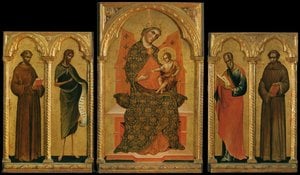
Conversano Polyptych

Explore Bartolomeo Vivarini’s Conversano Polyptych – a stunning 1475 Renaissance altarpiece! Admire its intricate details, gold leaf & religious symbolism at the Gallerie dell'Accademia.

Maestro del Renacimiento veneciano conocido por sus luminosas témperas como la Madonna y el Niño, Bartolomeo Vivarini fusionó la tradición bizantina con nuevas técnicas al óleo para crear un legado por redescubrir.

Giclée / Impresión de arte

Impresiones giclée o en lienzo de calidad de museo con producción rápida y opciones de acabado flexibles. ( Encargar reproducción pintada a mano Ver versión en imagen digital)

Corner sample of the P118B picture frame: poliestireno moldeado, 5 cm wide and 3 cm thick
P118B €10
Corner sample of the P118H picture frame: poliestireno moldeado, 5 cm wide and 3 cm thick
P118H €10
Corner sample of the P118W picture frame: poliestireno moldeado, 5 cm wide and 3 cm thick
P118W €10
Corner sample of the P438Z picture frame: poliestireno moldeado, 5.5 cm wide and 3.5 cm thick
P438Z €10
Corner sample of the P508JH picture frame: poliestireno moldeado, 7 cm wide and 3.5 cm thick
P508JH €12
Corner sample of the P508YH picture frame: poliestireno moldeado, 7 cm wide and 3.5 cm thick
P508YH €12
Corner sample of the P805H picture frame: poliestireno moldeado, 5 cm wide and 3.5 cm thick
P805H €10
Corner sample of the P805Z picture frame: poliestireno moldeado, 5 cm wide and 3.5 cm thick
P805Z €10
Corner sample of the P919BZ picture frame: poliestireno moldeado, 7 cm wide and 3.5 cm thick
P919BZ €10
Corner sample of the P919G picture frame: poliestireno moldeado, 7 cm wide and 3.5 cm thick
P919G €10
Corner sample of the P919XJ picture frame: poliestireno moldeado, 7 cm wide and 3.5 cm thick
P919XJ €10
Corner sample of the P959ZH picture frame: poliestireno moldeado, 5 cm wide and 3 cm thick
P959ZH €10
Corner sample of the P968JZ picture frame: poliestireno moldeado, 6 cm wide and 4 cm thick
P968JZ €12
Corner sample of the W106C picture frame: madera maciza, 5 cm wide and 3 cm thick
W106C €8
Corner sample of the W218G picture frame: madera maciza, 5 cm wide and 3 cm thick
W218G €10
Corner sample of the W218JH picture frame: madera maciza, 5 cm wide and 3 cm thick
W218JH €8
Corner sample of the W218Y picture frame: madera maciza, 5 cm wide and 3 cm thick
W218Y €10
Corner sample of the W307PJ picture frame: madera maciza, 6 cm wide and 3 cm thick
W307PJ €10
Corner sample of the W316G picture frame: madera maciza, 6 cm wide and 3 cm thick
W316G €10
Corner sample of the W316PJ picture frame: madera maciza, 6 cm wide and 3 cm thick
W316PJ €8
Corner sample of the W316Y picture frame: madera maciza, 6 cm wide and 3 cm thick
W316Y €10
Corner sample of the W398PJ picture frame: madera maciza, 5 cm wide and 3 cm thick
W398PJ €8
Corner sample of the W4111J picture frame: madera maciza, 6.5 cm wide and 3.5 cm thick
W4111J €10
Corner sample of the W500HY picture frame: madera maciza, 7 cm wide and 5 cm thick
W500HY €15
Corner sample of the W500JH picture frame: madera maciza, 7 cm wide and 5 cm thick
W500JH €15
Corner sample of the W692G picture frame: madera maciza, 8 cm wide and 4 cm thick
W692G €12
Corner sample of the W849H picture frame: madera maciza, 5 cm wide and 3 cm thick
W849H €8
Corner sample of the W940BG picture frame: madera maciza, 7.5 cm wide and 4.5 cm thick
W940BG €15
Corner sample of the W953PJ picture frame: madera maciza, 6 cm wide and 3.5 cm thick
W953PJ €8

Estándar
personalizado
CM
INCH

Elija entre nuestros tamaños predefinidos que respetan las proporciones originales de la obra.

ancho
altura

Introduzca el ancho y el alto que necesite para adaptarse a su marco o pared. Una impresión solo puede recortarse, nunca hacerse más grande que la imagen original, por lo que un tamaño con una forma distinta perderá parte de la obra. Le enviaremos una maqueta digital para su aprobación antes de realizar cualquier impresión. La imagen que se muestra en esta página no refleja el recorte real; solo la maqueta lo hace.

Envío a todo el mundo () en 2 semanas en lugar de las 4/5 semanas estándar. (24 octubre)

Envío exprés gratuito a todo el mundo
Lienzo de lino de alta calidad
Seguro de envío completo
Garantía de reembolso de impuestos aduaneros
Garantía de fidelidad cromática exacta
Política de devolución de 100 días (solo por defectos)
Garantía de devolución del 100% del dinero
Oferta por volumen

Precio total

€ 60

Conversano Polyptych

Giclée / Impresión de arte

Tamaño de la reproducción

-

Precio total

€ 60

Datos clave

  • Title: Conversano Polyptych
  • Dimensions: 157 x 271 cm
  • Subject or theme: Religious scenes and biblical figures
  • Year: 1475
  • Movement: Renaissance

A Divine Vision in Gold: The Majesty of the Conversano Polyptych

In the heart of the Venetian Renaissance, where the light of the lagoons meets the profound devotion of the era, Bartolomeo Vivarini crafted a masterpiece that transcends time. The Conversano Polyptych, completed in 1475, is not merely an altarpiece but a celestial window into the late Gothic and early Renaissance spirit. As one gazes upon this monumental work, housed within the prestigious Gallerie dell'Accademia, there is an immediate sense of being transported to a sacred realm. The composition, a complex arrangement of multiple panels, orchestrates a narrative of profound religious significance, centered around the Nativity and the presence of holy figures that seem to emerge from a gilded eternity.

The artistry of Vivarini is revealed through his masterful use of tempera on wood panels, a technique that demands absolute precision and foresight. This method allows for an extraordinary level of detail and a saturation of color that remains vibrant centuries later. The central panel serves as the emotional anchor, drawing the viewer into a gathering of figures surrounding a sacred relic, their faces etched with piety and reverence. The use of gold leaf in the background is particularly breathtaking; it does not merely decorate but creates an atmospheric opulence, suggesting a divine light that radiates from within the painting itself, casting a glow upon the intricate headdresses and heavy, embroidered robes of the saints.

Symbolism and the Language of Devotion

Every element within this polyptych is imbued with deep symbolic meaning, designed to guide the faithful through a visual liturgy. The architecture of the piece—divided into distinct sections that separate the heavenly from the earthly—mirrors the hierarchical structure of the universe as understood in the 15th century. Within these frames, the soft curves of halos and the rhythmic placement of figures create a sense of divine order. The Nativity scenes are rich with iconography: the humble manger, the swaddling clothes, and the watchful eyes of Mary and Joseph all serve to ground the miraculous event in a tangible, human reality.

For the discerning collector or interior designer, the Conversano Polyptych offers more than just historical value; it offers an unparalleled aesthetic experience. The interplay of chiaroscuro—the dramatic contrast between light and shadow—adds a sculptural depth to the figures, making them appear almost lifelike within their gilded niches. This tension between the flat, decorative tradition of the Gothic period and the emerging realism of the Renaissance creates a visual complexity that is both intellectually stimulating and emotionally resonant. It is a work that commands attention, bringing a sense of historical weight and spiritual serenity to any space it inhabits.

A Legacy for the Modern Collector

To possess a high-quality reproduction of such a significant work is to invite a piece of Venetian history into one's personal sanctuary. The warmth of the color palette, dominated by rich ochres, deep blues, and radiant golds, provides a sophisticated foundation for luxurious interior design. Whether placed in a grand gallery or a quiet study, the polyptych acts as a focal point of contemplation, echoing the craftsmanship of Bartolomeo Vivarini and the enduring legacy of the Italian masters. It remains a testament to an era where art was the ultimate bridge between the human soul and the divine.

Preguntas y respuestas

¿Qué ubicación se adapta mejor al formato de "Conversano Polyptych" de Bartolomeo Vivarini?

Con su formato Panoramic, se sugiere una reproducción de "Conversano Polyptych" para un Hotel Lobby.

¿Cuál es la fecha y el estilo de "Conversano Polyptych" de Bartolomeo Vivarini?

"Conversano Polyptych" de Bartolomeo Vivarini data de 1475 y pertenece al Renaissance.

¿Cómo puedo ver una vista previa de una reproducción de "Conversano Polyptych" de Bartolomeo Vivarini?

Para previsualizar una reproducción de "Conversano Polyptych" de Bartolomeo Vivarini, abra la página de Vista previa de la obra.


Biografía del artista

Un legado de luz veneciana y devoción

En la atmósfera vibrante y centelleante del Quattrocento, Bartolomeo Vivarini emergió como una figura fundamental en la evolución de la pintura veneciana. Nacido en el legendario núcleo de la cristalería de Murano, Italia, formó parte de una influyente dinastía de artistas que ayudaron a forjar la identidad visual de la República de Venecia. Como miembro de la familia Vivarini, su vida y su obra estuvieron profundamente entrelazadas con el pulso artístico de su tierra natal, tendiendo un puente durante la transición entre las ornamentadas y doradas tradiciones del periodo gótico tardío y el floreciente humanismo del Renacimiento temprano.

El arte de Vivarini se caracteriza por un profundo sentido de espiritualidad y precisión técnica. Si bien fue un maestro de la tempera, utilizando a menudo el pan de oro para imbuir sus composiciones con un lujo celestial, también fue un innovador en el uso de nuevos medios. Se destaca que aprendió el arte de la pintura al óleo de Antonello da Messina, y se le atribuye la producción de lo que se cree que fue la primera pintura al óleo en Venecia alrededor de 1473. Este dominio le permitió manipular la luz y la textura de formas que aportaron un nuevo nivel de intimidad y serenidad a sus temas religiosos.

Maestría de la forma y el simbolismo

La obra de Vivarini presenta a menudo un equilibrio sorprendente entre contornos definidos y una paleta de colores rica y emotiva. Sus figuras poseen con frecuencia una expresión digna y devota, capturando la solemnidad requerida para los retablos que adornaban las basílicas venecianas. Esta capacidad para transmitir la emoción humana a través de formas estructuradas lo convirtió en un pintor muy solicitado para importantes encargos religiosos. Un ejemplo notable de su destreza se encuentra en su Madonna y Niño, donde utiliza la luz que entra por las ventanas y profundos ropajes rojos para crear una sensación de espacio sagrado.

Más allá de las propias figuras, las pinturas de Vivarini suelen estar revestidas de un profundo significado simbólico:

  • El uso del oro: Su frecuente aplicación de pan de oro no solo sirve como decoración, sino como un medio para representar la luz divina.
  • Motivos naturales: En un encantador guiño a su nombre —ya que vivarino se traduce como jilguero en italiano—, ocasionalmente incluía este pequeño pájaro como una sutil firma dentro de sus obras.
  • Profundidad arquitectónica: Sus composiciones, como el Políptico de Conversano, demuestran una comprensión sofisticada de la perspectiva y la integración de figuras sagradas en estructuras complejas de múltiples paneles.

Significancia histórica e influencia artística

La importancia histórica de Bartolomeo Vivarini reside en su papel como puente entre eras. Se situó en la encrucijada entre las tradiciones de influencia bizantina de sus predecesores y los revolucionarios estilos renacentistas traídos por artistas como Fra Angelico y Giovanni Bellini. Al fusionar estas diversas influencias, ayudó a establecer un lenguaje visual veneciano único, uno que priorizaba el color luminoso y la resonancia emocional.

Su influencia se extendió a través de su linaje familiar, impactando notablemente en la obra de su sobrino, Alvise Vivarini, quien se convertiría en un artista destacado en Venecia antes del ascenso de Bellini. A través de su meticuloso detalle y su adopción pionera de las técnicas al óleo, Bartolomeo Vivarini dejó una huella indeleble en la historia del arte italiano, asegurando que la grandeza espiritual y estética de Murano y Venecia se preservara para las generaciones venideras.

Bartolomeo Vivarini

Bartolomeo Vivarini

1440 - 1499 , Italia

Datos clave

  • Artistic Movement Or Style: Renacimiento veneciano
  • Artists Or Movements Influenced By This Artist: ['Alvise Vivarini']
  • Artists Who Influenced This Artist:
    • Antonello da Messina
    • Fra Angelico
  • Date Of Birth: 1440
  • Date Of Death: 1499
  • Full Name: Bartolomeo Vivarini
  • Nationality: Italiano
  • Notable Artworks:
    • Madonna y Niño
    • Políptico de Conversano
    • Tríptico (detalle)
  • Place Of Birth: Murano, Italia
Explore obras de arte organizadas por temas, estilos y características.