Vista previa Vista previa en RA Cambiar a formato impreso Ver versión en imagen digital Compartir
Ver detalles Añadir a favoritos Descargar Ver artículos similares Radiografía Presentación de diapositivas Estadísticas

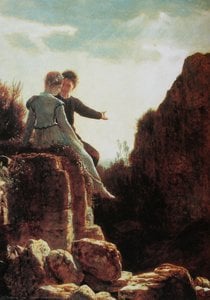
Centauro observando peces

‘Centauro observando peces’ (1878) de Arnold Böcklin es una cautivadora pintura simbolista al óleo de un centauro melancólico. Explora su estilo romántico, tonos tierra y su aire de contemplación.

Descubre Arnold Böcklin (1827-1901), maestro del simbolismo. 'Isla de los Muertos' y paisajes oníricos exploran mitos, mortalidad e introspección. ¡Explora su legado!

Reproducción al óleo hecha a mano

Óleo sobre lienzo pintado a mano en el tamaño y marco de su elección, realizado por encargo por nuestros artistas. ( Cambiar a formato impreso Ver versión en imagen digital)

P118B $10
P118H $10
P118W $10
P438Z $10
P508JH $12
P508YH $12
P805H $10
P805Z $10
P919BZ $10
P919G $10
P919XJ $10
P959ZH $10
P968JZ $12
W106C $8
W218G $10
W218JH $8
W218Y $10
W307PJ $10
W316G $10
W316PJ $8
W316Y $10
W398PJ $8
W4111J $10
W500HY $15
W500JH $15
W692G $12
W849H $8
W940BG $15
W953PJ $8

Estándar
personalizado
CM
INCH

Elija entre nuestros tamaños predefinidos que respetan las proporciones originales de la obra.

ancho
altura

Puede ingresar sus propias dimensiones para adaptarse a un marco o espacio específico. Si el tamaño seleccionado no coincide con las proporciones de la imagen original, recortaremos la obra o extenderemos la pintura con elementos adicionales pintados a mano. Se le enviará una maqueta digital para su aprobación antes de comenzar la producción.
Tenga en cuenta que la vista previa en pantalla no refleja el recorte o la extensión reales. Solo la maqueta mostrará con precisión la composición final.
Si bien existen tamaños personalizados, recomendamos seleccionar una dimensión de la lista predefinida para preservar las proporciones originales.

Ejemplos de lo que se puede personalizar: Reemplace el rostro con una foto del cliente; Agregue una mascota (por ejemplo, cambie un gato por un perro); Incluya un mensaje oculto en el fondo; Cambie el paisaje o los elementos del fondo.
Tras realizar el pedido, el equipo de WahooArt.com enviará un correo electrónico al cliente para solicitar instrucciones y proporcionarle una vista previa del boceto.

Envío a todo el mundo () en 3-4 semanas en lugar de las 5 semanas estándar. (15 septiembre). Sin comprometer la calidad.

why_choose_icon
Envío exprés gratuito a todo el mundo
why_choose_icon
Lienzo de lino de alta calidad
why_choose_icon
Seguro de envío completo
why_choose_icon
Garantía de reembolso de impuestos aduaneros
why_choose_icon
Garantía de fidelidad cromática exacta
why_choose_icon
Política de devolución de 100 días (solo por defectos)
why_choose_icon
Garantía de devolución del 100% del dinero
why_choose_icon
Oferta por volumen

Precio total

$ 272

reproduction

Centauro observando peces

Técnica de reproducción

Tamaño de la reproducción

-

Precio total

$ 272

Datos clave

  • Location: Kunsthaus Zürich, Zurich
  • Year: 1878
  • Artist: Arnold Böcklin
  • Notable elements or techniques: Impasto technique
  • Title: Centaur Watching Fish
  • Medium: Oil on canvas
  • Subject or theme: Mythology

Cuestionario de arte

Cada pregunta tiene una única respuesta correcta.

Pregunta 1:
What artistic movement is ‘Centaur Watching Fish’ primarily associated with?
Pregunta 2:
The painting depicts a mythological creature – what is it?
Pregunta 3:
What technique is prominently used in Böcklin’s ‘Centaur Watching Fish’?
Pregunta 4:
Where was Arnold Böcklin born?
Pregunta 5:
What is the overall mood conveyed by the artwork’s composition and color palette?

A Silent Meditation on Nature and Mortality

In the quietude of Arnold Böcklin’s 1878 masterpiece, “Centaur Watching Fish,” the viewer is invited into a realm where the boundaries between the mythological and the terrestrial dissolve. This evocative oil on canvas, currently held in the prestigious Kunsthaus Zürich, serves as a profound gateway into the Symbolist movement—a period of art history dedicated to exploring the hidden psychological depths of the human soul. Rather than presenting a mere scene from ancient legend, Böcklin crafts an immersive experience that speaks to the universal themes of solitude and the silent, rhythmic pulse of the natural world. The centaur, a creature of dual nature, reclines upon a serene shoreline, his gaze fixed upon the movement beneath the water's surface, creating a moment of suspended animation that feels both eternal and fleeting.

The composition is masterfully orchestrated to evoke a sense of Romantic reverie. Utilizing a horizontal format, Böcklin emphasizes the reclining posture of the centaur, grounding the mythological figure within a landscape of soft sands and swaying grasses. The artist deliberately eschews the rigid precision of strict realism in favor of an emotional truth. Through the use of diffused lighting and gentle shadows, he establishes an atmosphere of melancholic stillness. This technique allows the viewer to feel the weight of the silence, as if the very air around the creature is heavy with contemplation. It is a painting that does not demand attention through spectacle, but rather earns it through a subtle, haunting intimacy.

The Mastery of Texture and Atmosphere

Technically, “Centaur Watching Fish” is a triumph of texture and perspective. Böcklin employs the impasto technique with remarkable skill, applying thick, deliberate layers of paint to render the coarse fur of the centaur’s equine half. This tactile richness provides a palpable sense of physicality, making the creature feel present and breathing within the frame. To balance this heavy texture, the artist utilizes atmospheric perspective to create an illusion of infinite depth. By reducing color saturation and softening the details of the distant horizon, he simulates a hazy, dreamlike distance that reinforces the theme of isolation. This method draws a direct lineage from the Romantic masters like Caspar David Friedrich, using the landscape as a mirror for spiritual introspection.

The color palette is a sophisticated arrangement of earthy tones—ochres, deep browns, and muted beiges—which lends the work an organic, timeless quality. These warm, grounded hues are contrasted by the subtle, shimmering light reflecting off the water, drawing the eye toward the focal point of the centaur’s quiet observation. For the collector or interior designer, this piece offers a unique aesthetic versatility; its somber yet tranquil mood provides a sophisticated anchor for a room, offering a sense of historical depth and intellectual gravity that more contemporary works may lack.

Symbolism: The Intersection of Myth and Being

Beyond its visual splendor, the painting functions as a complex symbolic tapestry. The centaur itself—a hybrid of human intellect and animal instinct—serves as a powerful metaphor for the duality of existence. As he watches the fish, there is a profound sense of the relationship between humanity and the untamed elements of nature. The act of watching becomes a meditation on mortality; the stillness of the figure suggests a resignation to the cycles of life and death that govern both man and beast. There is a touch of sadness in his solitude, yet it is a beautiful, dignified melancholy that celebrates the quiet dignity of existence.

For those seeking to bring a piece of this profound emotional landscape into their personal spaces, a high-quality reproduction of this work offers more than just decoration. It provides a window into a bygone era of artistic exploration, a constant reminder of the beauty found in silence and the enduring power of myth. Whether placed in a library, a study, or a curated gallery space, “Centaur Watching Fish” continues to provoke thought, inviting all who encounter it to pause, breathe, and reflect upon the silent wonders of the world.


Biografía del artista

Primeros años y formación

Arnold Böcklin, pintor simbolista suizo, nació el 16 de octubre de 1827 en Basilea, Suiza. Su padre, Christian Frederick Böcklin, descendía de una antigua familia de Schaffhausen y se dedicaba al comercio de seda. La madre de Arnold, Ursula Lippe, era nativa de la misma ciudad. Estudió en la Academia de Düsseldorf bajo Schirmer, convirtiéndose en amigo de Anselm Feuerbach. Böcklin está asociado con la Escuela de Düsseldorf de pintura.

Carrera artística y simbolismo

El viaje artístico de Böcklin lo llevó a varias ciudades, incluyendo París, donde trabajó en el Louvre, y Roma, donde fue influenciado por sus vistas. Su obra a menudo presentaba figuras alegóricas y mitológicas en entornos que involucraban arquitectura clásica, explorando temas de la muerte y la mortalidad.
  • Great Park, una de sus primeras obras, mostró la antigua mitología.
  • Ninfa y Sátiro (1858) y Safo (1859) fueron obras notables de este período.
  • El retrato de Böcklin de sí mismo, con la muerte tocando un violín (1872), ejemplificó su estilo único.

Evolución artística e influencias

La obra de Böcklin evolucionó hacia un simbolismo más profundo y evocador. Se inspiró en la literatura clásica, la mitología griega y romana, y el paisaje suizo. Su interés por temas como la muerte, la melancolía y la naturaleza se reflejó en sus pinturas con una atmósfera onírica y misteriosa. Böcklin fue influenciado por artistas como Peter Cornelius y Philipp Veit, así como por las ideas del movimiento prerrafaelita.

Logros principales e impacto

Böcklin es mejor conocido por sus cinco versiones de La Isla de los Muertos (1880-1886), que evocaban el cementerio inglés en Florencia, donde estaba enterrada su hija. Esta obra maestra se convirtió en un símbolo del simbolismo tardorromántico y ha inspirado a numerosos artistas y compositores. Su trabajo influyó en artistas más jóvenes como Hans Thoma e inspiró a varios compositores de la época romántica tardía. Clement Greenberg describió su obra como "una de las expresiones más consumadas" de su tiempo.

Legado e importancia histórica

El estilo de Böcklin se superpone con el de los prerrafaelitas, enfatizando el mundo de los sueños y el misticismo. Su capacidad para crear imágenes evocadoras y simbólicas lo convirtió en una figura clave del movimiento simbolista. Su obra sigue siendo admirada por su belleza melancólica, su profundidad psicológica y su impacto duradero en el arte occidental.

Museos y colecciones

La obra de Böcklin se puede encontrar en varios museos, incluyendo:
  • Öffentliche Kunstsammlung (Basilea, Suiza)
  • Kunstmuseum Basel (Suiza)
  • Museum Kunsthaus Zürich (Zúrich, Suiza)
Arnold Böcklin

Arnold Böcklin

1827 - 1901 , Suiza

Datos clave

  • Artistas Que Influyeron: ['Anselm Feuerbach']
  • Fallecimiento: 16 de enero de 1901
  • Fecha De Nacimiento: 16 de octubre de 1827
  • Influenciado A Artistas: ['Hans Thoma']
  • Lugar De Nacimiento: Basilea, Suiza
  • Movimiento Artístico: Simbolismo
  • Nacionalidad: Suizo
  • Nombre Completo: Arnold Böcklin
  • Obras Notables:
    • Isla de la Muerte
    • La Guerra
    • Ninfas y sátiros
Explore obras de arte organizadas por temas, estilos y características.