


 Oil On CanvasWallArtNeoclassicism
 1757Early Modern
 61.0 x 47.0 cm
 El Museo Ashmolean de Arte y Arqueología
Óleo sobre lienzo pintado a mano en el tamaño y marco de su elección, realizado por encargo por nuestros artistas. ( Comprar impresión Comprar imagen)





























Elija entre nuestros tamaños predefinidos que respetan las proporciones originales de la obra.

Puede ingresar sus propias dimensiones para adaptarse a un marco o espacio específico. Si el tamaño seleccionado no coincide con las proporciones de la imagen original, recortaremos la obra o extenderemos la pintura con elementos adicionales pintados a mano. Se le enviará una maqueta digital para su aprobación antes de comenzar la producción.
Tenga en cuenta que la vista previa en pantalla no refleja el recorte o la extensión reales. Solo la maqueta mostrará con precisión la composición final.
Si bien existen tamaños personalizados, recomendamos seleccionar una dimensión de la lista predefinida para preservar las proporciones originales.
Envío a todo el mundo () en 3-4 semanas en lugar de las 5 semanas estándar. (6 septiembre). Sin comprometer la calidad.


William Fermor
Dimensiones de la reproducción
In the delicate transition between the exuberant flourishes of the Rococo and the disciplined clarity of Neoclassicism, Anton Raphael Mengs’s 1757 masterpiece, “William Fermor,” emerges as a profound testament to artistic evolution. This striking oil on canvas does more than merely capture the likeness of a Scottish-born officer in the Imperial Russian Army; it serves as a window into an era where the intellectual rigor of the Enlightenment began to reshape the visual language of Europe. As one gazes upon the portrait, there is an immediate sense of dignified resolve, a quality that transcends the sitter's individual identity to touch upon universal ideals of nobility and strength.
The technical execution of the piece reveals Mengs’s unparalleled mastery over light and form. Utilizing a sophisticated application of chiaroscuro, the artist orchestrates a dramatic interplay between shadow and illumination to sculpt Fermor’s features with sculptural precision. The subtle textures of the background wall act as a quiet stage, ensuring that the viewer's focus remains anchored on the subject's commanding presence. Every brushstroke contributes to a sense of tactile reality, from the crispness of the white cravat to the heavy, luxurious weight of the crimson coat, inviting the observer to appreciate the meticulous craftsmanship that defines this pivotal work of the mid-18th century.
Beyond its surface beauty, “William Fermor” is rich with symbolic layers that would have been deeply legible to a contemporary audience. The sitter’s attire—a vibrant crimson coat embellished with gleaming gold buttons—is far from a mere fashion statement; it is a deliberate reference to royal heraldry, signaling prestige, authority, and a high social standing. This sartorial grandeur is balanced by the refined elegance of his powdered wig and cravat, elements that evoke the idealized dignity of Roman antiquity. Through these details, Mengs aligns Fermor with the classical virtues of gravitas and decorum, echoing the influential aesthetic theories of Johann Joachim Winckelmann.
The composition itself functions as a visual anchor for the Neoclassical movement. By placing Fermor against a restrained, subtly textured backdrop, Mengs avoids the distracting ornamentation typical of the preceding Rococo style, opting instead for a clarity that mirrors the stability and order sought during the Seven Years’ War era. This deliberate simplicity allows the emotional weight of the portrait to resonate more deeply, making it an ideal centerpiece for those who appreciate art that communicates power through restraint rather than excess.
For the discerning collector or interior designer, a high-quality reproduction of “William Fermor” offers much more than a decorative element; it provides a profound connection to art history. The painting’s palette of deep reds, brilliant golds, and soft neutrals possesses a timeless versatility, capable of anchoring a room with a sense of historical weight and intellectual sophistication. Whether placed in a formal study, a grand library, or a contemporary living space, the portrait introduces an atmosphere of stately composure and refined taste.
Owning a piece that embodies the bridge between two great eras allows for a continuous dialogue with the past. The artwork’s ability to evoke both the warmth of human character and the cold precision of classical ideals makes it a captivating subject for contemplation. It remains an evocative choice for those seeking to surround themselves with art that inspires respect, commands attention, and celebrates the enduring beauty of the human spirit captured through the lens of classical perfection.

Anton Raphael Mengs fue un pintor germano-bohemio que influyó significativamente en la transición de la pintura rococó al neoclasicismo. Activo principalmente en Roma, Madrid y Sajonia, su obra encarna una mezcla de grandeza barroca con ideales clásicos emergentes, estableciéndolo como una figura crucial en el arte del siglo XVIII.
El viaje artístico de Mengs comenzó bajo la tutela de su padre, Ismael Mengs, un pintor danés que se había establecido en Dresde. Ismael reconoció el talento de su hijo desde temprano y lo llevó a Roma en 1741. Esta experiencia formativa implicó copiar obras de Rafael para el Elector de Sajonia, moldeando profundamente las sensibilidades estéticas de Anton Raphael. La exposición a la maestría de Rafael le inculcó una profunda apreciación por la forma y composición clásicas, que se convertirían en señas de identidad de su propio estilo.
La carrera de Mengs floreció a través de varias cortes europeas. En 1749, fue nombrado primer pintor de Federico Augusto, Elector de Sajonia, un puesto que le brindó considerable patrocinio al tiempo que le permitía mantener su base en Roma. Su obra más celebrada es posiblemente la pintura mural de Parnaso en Villa Albani en Roma, que obtuvo un amplio reconocimiento y solidificó su reputación como artista líder. Otras comisiones importantes incluyeron un magnífico fresco sobre la cúpula de la Iglesia de Sant'Eusebio en Roma, demostrando su habilidad en la decoración monumental, y el techo del salón de banquetes del Palacio Real de Madrid, considerado uno de sus logros más destacados.
Si bien influenciado por la tradición barroca romana, Mengs abrazó cada vez más los ideales de la antigüedad clásica. Esta transición fue significativamente impulsada por su estrecha colaboración con Johann Joachim Winckelmann, un destacado historiador del arte y teórico que defendió el resurgimiento de las estéticas griega y romana. Juntos, abogaron por un retorno a la simplicidad, la claridad y las formas idealizadas en el arte, sentando las bases para el movimiento neoclásico.
Anton Raphael Mengs falleció en Roma en 1779, dejando atrás una importante obra que unió la brecha entre los estilos barroco y neoclásico. Su énfasis en los ideales clásicos, combinado con su habilidad técnica, lo convirtió en una figura clave en el desarrollo del neoclasicismo. Es recordado no solo por sus impresionantes frescos y retratos, sino también por sus contribuciones intelectuales a la teoría del arte a través de su colaboración con Winckelmann. Su influencia se puede ver en generaciones posteriores de artistas que abrazaron la claridad, el orden y las formas idealizadas que caracterizaron la pintura neoclásica.

1728 - 1779 , República Checa

Explore the profound elegance of Neoclassical art. Discover the principles of order, symmetry, and virtue through the works of masters like David and Mengs. Immerse yourself in a journey of classical grace and timeless aesthetic perfection.
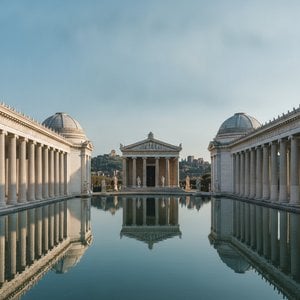
Discover the profound elegance of Neoclassicism. Explore how the pursuit of order, symmetry, and Greco-Roman ideals created a timeless aesthetic for collectors seeking grandeur and intellectual depth in fine art and architecture.

 Ver en contexto
 Enviar
 Compartir
 Detalles

 Descargar
 Similares
 Radiografía
 Presentación de diapositivas
 Ver más







 La opción de vidrio solo está disponible en tamaños inferiores a 110 cm.


