Red Lenin: A Bold Statement Against Celebrity Culture
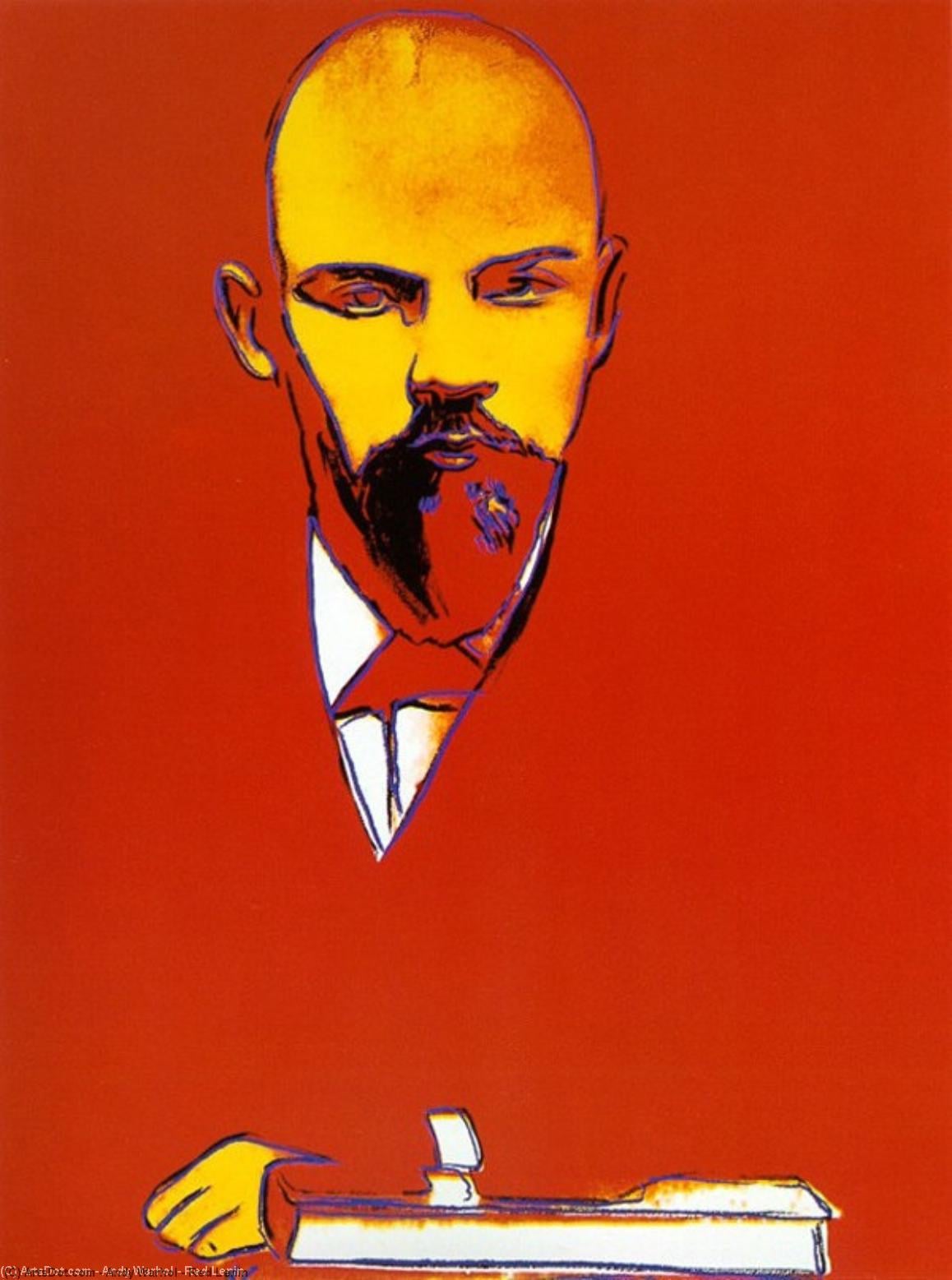
Andy Warhol’s Red Lenin stands as a cornerstone of Pop Art, encapsulating the movement's rebellious spirit and its fascination with elevating everyday imagery into monumental art. Created in 1987, shortly before Warhol’s untimely death, this silkscreen print transcends mere representation; it’s a deliberate provocation—a challenge to traditional artistic conventions and a commentary on the pervasive influence of celebrity culture.
Warhol's approach was revolutionary for its time. Rejecting the emotional depth favored by Abstract Expressionism, he embraced repetition and industrial techniques – specifically screen printing – mirroring the mass production processes that dominated American advertising and consumer culture. This stylistic choice wasn’t accidental; Warhol aimed to dismantle hierarchies between high art and popular culture, arguing that beauty could be found in unexpected places.
- Subject Matter: The painting depicts Vladimir Lenin, Soviet leader and architect of the October Revolution, rendered in stark red hues against a pristine white background.
- Style: Warhol’s signature style is characterized by flattened perspective, bold color palettes—primarily red—and simplified forms. This deliberate reduction emphasizes the iconic nature of Lenin's image while simultaneously stripping away any sentimental associations.
- Technique: Warhol utilized screen printing, applying ink through a stencil onto fabric or paper. This method allowed for rapid production and ensured consistency across multiple prints, furthering Warhol’s commitment to mass reproduction as an artistic concept.
The Evolution of Pop Art
Pop Art emerged in the mid-1950s as a reaction against the prevailing artistic trends of postwar America—namely Abstract Expressionism and Surrealism. Artists like Roy Fox Lichtenstein and Warhol sought to engage with popular culture, drawing inspiration from advertising campaigns, comic books, and mass media imagery. They questioned the elitist pretensions of the art world and championed accessibility for all audiences.
“I’ve never met a person I couldn’t call a beauty,” Warhol famously declared in 1975—a sentiment that perfectly embodies his artistic ethos. Unlike many artists of his era who prioritized emotional expression, Warhol focused on capturing the essence of his subjects through stylized representations, mirroring the visual language of commercial art.
Significance and Legacy
Red Lenin’s enduring influence can be seen in its continued presence within contemporary art discourse. Warhol's deliberate use of color—the dominant red—symbolizes revolution and power, mirroring the historical context of Lenin’s leadership during the Russian Civil War.
The painting serves as a potent reminder that art doesn’t necessarily need to convey profound emotion; it can achieve its impact through visual simplicity and strategic repetition. Warhol's legacy extends far beyond his artistic output—he fundamentally reshaped perceptions of creativity and challenged established notions about what constitutes “serious” art.
The Arnot Art Museum showcases Warhol’s masterpieces, offering visitors a chance to experience the transformative power of Pop Art firsthand. Explore their collection at Arnot Art Museum (United States).
Preguntas y respuestas
¿Es "Red Lenin" de Andy Warhol de dominio público?
"Red Lenin" de Andy Warhol es de aún protegido por derechos de autor. Este estado determina cómo se puede reproducir la imagen de la obra.
¿Está "Red Lenin" disponible como una impresión de bellas artes?
Puede solicitar una impresión de "Red Lenin" de Andy Warhol directamente en esta página: una impresión de bellas artes sobre lienzo de algodón o papel de lienzo de archivo.
¿Con qué sentimiento se asocia "Red Lenin"?
"Red Lenin" se asocia con un sentimiento Dramático. El tono emocional describe la impresión que transmite la obra.
¿A qué artista se le atribuye "Red Lenin"?
El artista detrás de "Red Lenin" es Andy Warhol. La obra está catalogada bajo el nombre de Andy Warhol.
¿Existe una guía para "Red Lenin" de Andy Warhol?
La página Guía de "Red Lenin" de Andy Warhol ofrece una ficha informativa imprimible de dos hojas: la obra con su tabla de identidad, una línea de tiempo por décadas que la sitúa en la vida del artista, otras obras del mismo autor, la paleta de colores medida y citas listas para copiar en cuatro estilos diferentes.
¿Dónde puedo comprar una reproducción pintada a mano de "Red Lenin" de Andy Warhol?
Las copias pintadas a mano de "Red Lenin" de Andy Warhol se venden en este sitio web: una reproducción al óleo pintada a mano sobre lienzo de lino, las cuales pueden solicitarse desde esta página.
¿Dónde y para qué uso se recomienda "Red Lenin"?
Se recomienda "Red Lenin" de Andy Warhol para Acento cromático, idealmente en un/a Salón principal. El uso y el espacio juntos orientan dónde encaja una reproducción.



 Vista previa
 Encargar reproducción pintada a mano
 Compartir
 Compartir
 Ver detalles
 Guía
Guía

 Descargar
 Ver artículos similares
 Radiografía
 Presentación de diapositivas
 Estadísticas

 Leer más






































 La opción de vidrio solo está disponible en tamaños inferiores a 110 cm.