


Impresiones giclée o en lienzo de calidad de museo con producción rápida y opciones de acabado flexibles. ( Comprar pintura hecha a mano Comprar imagen)





























Elija entre nuestros tamaños predefinidos que respetan las proporciones originales de la obra.

Puede introducir sus propias dimensiones para adaptarse a un marco o espacio específico. Si el tamaño seleccionado no coincide con las proporciones de la imagen original, recortaremos la obra de arte o extenderemos la imagen con un borde con efecto espejo o de color sólido. Se enviará una maqueta digital para su aprobación antes de que comience la producción.
Tenga en cuenta que la vista previa en pantalla no refleja el recorte o la extensión real. Solo la maqueta mostrará con precisión la composición final.
Aunque existen tamaños personalizados, recomendamos seleccionar una dimensión de la lista predefinida para preservar las proporciones originales.
Envío a todo el mundo () en 2 semanas en lugar de las 4/5 semanas estándar. (6 septiembre)


Título traducido: untitled (4160)
Dimensiones de la reproducción
“Untitled (4160)” by Amedeo Clemente Modigliani stands as a testament to the artist’s singular vision—a portrait that transcends mere representation, delving into the depths of human emotion and embodying the spirit of Expressionism. Executed in 1920, shortly before his untimely death, this painting exemplifies Modigliani's distinctive style: elongated figures rendered with subtle shading and a masterful use of color to convey an aura of melancholy and profound introspection.
Modigliani’s technique is characterized by a deliberate simplification of anatomical forms, achieved through painstaking observation and meticulous drawing. He eschewed academic conventions, favoring instead a stylized approach that prioritized expressive gesture over precise realism. The canvas itself is treated with thin layers of oil paint—a hallmark of École de Paris—allowing for luminous tonal gradations and capturing the delicate interplay between light and shadow. This technique lends an ethereal quality to the portrait, emphasizing the contours of the figure and highlighting its inherent vulnerability.
Despite its apparent stillness, “Untitled (4160)” is laden with symbolic significance. The woman’s gaze—directed outwards yet simultaneously inward—suggests a contemplation of existence and an awareness of mortality. Her elongated neck and stylized facial features are not merely stylistic choices but deliberate distortions intended to convey inner turmoil and spiritual yearning. Modigliani's use of muted colors—primarily ochre, ivory, and pale blues—further reinforces this mood of quiet sorrow and underscores the painting’s preoccupation with themes of beauty and suffering.
Created during the turbulent years leading up to World War I, “Untitled (4160)” reflects the broader artistic currents of the Expressionist movement. Artists like Ludwig Meidner and Bohumil Kubista sought to capture the anxieties and disillusionments of their time through emotionally charged imagery—often depicting landscapes scarred by violence and upheaval. Modigliani’s work aligns with this aesthetic impulse, rejecting decorative conventions in favor of a raw honesty that confronts viewers with uncomfortable truths about human experience.
Ultimately, “Untitled (4160)” succeeds in conveying an enduring emotional resonance. It captures the essence of Modigliani’s artistic philosophy—a belief that art should strive to express profound feelings and illuminate the complexities of human consciousness. The painting's haunting beauty resides not merely in its formal qualities but in its ability to evoke a sense of melancholy, tenderness, and quiet contemplation—qualities that continue to captivate audiences today.


1884 - 1920 , Italia

Explore the profound psychological depth of Expressionist portraiture. From Munch to Schiele, discover how distorted forms and visceral brushstrokes unmask raw human emotion in this definitive guide for art enthusiasts and collectors.

Discover the profound power of Expressionist art. From the raw intensity of Edvard Munch to the visceral textures of Neo-Expressionism, explore how subjective emotion and distorted reality define this movement. An expert guide for discerning collectors seeking depth and soul in fine art.

Explore the profound emotional depth of Expressionist painting. From the bold colors of Emil Nolde to the distorted forms of Kirchner, discover how this movement redefined art through raw feeling and visceral texture in our expert guide to art history.
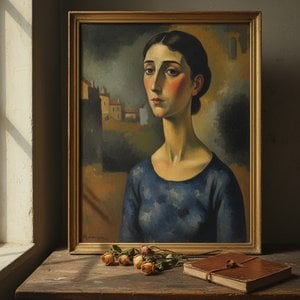
Delve into the haunting beauty of Amedeo Modigliani's portraits. Explore the intersection of Expressionism and Modernism through an expert analysis of his iconic elongated forms, melancholic gazes, and profound influence on art history.

Master the profound depths of Expressionism with our expert guide. Discover how pioneers like Munch and Kirchner used color and distortion to evoke raw emotion—essential knowledge for any discerning art collector seeking to curate intensity.

 Ver en contexto
 Enviar
 Compartir
 Detalles

 Descargar
 Similares
 Radiografía
 Presentación de diapositivas

 Ver más







 La opción de vidrio solo está disponible en tamaños inferiores a 110 cm.


