
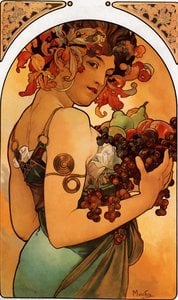
Study for Poetry de Alphonse Maria Mucha, reproducción al óleo pintada a mano por un maestro artista
Ver en contexto Vista previa en RA Cambiar a impresiones Cambiar a imagen digital Enviar
Detalles Guía Añadir a favoritos Descargar Similares Radiografía Presentación de diapositivas Preguntas y respuestas Descargar presentación Estadísticas

Study for Poetry Reproducción de pintura al óleo pintada a mano

Descubre Alphonse Mucha (1860-1939), maestro del Art Nouveau! Explora sus icónicos carteles, mujeres hermosas y el monumental 'Épico Eslavo'. ¡Una leyenda artística checa!

Reproducción al óleo hecha a mano

Óleo sobre lienzo pintado a mano en el tamaño y marco de su elección, realizado por encargo por nuestros artistas. ( Cambiar a impresiones Cambiar a imagen digital)

Corner sample of the P118B picture frame: poliestireno moldeado, 5 cm wide and 3 cm thick
P118B €10
Corner sample of the P118H picture frame: poliestireno moldeado, 5 cm wide and 3 cm thick
P118H €10
Corner sample of the P118W picture frame: poliestireno moldeado, 5 cm wide and 3 cm thick
P118W €10
Corner sample of the P438Z picture frame: poliestireno moldeado, 5.5 cm wide and 3.5 cm thick
P438Z €10
Corner sample of the P508JH picture frame: poliestireno moldeado, 7 cm wide and 3.5 cm thick
P508JH €12
Corner sample of the P508YH picture frame: poliestireno moldeado, 7 cm wide and 3.5 cm thick
P508YH €12
Corner sample of the P805H picture frame: poliestireno moldeado, 5 cm wide and 3.5 cm thick
P805H €10
Corner sample of the P805Z picture frame: poliestireno moldeado, 5 cm wide and 3.5 cm thick
P805Z €10
Corner sample of the P919BZ picture frame: poliestireno moldeado, 7 cm wide and 3.5 cm thick
P919BZ €10
Corner sample of the P919G picture frame: poliestireno moldeado, 7 cm wide and 3.5 cm thick
P919G €10
Corner sample of the P919XJ picture frame: poliestireno moldeado, 7 cm wide and 3.5 cm thick
P919XJ €10
Corner sample of the P959ZH picture frame: poliestireno moldeado, 5 cm wide and 3 cm thick
P959ZH €10
Corner sample of the P968JZ picture frame: poliestireno moldeado, 6 cm wide and 4 cm thick
P968JZ €12
Corner sample of the W106C picture frame: madera maciza, 5 cm wide and 3 cm thick
W106C €8
Corner sample of the W218G picture frame: madera maciza, 5 cm wide and 3 cm thick
W218G €10
Corner sample of the W218JH picture frame: madera maciza, 5 cm wide and 3 cm thick
W218JH €8
Corner sample of the W218Y picture frame: madera maciza, 5 cm wide and 3 cm thick
W218Y €10
Corner sample of the W307PJ picture frame: madera maciza, 6 cm wide and 3 cm thick
W307PJ €10
Corner sample of the W316G picture frame: madera maciza, 6 cm wide and 3 cm thick
W316G €10
Corner sample of the W316PJ picture frame: madera maciza, 6 cm wide and 3 cm thick
W316PJ €8
Corner sample of the W316Y picture frame: madera maciza, 6 cm wide and 3 cm thick
W316Y €10
Corner sample of the W398PJ picture frame: madera maciza, 5 cm wide and 3 cm thick
W398PJ €8
Corner sample of the W4111J picture frame: madera maciza, 6.5 cm wide and 3.5 cm thick
W4111J €10
Corner sample of the W500HY picture frame: madera maciza, 7 cm wide and 5 cm thick
W500HY €15
Corner sample of the W500JH picture frame: madera maciza, 7 cm wide and 5 cm thick
W500JH €15
Corner sample of the W692G picture frame: madera maciza, 8 cm wide and 4 cm thick
W692G €12
Corner sample of the W849H picture frame: madera maciza, 5 cm wide and 3 cm thick
W849H €8
Corner sample of the W940BG picture frame: madera maciza, 7.5 cm wide and 4.5 cm thick
W940BG €15
Corner sample of the W953PJ picture frame: madera maciza, 6 cm wide and 3.5 cm thick
W953PJ €8

Tamaño estándar
a medida
CM
INCH

Elija entre nuestros tamaños predefinidos que respetan las proporciones originales de la obra.

ancho
altura

Indique el ancho y el alto que necesite para adaptarse a su marco o pared. Al tratarse de una obra pintada a mano, si requiere un tamaño con una proporción distinta, el artista puede pintar un poco más alrededor de la imagen o recortarla ligeramente; usted elige. Le enviaremos una maqueta digital para su aprobación antes de comenzar la pintura. La imagen que se muestra en esta página no refleja el resultado real; solo la maqueta lo hace.

Ejemplos de lo que se puede personalizar: Reemplace el rostro con una foto del cliente; Agregue una mascota (por ejemplo, cambie un gato por un perro); Incluya un mensaje oculto en el fondo; Cambie el paisaje o los elementos del fondo.
Tras realizar el pedido, el equipo de WahooArt.com enviará un correo electrónico al cliente para solicitar instrucciones y proporcionarle una vista previa del boceto.

Envío a todo el mundo () en 3-4 semanas en lugar de las 5 semanas estándar. (10 noviembre). Sin comprometer la calidad.

Envío exprés gratuito a todo el mundo
Lienzo de lino de alta calidad
Seguro de envío total
Garantía de reembolso de aranceles aduaneros
Garantía de fidelidad cromática exacta
Política de devolución de 100 días (solo por defectos)
Garantía de devolución del 100% del dinero
Descuento por cantidad

Precio total

€ 243

Study for Poetry

Técnica de reproducción

Dimensiones de la reproducción

-

Precio total final

€ 243

Datos clave

  • Artist: Alphonse Maria Mucha
  • Movement: Art Nouveau
  • Influences:
    • Renoir
    • Moreau
  • Subject or theme: Contemplative woman

Test de conocimientos artísticos

Cada pregunta tiene una única respuesta correcta.

Pregunta 1:
Which artistic movement is most closely associated with Alphonse Mucha’s ‘Study for Poetry’?
Pregunta 2:
The presence of a clock and potted plants in the painting contributes to which overall atmosphere?
Pregunta 3:
Alphonse Mucha’s style was heavily influenced by:
Pregunta 4:
The woman in ‘Study for Poetry’ is depicted with a crown or headpiece, suggesting what?
Pregunta 5:
Muchas work often featured idealized women. What is a common characteristic of these depictions?

A Moment of Contemplation: Mucha’s “Study for Poetry”

Alphonse Maria Mucha's "Study for Poetry," a captivating work from his early Parisian period, offers a profound glimpse into the artist’s burgeoning mastery of Art Nouveau. This seemingly simple depiction – a woman seated in quiet reflection – is far more than just a portrait; it’s an embodiment of the movement’s core tenets: a celebration of natural forms, a yearning for beauty, and a deeply romantic sensibility. The painting immediately draws the eye to the central figure, a young woman with cascading auburn hair that seems to flow almost independently of her pose. Her expression is one of serene contemplation, inviting the viewer into her private world. The subtle details – the delicate crown adorning her head, the folds of her garment – speak volumes about Mucha’s meticulous attention to detail and his desire to elevate everyday subjects to the realm of art.

The Language of Art Nouveau

Mucha's style in this piece is immediately recognizable as a cornerstone of Art Nouveau. Notice the absence of harsh angles or rigid lines; instead, everything curves and flows – from the woman’s hair to the decorative elements within the room. This organic approach was heavily influenced by Mucha’s studies of Japanese prints and his admiration for artists like Pierre-Auguste Renoir. The use of rich, saturated colors—deep reds, greens, and golds—further enhances the painting's luxurious feel, a hallmark of the style intended to evoke a sense of opulence and refinement. The composition itself is carefully balanced, creating a harmonious visual experience that reflects Mucha’s belief in art as a means of elevating the spirit.

Symbolism and Setting

Beyond its aesthetic qualities, “Study for Poetry” is rich with symbolic elements. The clock on the wall serves not just as a functional object but also represents the passage of time and the fleeting nature of beauty – themes frequently explored in Art Nouveau. The vase and potted plants introduce an element of natural serenity, reinforcing the painting’s overall mood of tranquility. These additions are characteristic of Mucha's approach: he didn't simply depict reality; he imbued it with meaning and emotion. The woman’s posture, lost in thought, suggests a connection to Romantic ideals – a focus on individual experience and the power of imagination.

A Legacy of Beauty

Created during a pivotal moment in Mucha’s artistic development, “Study for Poetry” demonstrates his early experimentation with the techniques that would define his career. It's a testament to his ability to synthesize classical influences – evident in the idealized form of the woman – with the innovative spirit of Art Nouveau. This work foreshadows his later success with poster design and decorative panels, solidifying his place as one of the most influential artists of the late 19th and early 20th centuries. A reproduction of “Study for Poetry” offers a beautiful addition to any interior space, bringing a touch of Mucha’s timeless elegance and contemplative spirit into your home.

Preguntas y respuestas

¿De qué manera el estilo de "Study for Poetry" se relaciona con la época de su creador?

"Study for Poetry" de Alphonse Maria Mucha pertenece al movimiento Art Nouveau, dentro de la era Siglo XIX de su creador.

¿Cuál es el color predominante en "Study for Poetry" de Alphonse Maria Mucha?

El Driftwood (#b1a24b) es el color predominante de "Study for Poetry" de Alphonse Maria Mucha.

¿Qué artista y qué estilo definen a "Study for Poetry"?

"Study for Poetry" fue creada por Alphonse Maria Mucha bajo el estilo Art Nouveau. El artista y el movimiento definen la tradición de la obra.


Biografía del artista

Primeros Años y Educación

  • Nacido: 15 de julio de 1860, en Ivanačice, Moravia (ahora parte de la República Checa)
  • Mostró talento artístico desde una edad temprana.
  • Estudió en la Academia de Bellas Artes de Praga pero se desilusionó con los enfoques tradicionales.
  • Se mudó a París en 1887 para perseguir su propio estilo.

Estilo Artístico y Obras Notables

  • Conocido por un estilo Art Nouveau distintivo caracterizado por líneas fluidas, formas orgánicas y una sensación de movimiento.
  • Influenciado por artistas como Pierre-Auguste Renoir y Gustave Moreau.
  • Obras Notables:
    • La Insurrección Eslava - Muestra la combinación de motivos checos tradicionales con elementos Art Nouveau modernos.
    • Salon des Cent
    • Pinturas inspiradas en obras como Las Hijas de Tespio de Gustave Moreau, y La Ribambelle des Gobelins de Piero Dorazio.
    • Ilustraciones basadas en Jóvenes Granjeros Rompiendo Lino de Sir Hubert von Herkomer.
  • Frecuentemente presentó mujeres idealizadas con túnicas fluidas rodeadas de flores exuberantes.

Hitos Profesionales y Comisiones Importantes

  • Colaboración con Sarah Bernhardt: Creó carteles y diseños para la actriz Sarah Bernhardt, comenzando con el cartel de Gismonda (1894), lo que lanzó su carrera.
  • Exposición Universal en París (1900): Su estilo Art Nouveau ganó reconocimiento internacional en esta exposición. Decoró el Pabellón de Bosnia y Herzegovina y colaboró en el Pabellón Austriaco.
  • Patronazgo de Charles Richard Crane: Recibió apoyo de Charles Richard Crane, lo que le permitió crear la monumental serie El Épico Eslavo (1912-30).
  • Checoslovaquia Independiente: Diseñó sellos postales, billetes y documentos gubernamentales para la recién independiente Checoslovaquia.

Influencias y Legado

  • Influenciado por las tradiciones artísticas checas y los movimientos de arte europeos modernos.
  • Su estilo único allanó el camino para futuras generaciones de artistas en Art Nouveau y Secesión.
  • Inspiró a otros artistas como Eva Prokopcová.
  • El legado se extiende más allá de su obra de arte hasta influir en el diseño y la estética.

Vida Posterior y Muerte

  • Se casó con Maruska (Marie/Maria) Chytilová en 1906.
  • Visitó los Estados Unidos desde 1906 hasta 1910, donde nació su hija Jaroslava.
  • Murió el 14 de julio de 1939 en Praga, Checoslovaquia.
Alphonse Maria Mucha

Alphonse Maria Mucha

1860 - 1939 , República Checa

Datos clave

  • Artistas Influenciados: ['Eva Prokopcová']
  • Artistas Que Influyeron:
    • Pierre-Auguste Renoir
    • Gustave Moreau
  • Fecha De Fallecimiento: 1939
  • Fecha De Nacimiento: 15 de julio de 1860
  • Lugar De Nacimiento: Brno, República Checa
  • Movimiento Artístico: Art Nouveau
  • Nacionalidad: Checo
  • Nombre Completo: Alphonse Maria Mucha
  • Obras Notables:
    • La sublevación eslava
    • Salón de los Cien
    • Las hijas de Tespio
    • La Ribambelle de Gobelins
Explore obras de arte organizadas por temas, estilos y características.


































