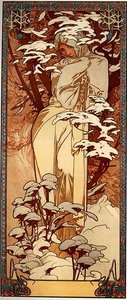
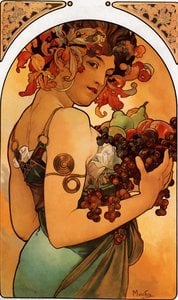
Rose de Alphonse Maria Mucha, reproducción al óleo pintada a mano por un maestro artista
Ver en contexto Vista previa en RA Cambiar a impresiones Cambiar a imagen digital Enviar
Detalles Guía Añadir a favoritos Descargar Similares Radiografía Presentación de diapositivas Preguntas y respuestas Presentation Estadísticas

Rose Reproducción de pintura al óleo pintada a mano

Alphonse Mucha’s ‘Rose’ captures the elegance of Art Nouveau with its flowing lines and idealized woman surrounded by roses – a timeless symbol of beauty and romance perfect for your home.

Descubre Alphonse Mucha (1860-1939), maestro del Art Nouveau! Explora sus icónicos carteles, mujeres hermosas y el monumental 'Épico Eslavo'. ¡Una leyenda artística checa!

Reproducción al óleo hecha a mano

Óleo sobre lienzo pintado a mano en el tamaño y marco de su elección, realizado por encargo por nuestros artistas. ( Cambiar a impresiones Cambiar a imagen digital)

Corner sample of the P118B picture frame: poliestireno moldeado, 5 cm wide and 3 cm thick
P118B €10
Corner sample of the P118H picture frame: poliestireno moldeado, 5 cm wide and 3 cm thick
P118H €10
Corner sample of the P118W picture frame: poliestireno moldeado, 5 cm wide and 3 cm thick
P118W €10
Corner sample of the P438Z picture frame: poliestireno moldeado, 5.5 cm wide and 3.5 cm thick
P438Z €10
Corner sample of the P508JH picture frame: poliestireno moldeado, 7 cm wide and 3.5 cm thick
P508JH €12
Corner sample of the P508YH picture frame: poliestireno moldeado, 7 cm wide and 3.5 cm thick
P508YH €12
Corner sample of the P805H picture frame: poliestireno moldeado, 5 cm wide and 3.5 cm thick
P805H €10
Corner sample of the P805Z picture frame: poliestireno moldeado, 5 cm wide and 3.5 cm thick
P805Z €10
Corner sample of the P919BZ picture frame: poliestireno moldeado, 7 cm wide and 3.5 cm thick
P919BZ €10
Corner sample of the P919G picture frame: poliestireno moldeado, 7 cm wide and 3.5 cm thick
P919G €10
Corner sample of the P919XJ picture frame: poliestireno moldeado, 7 cm wide and 3.5 cm thick
P919XJ €10
Corner sample of the P959ZH picture frame: poliestireno moldeado, 5 cm wide and 3 cm thick
P959ZH €10
Corner sample of the P968JZ picture frame: poliestireno moldeado, 6 cm wide and 4 cm thick
P968JZ €12
Corner sample of the W106C picture frame: madera maciza, 5 cm wide and 3 cm thick
W106C €8
Corner sample of the W218G picture frame: madera maciza, 5 cm wide and 3 cm thick
W218G €10
Corner sample of the W218JH picture frame: madera maciza, 5 cm wide and 3 cm thick
W218JH €8
Corner sample of the W218Y picture frame: madera maciza, 5 cm wide and 3 cm thick
W218Y €10
Corner sample of the W307PJ picture frame: madera maciza, 6 cm wide and 3 cm thick
W307PJ €10
Corner sample of the W316G picture frame: madera maciza, 6 cm wide and 3 cm thick
W316G €10
Corner sample of the W316PJ picture frame: madera maciza, 6 cm wide and 3 cm thick
W316PJ €8
Corner sample of the W316Y picture frame: madera maciza, 6 cm wide and 3 cm thick
W316Y €10
Corner sample of the W398PJ picture frame: madera maciza, 5 cm wide and 3 cm thick
W398PJ €8
Corner sample of the W4111J picture frame: madera maciza, 6.5 cm wide and 3.5 cm thick
W4111J €10
Corner sample of the W500HY picture frame: madera maciza, 7 cm wide and 5 cm thick
W500HY €15
Corner sample of the W500JH picture frame: madera maciza, 7 cm wide and 5 cm thick
W500JH €15
Corner sample of the W692G picture frame: madera maciza, 8 cm wide and 4 cm thick
W692G €12
Corner sample of the W849H picture frame: madera maciza, 5 cm wide and 3 cm thick
W849H €8
Corner sample of the W940BG picture frame: madera maciza, 7.5 cm wide and 4.5 cm thick
W940BG €15
Corner sample of the W953PJ picture frame: madera maciza, 6 cm wide and 3.5 cm thick
W953PJ €8

Tamaño estándar
a medida
CM
INCH

Elija entre nuestros tamaños predefinidos que respetan las proporciones originales de la obra.

ancho
altura

Indique el ancho y el alto que necesite para adaptarse a su marco o pared. Al tratarse de una obra pintada a mano, si requiere un tamaño con una proporción distinta, el artista puede pintar un poco más alrededor de la imagen o recortarla ligeramente; usted elige. Le enviaremos una maqueta digital para su aprobación antes de comenzar la pintura. La imagen que se muestra en esta página no refleja el resultado real; solo la maqueta lo hace.

Ejemplos de lo que se puede personalizar: Reemplace el rostro con una foto del cliente; Agregue una mascota (por ejemplo, cambie un gato por un perro); Incluya un mensaje oculto en el fondo; Cambie el paisaje o los elementos del fondo.
Tras realizar el pedido, el equipo de WahooArt.com enviará un correo electrónico al cliente para solicitar instrucciones y proporcionarle una vista previa del boceto.

Envío a todo el mundo () en 3-4 semanas en lugar de las 5 semanas estándar. (6 noviembre). Sin comprometer la calidad.

Envío exprés gratuito a todo el mundo
Lienzo de lino de alta calidad
Seguro de envío total
Garantía de reembolso de aranceles aduaneros
Garantía de fidelidad cromática exacta
Política de devolución de 100 días (solo por defectos)
Garantía de devolución del 100% del dinero
Descuento por cantidad

Precio total

€ 243

Rose

Técnica de reproducción

Dimensiones de la reproducción

-

Precio total final

€ 243

Datos clave

  • Dimensions: 230 x 174 mm
  • Year: 1898
  • Notable elements or techniques: Intricate lines, floral motifs, decorative style
  • Artistic style: Stylized, organic forms, flowing lines
  • Medium: Lithograph
  • Location: Musée d'Orsay, Paris

Test de conocimientos artísticos

Cada pregunta tiene una única respuesta correcta.

Pregunta 1:
Which art movement is Alphonse Mucha most associated with?
Pregunta 2:
What is the primary subject matter of this artwork?
Pregunta 3:
The composition utilizes which characteristic technique of Art Nouveau?
Pregunta 4:
The color palette predominantly features which tones?
Pregunta 5:
What does the intertwining of the figure with floral elements primarily symbolize?

Alphonse Mucha’s ‘Rose’: A Symphony of Art Nouveau

“Rose,” created by Alphonse Mucha, is more than just a depiction of a flower; it's a masterful encapsulation of the Art Nouveau movement – a testament to flowing lines, organic forms, and an almost reverent appreciation for nature. This iconic image, brimming with delicate detail and imbued with a sense of serene beauty, perfectly exemplifies Mucha’s distinctive style and his profound influence on decorative arts at the turn of the 20th century.

The artwork immediately draws the eye to the central figure – a woman rendered in a pose of graceful contemplation. Her flowing robes, intricately patterned with floral motifs, mirror the swirling curves that dominate the composition. Mucha’s genius lies in his ability to seamlessly blend the human form with the natural world, creating an image that feels both ethereal and grounded. The roses themselves aren't merely decorative elements; they are symbols of love, beauty, and fertility – core themes within Art Nouveau’s exploration of feminine ideals.

A Celebration of Line and Color

Mucha’s technique is characterized by a meticulous attention to detail and an extraordinary command of line. The flowing, curvilinear lines that define the woman's hair, dress, and the surrounding floral elements create a dynamic sense of movement and elegance – a hallmark of Art Nouveau. The color palette, dominated by warm, muted tones – creams, golds, peaches, and soft pinks – contributes significantly to the artwork’s overall mood. The subtle gradient effect, with lighter hues at the top transitioning to darker shades towards the bottom, adds depth and dimension, enhancing the illusion of a three-dimensional space.

Symbolism and Emotional Resonance

Beyond its aesthetic qualities, “Rose” is rich in symbolic meaning. Mucha frequently featured idealized women within decorative settings, often intertwined with natural elements to represent harmony between humanity and nature. The rose itself carries layers of symbolism – representing love, romance, beauty, and the ephemeral nature of life. The flattened perspective and lack of strong shadows contribute to a sense of dreamlike serenity, inviting the viewer into a world of delicate beauty and quiet contemplation. It’s an image designed not just to be looked at, but to be felt—a visual poem evoking feelings of peace, grace, and timeless elegance.

A Reproduction Worth Cherishing

This hand-painted reproduction captures the essence of Mucha's original masterpiece, allowing you to bring this iconic work of Art Nouveau into your home or office. Each detail – from the velvety texture of the roses to the intricate patterns in the woman’s dress – is meticulously recreated, ensuring a faithful representation of Mucha’s artistic vision. Whether as a statement piece for your living room or a thoughtful gift, this reproduction offers a lasting connection to one of the most influential and beloved artists of the Art Nouveau era.

Preguntas y respuestas

¿Qué intensidad de color tiene "Rose" de Alphonse Maria Mucha?

La intensidad cromática de "Rose" es Vivid. La intensidad describe la fuerza con la que se perciben los colores.

¿Está "Rose" disponible como una impresión de bellas artes?

Para obtener una impresión de "Rose" de Alphonse Maria Mucha, simplemente pídala en su página de Impresión de arte de bellas artes: una impresión de bellas artes sobre lienzo de algodón o papel de lienzo de archivo.

¿Los colores de "Rose" de Alphonse Maria Mucha son intensos o tenues?

Los colores de "Rose" de Alphonse Maria Mucha presentan una saturación Clear Color Presence con una intensidad Vivid.


Biografía del artista

Primeros Años y Educación

  • Nacido: 15 de julio de 1860, en Ivanačice, Moravia (ahora parte de la República Checa)
  • Mostró talento artístico desde una edad temprana.
  • Estudió en la Academia de Bellas Artes de Praga pero se desilusionó con los enfoques tradicionales.
  • Se mudó a París en 1887 para perseguir su propio estilo.

Estilo Artístico y Obras Notables

  • Conocido por un estilo Art Nouveau distintivo caracterizado por líneas fluidas, formas orgánicas y una sensación de movimiento.
  • Influenciado por artistas como Pierre-Auguste Renoir y Gustave Moreau.
  • Obras Notables:
    • La Insurrección Eslava - Muestra la combinación de motivos checos tradicionales con elementos Art Nouveau modernos.
    • Salon des Cent
    • Pinturas inspiradas en obras como Las Hijas de Tespio de Gustave Moreau, y La Ribambelle des Gobelins de Piero Dorazio.
    • Ilustraciones basadas en Jóvenes Granjeros Rompiendo Lino de Sir Hubert von Herkomer.
  • Frecuentemente presentó mujeres idealizadas con túnicas fluidas rodeadas de flores exuberantes.

Hitos Profesionales y Comisiones Importantes

  • Colaboración con Sarah Bernhardt: Creó carteles y diseños para la actriz Sarah Bernhardt, comenzando con el cartel de Gismonda (1894), lo que lanzó su carrera.
  • Exposición Universal en París (1900): Su estilo Art Nouveau ganó reconocimiento internacional en esta exposición. Decoró el Pabellón de Bosnia y Herzegovina y colaboró en el Pabellón Austriaco.
  • Patronazgo de Charles Richard Crane: Recibió apoyo de Charles Richard Crane, lo que le permitió crear la monumental serie El Épico Eslavo (1912-30).
  • Checoslovaquia Independiente: Diseñó sellos postales, billetes y documentos gubernamentales para la recién independiente Checoslovaquia.

Influencias y Legado

  • Influenciado por las tradiciones artísticas checas y los movimientos de arte europeos modernos.
  • Su estilo único allanó el camino para futuras generaciones de artistas en Art Nouveau y Secesión.
  • Inspiró a otros artistas como Eva Prokopcová.
  • El legado se extiende más allá de su obra de arte hasta influir en el diseño y la estética.

Vida Posterior y Muerte

  • Se casó con Maruska (Marie/Maria) Chytilová en 1906.
  • Visitó los Estados Unidos desde 1906 hasta 1910, donde nació su hija Jaroslava.
  • Murió el 14 de julio de 1939 en Praga, Checoslovaquia.
Alphonse Maria Mucha

Alphonse Maria Mucha

1860 - 1939 , República Checa

Datos clave

  • Artistas Influenciados: ['Eva Prokopcová']
  • Artistas Que Influyeron:
    • Pierre-Auguste Renoir
    • Gustave Moreau
  • Fecha De Fallecimiento: 1939
  • Fecha De Nacimiento: 15 de julio de 1860
  • Lugar De Nacimiento: Brno, República Checa
  • Movimiento Artístico: Art Nouveau
  • Nacionalidad: Checo
  • Nombre Completo: Alphonse Maria Mucha
  • Obras Notables:
    • La sublevación eslava
    • Salón de los Cien
    • Las hijas de Tespio
    • La Ribambelle de Gobelins
Explore obras de arte organizadas por temas, estilos y características.