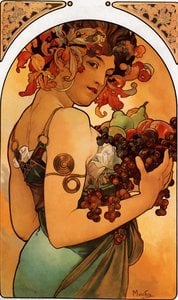
Medee (1898) de Alphonse Maria Mucha, reproducción al óleo pintada a mano por un maestro artista
Ver en contexto Vista previa en RA Cambiar a impresiones Cambiar a imagen digital Enviar
Detalles Guía Añadir a favoritos Descargar Similares Radiografía Presentación de diapositivas Preguntas y respuestas Presentation Estadísticas

Medee Reproducción de pintura al óleo pintada a mano

Dimensiones
76.0 x 206.0 cm

Descubre Alphonse Mucha (1860-1939), maestro del Art Nouveau! Explora sus icónicos carteles, mujeres hermosas y el monumental 'Épico Eslavo'. ¡Una leyenda artística checa!

Reproducción al óleo hecha a mano

Óleo sobre lienzo pintado a mano en el tamaño y marco de su elección, realizado por encargo por nuestros artistas. ( Cambiar a impresiones Cambiar a imagen digital)

Corner sample of the P118B picture frame: poliestireno moldeado, 5 cm wide and 3 cm thick
P118B €10
Corner sample of the P118H picture frame: poliestireno moldeado, 5 cm wide and 3 cm thick
P118H €10
Corner sample of the P118W picture frame: poliestireno moldeado, 5 cm wide and 3 cm thick
P118W €10
Corner sample of the P438Z picture frame: poliestireno moldeado, 5.5 cm wide and 3.5 cm thick
P438Z €10
Corner sample of the P508JH picture frame: poliestireno moldeado, 7 cm wide and 3.5 cm thick
P508JH €12
Corner sample of the P508YH picture frame: poliestireno moldeado, 7 cm wide and 3.5 cm thick
P508YH €12
Corner sample of the P805H picture frame: poliestireno moldeado, 5 cm wide and 3.5 cm thick
P805H €10
Corner sample of the P805Z picture frame: poliestireno moldeado, 5 cm wide and 3.5 cm thick
P805Z €10
Corner sample of the P919BZ picture frame: poliestireno moldeado, 7 cm wide and 3.5 cm thick
P919BZ €10
Corner sample of the P919G picture frame: poliestireno moldeado, 7 cm wide and 3.5 cm thick
P919G €10
Corner sample of the P919XJ picture frame: poliestireno moldeado, 7 cm wide and 3.5 cm thick
P919XJ €10
Corner sample of the P959ZH picture frame: poliestireno moldeado, 5 cm wide and 3 cm thick
P959ZH €10
Corner sample of the P968JZ picture frame: poliestireno moldeado, 6 cm wide and 4 cm thick
P968JZ €12
Corner sample of the W106C picture frame: madera maciza, 5 cm wide and 3 cm thick
W106C €8
Corner sample of the W218G picture frame: madera maciza, 5 cm wide and 3 cm thick
W218G €10
Corner sample of the W218JH picture frame: madera maciza, 5 cm wide and 3 cm thick
W218JH €8
Corner sample of the W218Y picture frame: madera maciza, 5 cm wide and 3 cm thick
W218Y €10
Corner sample of the W307PJ picture frame: madera maciza, 6 cm wide and 3 cm thick
W307PJ €10
Corner sample of the W316G picture frame: madera maciza, 6 cm wide and 3 cm thick
W316G €10
Corner sample of the W316PJ picture frame: madera maciza, 6 cm wide and 3 cm thick
W316PJ €8
Corner sample of the W316Y picture frame: madera maciza, 6 cm wide and 3 cm thick
W316Y €10
Corner sample of the W398PJ picture frame: madera maciza, 5 cm wide and 3 cm thick
W398PJ €8
Corner sample of the W4111J picture frame: madera maciza, 6.5 cm wide and 3.5 cm thick
W4111J €10
Corner sample of the W500HY picture frame: madera maciza, 7 cm wide and 5 cm thick
W500HY €15
Corner sample of the W500JH picture frame: madera maciza, 7 cm wide and 5 cm thick
W500JH €15
Corner sample of the W692G picture frame: madera maciza, 8 cm wide and 4 cm thick
W692G €12
Corner sample of the W849H picture frame: madera maciza, 5 cm wide and 3 cm thick
W849H €8
Corner sample of the W940BG picture frame: madera maciza, 7.5 cm wide and 4.5 cm thick
W940BG €15
Corner sample of the W953PJ picture frame: madera maciza, 6 cm wide and 3.5 cm thick
W953PJ €8

Tamaño estándar
a medida
CM
INCH

Elija entre nuestros tamaños predefinidos que respetan las proporciones originales de la obra.

ancho
altura

Indique el ancho y el alto que necesite para adaptarse a su marco o pared. Al tratarse de una obra pintada a mano, si requiere un tamaño con una proporción distinta, el artista puede pintar un poco más alrededor de la imagen o recortarla ligeramente; usted elige. Le enviaremos una maqueta digital para su aprobación antes de comenzar la pintura. La imagen que se muestra en esta página no refleja el resultado real; solo la maqueta lo hace.

Ejemplos de lo que se puede personalizar: Reemplace el rostro con una foto del cliente; Agregue una mascota (por ejemplo, cambie un gato por un perro); Incluya un mensaje oculto en el fondo; Cambie el paisaje o los elementos del fondo.
Tras realizar el pedido, el equipo de WahooArt.com enviará un correo electrónico al cliente para solicitar instrucciones y proporcionarle una vista previa del boceto.

Envío a todo el mundo () en 3-4 semanas en lugar de las 5 semanas estándar. (7 noviembre). Sin comprometer la calidad.

Envío exprés gratuito a todo el mundo
Lienzo de lino de alta calidad
Seguro de envío total
Garantía de reembolso de aranceles aduaneros
Garantía de fidelidad cromática exacta
Política de devolución de 100 días (solo por defectos)
Garantía de devolución del 100% del dinero
Descuento por cantidad

Precio total

€ 243

Medee

Técnica de reproducción

Dimensiones de la reproducción

-

Precio total final

€ 243

Datos clave

  • Artist: Alphonse Maria Mucha
  • Location: Private Collection
  • Year: 1898
  • Notable elements or techniques: Flowing lines, organic forms, dramatic scene
  • Dimensions: 76 x 206 cm
  • Medium: Painting

A Vision of Power: Alphonse Mucha's *Médée*

Alphonse Mucha’s *Médée*, painted in 1898, is more than just a depiction of a classical tragedy; it’s a potent distillation of Art Nouveau’s core tenets – flowing lines, organic forms, and an almost palpable sense of movement. This striking image captures the dramatic intensity of Sophocles' play, transforming a tale of vengeance and despair into a visually arresting spectacle. The painting’s immediate impact lies in its masterful use of color and composition, elements that were hallmarks of Mucha’s distinctive style and sought to evoke emotion through form.

The scene itself is powerfully rendered. Muchas Medee stands poised, her posture radiating both strength and vulnerability. Her costume, a cascade of rich fabrics and intricate detailing, embodies the opulent aesthetic favored by the artist – a deliberate departure from the rigid academic traditions he initially encountered at the Prague Academy. The inclusion of the sword immediately establishes a narrative of potential violence and retribution, while the fallen figure beneath her suggests a devastating consequence. The clock on the wall, a subtle yet significant detail, anchors the scene in time and space, hinting at the inexorable march of fate – a central theme within the play itself.

Art Nouveau’s Embrace: Style and Technique

Created during Mucha's most prolific period, *Médée* exemplifies his signature Art Nouveau style. Notice the sinuous curves that define Medee’s form, echoing the natural world – a deliberate homage to the influence of artists like Pierre-Auguste Renoir and Gustave Moreau. Mucha employed a meticulous technique, utilizing layering of glazes and delicate brushwork to achieve a luminous effect, characteristic of his work. The use of gold leaf, subtly integrated into the costume’s embellishments, adds an element of luxury and reinforces the painting's decorative quality – a key feature of Art Nouveau design.

The composition itself is carefully constructed, drawing the viewer’s eye through a series of dynamic lines and shapes. Mucha was renowned for his ability to capture movement and emotion within static forms, and *Médée* is a prime example of this skill. The overall effect is one of heightened drama and emotional intensity, perfectly suited to the subject matter.

Symbolism and Narrative Resonance

*Médée*, like the original Greek tragedy, is rich in symbolism. Medee herself represents female power, ambition, and ultimately, tragic downfall. Her act of revenge – symbolized by the sword – speaks to themes of justice, betrayal, and the destructive consequences of unchecked passion. The fallen figure beneath her can be interpreted as a representation of lost innocence or the ultimate price of vengeance. The painting’s setting, though somewhat ambiguous, suggests a public space—perhaps a palace or court—further emphasizing Medee's position of authority and influence.

This reproduction offers an exceptional opportunity to own a piece of Art Nouveau history, capturing Mucha’s genius in stunning detail. It is a powerful statement for any art lover, collector, or interior designer seeking to infuse their space with beauty, drama, and timeless elegance.

Preguntas y respuestas

¿Cómo se puede integrar "Medee" de Alphonse Maria Mucha en la decoración del hogar?

Se recomienda el uso de (Statement) y su ubicación en (Hotel Lobby) para "Medee" de Alphonse Maria Mucha.

¿Qué elementos de la obra de Alphonse Maria Mucha se encuentran en "Medee"?

"Medee" comparte con otras obras de Alphonse Maria Mucha su estilo Art Nouveau y sus temas recurrentes: alphonse maria mucha, brno, czech republic, 1860, 1898, 1939, 76 x 206 cm, medee.

¿Cómo se describe la paleta de colores de "Medee" de Alphonse Maria Mucha?

La paleta de "Medee" de Alphonse Maria Mucha se describe como Neutrals. Es una descripción concisa de los colores de la obra.


Biografía del artista

Primeros Años y Educación

  • Nacido: 15 de julio de 1860, en Ivanačice, Moravia (ahora parte de la República Checa)
  • Mostró talento artístico desde una edad temprana.
  • Estudió en la Academia de Bellas Artes de Praga pero se desilusionó con los enfoques tradicionales.
  • Se mudó a París en 1887 para perseguir su propio estilo.

Estilo Artístico y Obras Notables

  • Conocido por un estilo Art Nouveau distintivo caracterizado por líneas fluidas, formas orgánicas y una sensación de movimiento.
  • Influenciado por artistas como Pierre-Auguste Renoir y Gustave Moreau.
  • Obras Notables:
    • La Insurrección Eslava - Muestra la combinación de motivos checos tradicionales con elementos Art Nouveau modernos.
    • Salon des Cent
    • Pinturas inspiradas en obras como Las Hijas de Tespio de Gustave Moreau, y La Ribambelle des Gobelins de Piero Dorazio.
    • Ilustraciones basadas en Jóvenes Granjeros Rompiendo Lino de Sir Hubert von Herkomer.
  • Frecuentemente presentó mujeres idealizadas con túnicas fluidas rodeadas de flores exuberantes.

Hitos Profesionales y Comisiones Importantes

  • Colaboración con Sarah Bernhardt: Creó carteles y diseños para la actriz Sarah Bernhardt, comenzando con el cartel de Gismonda (1894), lo que lanzó su carrera.
  • Exposición Universal en París (1900): Su estilo Art Nouveau ganó reconocimiento internacional en esta exposición. Decoró el Pabellón de Bosnia y Herzegovina y colaboró en el Pabellón Austriaco.
  • Patronazgo de Charles Richard Crane: Recibió apoyo de Charles Richard Crane, lo que le permitió crear la monumental serie El Épico Eslavo (1912-30).
  • Checoslovaquia Independiente: Diseñó sellos postales, billetes y documentos gubernamentales para la recién independiente Checoslovaquia.

Influencias y Legado

  • Influenciado por las tradiciones artísticas checas y los movimientos de arte europeos modernos.
  • Su estilo único allanó el camino para futuras generaciones de artistas en Art Nouveau y Secesión.
  • Inspiró a otros artistas como Eva Prokopcová.
  • El legado se extiende más allá de su obra de arte hasta influir en el diseño y la estética.

Vida Posterior y Muerte

  • Se casó con Maruska (Marie/Maria) Chytilová en 1906.
  • Visitó los Estados Unidos desde 1906 hasta 1910, donde nació su hija Jaroslava.
  • Murió el 14 de julio de 1939 en Praga, Checoslovaquia.
Alphonse Maria Mucha

Alphonse Maria Mucha

1860 - 1939 , República Checa

Datos clave

  • Artistas Influenciados: ['Eva Prokopcová']
  • Artistas Que Influyeron:
    • Pierre-Auguste Renoir
    • Gustave Moreau
  • Fecha De Fallecimiento: 1939
  • Fecha De Nacimiento: 15 de julio de 1860
  • Lugar De Nacimiento: Brno, República Checa
  • Movimiento Artístico: Art Nouveau
  • Nacionalidad: Checo
  • Nombre Completo: Alphonse Maria Mucha
  • Obras Notables:
    • La sublevación eslava
    • Salón de los Cien
    • Las hijas de Tespio
    • La Ribambelle de Gobelins
Explore obras de arte organizadas por temas, estilos y características.