x
Ver en contextoVer en contexto Vista previa en RAVista previa en RA Comprar pintura hecha a mano Comprar pintura hecha a manoComprar imagen Comprar imagen EnviarEnviar
DetallesDetalles Añadir a favoritos Añadir a favoritos DescargarDescargar SimilaresSimilares RadiografíaRadiografía Presentación de diapositivasPresentación de diapositivas

Fruit Still-Life

Experience Baroque elegance with Abraham Brueghel's vibrant fruit still life, showcasing masterful chiaroscuro and abundance; discover this timeless piece today.

Abraham Brueghel (1631-c.1690), pintor flamenco de renombre, destacó por sus impresionantes bodegones florales y paisajes italianizantes. Figura clave en la escuela napolitana, su obra sigue fascinando por la belleza y el detalle.

Giclée / Impresión de arte

Impresiones giclée o en lienzo de calidad de museo con producción rápida y opciones de acabado flexibles. (Comprar pintura hecha a mano Comprar pintura hecha a manoComprar imagen Comprar imagen)

P118B $10
P118H $10
P118W $10
P438Z $10
P508JH $12
P508YH $12
P805H $10
P805Z $10
P919BZ $10
P919G $10
P919XJ $10
P959ZH $10
P968JZ $12
W106C $8
W218G $10
W218JH $8
W218Y $10
W307PJ $10
W316G $10
W316PJ $8
W316Y $10
W398PJ $8
W4111J $10
W500HY $15
W500JH $15
W692G $12
W849H $8
W940BG $15
W953PJ $8

Estándar
a medida
CM
INCH

Elija entre nuestros tamaños predefinidos que respetan las proporciones originales de la obra.

ancho
altura

Puede introducir sus propias dimensiones para adaptarse a un marco o espacio específico. Si el tamaño seleccionado no coincide con las proporciones de la imagen original, recortaremos la obra de arte o extenderemos la imagen con un borde con efecto espejo o de color sólido. Se enviará una maqueta digital para su aprobación antes de que comience la producción.
Tenga en cuenta que la vista previa en pantalla no refleja el recorte o la extensión real. Solo la maqueta mostrará con precisión la composición final.
Aunque existen tamaños personalizados, recomendamos seleccionar una dimensión de la lista predefinida para preservar las proporciones originales.

Envío a todo el mundo () en 2 semanas en lugar de las 4/5 semanas estándar. (30 agosto)

why_choose_icon
Envío exprés gratuito a todo el mundo
why_choose_icon
Lienzo de lino de alta calidad
why_choose_icon
Seguro de envío total
why_choose_icon
Garantía de reembolso de impuestos aduaneros
why_choose_icon
Garantía de fidelidad cromática exacta
why_choose_icon
Política de devolución de 60 días (solo por defectos)
why_choose_icon
Garantía de devolución del 100% del dinero
why_choose_icon
Descuento por cantidad

Precio total

$ 68

reproduction

Fruit Still-Life

Giclée / Impresión de arte

Dimensiones de la reproducción

-

Precio total final

$ 68

Datos clave

  • Notable elements or techniques: Dramatic lighting; Detailed fruit rendering
  • Movement: Baroque
  • Medium: Oil on Canvas
  • Year: 1670
  • Artistic style: Decorative Still Life
  • Subject or theme: Abundance; Fruit Composition
  • Title: Fruit Still-Life

Test de arte

Cada pregunta tiene una única respuesta correcta.

Pregunta 1:
Abraham Brueghel is known for his contributions to which artistic movement?
Pregunta 2:
What prominent artist did Abraham Brueghel collaborate with frequently during his career?
Pregunta 3:
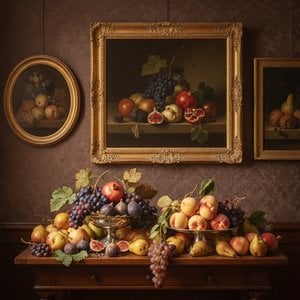
The painting depicts a scene featuring various fruits, including apples, oranges, grapes and plums. What is the overall impression created by the vibrant colors of these fruits?
Pregunta 4:
The image shows a knife alongside the fruit. What is its likely purpose within the composition?
Pregunta 5:
Abraham Brueghel’s style is characterized by a focus on landscapes and depictions of peasant life. How does this influence his artistic vision?

Abraham Brueghel’s Fruit Still Life: A Symphony of Color and Baroque Elegance

Abraham Brueghel, born in Antwerp in 1631, represents a fascinating crossroads within Flemish Baroque art. While his father, Jan Brueghel the Younger, established himself as a masterful landscape painter alongside Peter Paul Rubens—a partnership that cemented Antwerp’s reputation as an artistic powerhouse—Abraham charted a slightly different course, immersing himself in the burgeoning Italian Renaissance and subsequently finding considerable success in Naples. This journey instilled within him not only stylistic influences but also a profound understanding of how to capture fleeting beauty and convey complex emotions through meticulously crafted compositions. His ‘Fruit Still Life,’ painted circa 1670, exemplifies this artistic sensibility perfectly.

A Masterpiece Born from Observation

The painting’s subject matter—a bountiful assemblage of fruit—is deceptively simple. Apples, oranges, grapes, and plums are arranged with deliberate care within a bowl at the bottom left corner, alongside a gleaming knife resting on the right side. However, beneath this apparent tranquility lies a sophisticated artistic technique rooted in the principles of Baroque painting. Brueghel’s meticulous attention to detail—evident in the subtle variations of color and texture—demonstrates his commitment to realism while simultaneously elevating the scene beyond mere depiction. He skillfully employs chiaroscuro, utilizing dramatic contrasts between light and shadow to sculpt the forms of the fruit and create a palpable sense of depth.

The Influence of Giuseppe Ruoppolo and Caravaggio

Brueghel’s artistic development was significantly shaped by collaborations with artists like Giuseppe Ruoppolo, who embraced the darker aesthetic championed by Caravaggio. Ruoppolo's influence is particularly noticeable in Brueghel’s masterful use of tenebrismo—a technique characterized by extreme darkness punctuated by intense highlights—creating a theatrical atmosphere that draws the viewer into the scene. This stylistic approach wasn’t merely fashionable; it reflected a broader artistic trend aimed at conveying spiritual contemplation and eliciting emotional responses from the audience.

Symbolism Within Abundance

Beyond its technical prowess, ‘Fruit Still Life’ is laden with symbolic meaning. Fruit has long been associated with fertility, prosperity, and divine grace in Western art tradition. The careful placement of each fruit—the apples symbolizing knowledge and temptation, the oranges representing warmth and vitality—suggests a deliberate intention to communicate ideas beyond the visual surface. Furthermore, the knife serves as a reminder of mortality and the transient nature of earthly pleasures – a poignant counterpoint to the opulent display before us.

Decorative Potential and Emotional Resonance

Today, reproductions of Brueghel’s ‘Fruit Still Life’ offer an exceptional opportunity to bring a touch of Baroque elegance into any interior space. Its vibrant colors—particularly the reds and yellows of the fruit—create a visually stimulating effect that complements diverse design styles. More importantly, however, is its ability to evoke feelings of serenity and contemplation. Like Hieronymus Bosch's surreal landscapes, Brueghel’s work invites viewers to pause and appreciate the beauty of the natural world while simultaneously prompting reflection on deeper existential themes. It remains a testament to the enduring power of art to inspire and captivate across centuries.

Biografía del artista

Heredero de una Dinastía Pictórica: La Vida y el Arte de Abraham Brueghel

Abraham Brueghel, nacido en Amberes en 1631, emergió de uno de los linajes artísticos más célebres de la historia flamenca. Como miembro de la prolífica familia Brueghel —descendiente del renombrado Pieter Bruegel el Viejo—, heredó un legado impregnado de la pintura de paisajes, las representaciones de la vida campesina y una aguda observación del mundo natural. Sin embargo, el camino de Abraham divergiendo en cierta medida de sus antepasados, guiándolo hacia Italia, donde se convirtió en una figura fundamental en el desarrollo de los bodegones decorativos del Barroco. Su historia es una de migración artística, adaptación y, finalmente, el establecimiento de una voz propia dentro de las vibrantes escenas artísticas de Roma y Nápoles. Desde temprana edad, Abraham demostró una promesa considerable, nutrida por su padre, Jan Brueghel el Joven, un hábil pintor y colaborador frecuente de Peter Paul Rubens. Incluso siendo un adolescente, su talento fue reconocido; uno de sus bodegones florales fue vendido cuando tenía apenas quince años, un testimonio de su floreciente destreza.

De Amberes a Italia: Una Carrera en Florecimiento

El año 1649 marcó un punto de inflexión en la vida y la carrera de Abraham. A la edad de dieciocho años, viajó a Sicilia para cumplir con un encargo del príncipe Antonio Ruffo, el primero de muchos que definirían su trayectoria artística. Esta incursión inicial en el mecenazgo italiano resultó fructíca; en poco tiempo, la colección del príncipe Ruffo contaba con nueve pinturas de flores realizadas por el joven artista. Una década más tarde, en 1659, Brueghel se estableció en Roma, donde contrajo matrimonio con Angela Buratti y se integró rápidamente en la próspera comunidad artística de la ciudad. Su aceptación en la prestigiosa Accademia di San Luca en 1670 consolidó su posición entre los artistas romanos, reconociendo su dedicación a elevar el oficio de la pintura. También se unió a los Bentvueghels, una sociedad de pintores holandeses y flamencos conocida por sus encuentros conviviales y el uso de apodos lúdicos; Abraham fue bautizado como “Rijngraaf”, o Duque del Rin, un título aristocrático que reflejaba su herencia. Este periodo en Roma fue testigo de la maduración del estilo de Brueghel, influenciado por la grandeza expansiva del Barroco tardío italiano, mientras mantenía una sensibilidad distintivamente flamenca por el detalle y la profusión decorativa.

Nápoles y el Florecimiento del Bodegón

Alrededor de 1672-1675, Abraham se trasladó una vez más, esta vez a Nápoles. Este movimiento resultó particularmente significativo, ya que introdujo el estilo flamengo-romano de bodegón elaborado en una ciudad que previamente se había resistido a él. Antes de la llegada de Brueghel, el arte napolitano favorecía tradiciones distintas; sus vibrantes composiciones —rebosantes de frutas del sur, flores exuberantes y a menudo ambientadas en paisajes dramáticos— fueron una novedad que gradualmente ganó aceptación e influencia. Permaneció en Nápoles hasta su muerte hacia 1690 (aunque algunas fuentes sugieren incluso hasta 1697), estableciéndose como una figura líder en el panorama artístico de la ciudad. Su obra durante este periodo se caracteriza por colores más brillantes, pinceladas más audaces y un énfasis creciente en arreglos opulentos, reflejando la influencia de maestros flamencos como Frans Snyders, Jan Fyt y Pieter Boel, quienes también habían trabajado dentro del contexto italiano.

Una Síntesis de Estilos: El Legado Artístico de Brueghel

El logro artístico de Abraham Brueghel reside en su magistral síntesis de la meticulosidad flamenca y el dinamismo barroco italiano. No se limitó a replicar los estilos existentes; forjó una estética única que combinaba la abundancia decorativa favorecida por sus predecesores con el movimiento dramático y la teatralidad característica de sus contemporáneos italianos, tales como Michele Pace del Campidoglio y Michelangelo Cerquozzi. Sus bodegones no son simples representaciones de objetos, sino composiciones cuidadosamente construidas —que a menudo presentan jarrones preciosos, fragmentos de escultura romana o monumentos antiguos— que crean una sensación de lujo y gusto refinado. Frecuentemente colaboraba con otros artistas, pintando a menudo los paisajes dentro de sus arreglos de bodegón mientras encargaba a especialistas la adición de staffage —figuras o animales— para realzar la profundidad narrativa de sus obras. Estas colaboraciones incluyeron a destacados pintores italianos como Carlo Maratta, Giovanni Battista Gauli y Giacinto Brandi, así como al artista francés Guillaume Courtois. El legado de Brueghel se extiende más allá de sus pinturas individuales; desempeñó un papel crucial en la popularización del género del bodegón decorativo en Nápoles, influyendo en las generaciones posteriores de artistas y dejando una huella indeleble en el patrimonio artístico de la ciudad. Su obra continúa cautivando a los espectadores con sus colores vibrantes, detalles intrincados y una armoniosa mezcla de precisión flamenca y grandeza italiana.

Abraham Brueghel

Abraham Brueghel

1631 - 1690 , Bélgica

Datos clave

  • Artistic Movement Or Style: Baroque
  • Artists Or Movements Influenced By This Artist: ['Naples still life painting']
  • Artists Who Influenced This Artist:
    • Jan Brueghel the Younger
    • Frans Snyders
    • Jan Fyt
  • Date Of Birth: 1631
  • Date Of Death: c. 1690
  • Full Name: Abraham Brueghel
  • Nationality: Flemish
  • Notable Artworks:
    • Bunches of Grapes...
    • Landscape with Silenus...
    • Woman Grasping Fruit
  • Place Of Birth: Antwerp, Belgium