1of 100
Βασίλι Καντίνσκι 1866–1944
Russian Born in Μόσχα ['Expressionism', 'Abstract painting', 'Der Blaue Reiter'] Wikipedia in 32/32 languages


Expressionist painters, ranked
The most famous Expressionist painter is Βασίλι Καντίνσκι (1866–1944), known for Composition VII (study 2) and An Intimate Party. Next come Έντβαρντ Μουνχ, Ζαν Μισέλ Μπασκιά, Πάουλ Κλέε and Τζάκσον Πόλοκ. This ranking of the 100 most famous Expressionist painters runs from Κριστιανός Ρόλφς (born 1849) to Ζαν Μισέλ Μπασκιά (born 1960), across 38 countries.
How this list is ranked. Artists whose works our catalogue files under Expressionist, in the order of our fame ranking of artists. Artists without a Wikidata identifier born after 1955 are left out until verified. The Wikipedia figure next to each name is the number of our 32 languages in which Wikipedia has an article on the artist.
The essentials
Ranked, with their masterpieces
1of 100
Russian Born in Μόσχα ['Expressionism', 'Abstract painting', 'Der Blaue Reiter'] Wikipedia in 32/32 languages
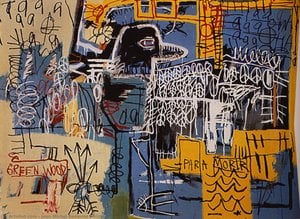
3of 100
Αμερικανός Born in Βρόκηλιν Neo-Εξπρεσιονισμός Wikipedia in 29/32 languages

By the early 1980s, Basquiat transitioned from graffiti to canvas, rapidly gaining recognition within the New York art world. His paintings weren’t easily categorized; they were a unique synthesis of influences ranging from Abstract Expressionism to tribal art, comic books, and historical painting. In the years since his death, Basquiat’s reputation has only grown.
4of 100
German and Swiss Born in Μύνχενμπουχζεε Expressionism, Cubism, Surrealism Wikipedia in 31/32 languages

Klee was a natural draftsman who possessed a deep, almost scientific understanding of color theory. He was also a prolific printmaker, utilizing zinc-plate etchings and lithographs to expand his visual language.
Where to see To find the traces of his prolific output, one might travel to Bern, Switzerland.
5of 100
American Born in Κόντυ Abstract Expressionism Wikipedia in 31/32 languages

By 1947, a profound shift had taken hold in the way he approached the canvas. This change allowed him to stand over his work, becoming part of the creative act itself. He was among the first American painters to be recognized as a peer of the great 20th-century European masters, proving that a new, visceral language could emerge from the soil of the United States.
Where to see In New York City, the Museum of Modern Art holds several of his canvases, allowing viewers to stand before the sprawling, uncentered compositions that defined his era.
6of 100
Ιταλός Born in Λιβόρνο Εκφρατισμός Wikipedia in 32/32 languages

In 1906, the pull of Paris became too strong to resist. He became close friends with the Romanian sculptor Constantin Brâncuși, a relationship that would influence his own approach to form.
Where to see In the United States, the Metropolitan Museum of Art in New York holds significant pieces, including a portrait of Jeanne Hebuterne from 1918.
7of 100
Αυστριακός Born in Τουλν αν ντερ Ντόναου Αυστριακός Εκφραστισμός Wikipedia in 32/32 languages

He moves through the city's artistic circles, eventually meeting Gustav Klimt. By 1909, he is actively challenging the established order, co-founding the Neues Wiener Kunstgruppe and the Neukunstgruppe. His departure from the decorative gold of the Secession movement toward a more visceral, psychological exploration of the human form changed the trajectory of figurative painting.
Where to see The weight of Schiele’s output is felt most heavily in Vienna.
Key works · The 100 most famous works
8of 100
Ιρλανδός Born in Δουβλίνο Εκφραστισμός, Κυβισμός, Σουρεαλισμός Wikipedia in 30/32 languages

Three Studies for Figures at the Base of a Crucifixion (1944). Three Studies for Figures at the Base of a Crucifixion (1944).
9of 100
Γερμανός Born in Δρέσδη ['Φωτορεαλισμός', 'Αβηρασία'] Wikipedia in 28/32 languages

In 1951, he begins formal studies at the Dresden Academy of Fine Arts. From 1957 to 1961, he remains within the academy's structure, working as a master trainee. In 1972, he represented West Germany at the Venice Biennale, a moment that solidified his standing on the international stage.
Where to see The physical presence of Richter’s practice spans major institutional collections across Europe.
10of 100
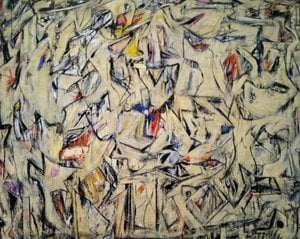
Ολλανδός-Αμερικανός Born in Ρότερνταμ Αφηρημένος Εξπρεσιονισμός Wikipedia in 30/32 languages

At twelve years old, Willem de Kooning leaves formal schooling behind to enter the world of commercial art. This period of focused training provides the essential tools for the radical shifts that await him across the Atlantic. In New York, de Kooning finds a mentor in Arshile Gorky.
Key works · The 100 most famous works
11of 100
American Born in Ογκάστα Wikipedia in 24/32 languages

The surface of a Johns painting often feels heavy and built up. This method allows for a physical depth that sits on the canvas, sometimes incorporating collage and newsprint directly into the wax. Later, in 2011, he received the Presidential Medal of Freedom.
Where to see To see his paintings and sculptures in person, one might travel to New York City.
12of 100
Αμερικανός Born in Ντάουγαβπύλς Χρωματική Προσκυνησία

The move to New York City in 1923 brought a shift in focus. He sought out the Art Students League to refine his practice. His shift toward large, luminous rectangles of color helped define the Abstract Expressionism movement and later influenced the Minimalist movement.
Where to see To stand before his canvases is to experience the weight of color in a quiet room.
14of 100
Αυστριακός, Τσεχικός, Βρετανικός Born in Πόχλαν Εκφρασιονισμός, Βιεννέζικη Αβανγκάρντ Wikipedia in 29/32 languages

He developed a nervously animated style, using bold lines and imagery that drew inspiration from Medieval compositions. He was a leading figure of the Expressionist movement, moving away from simple visual accuracy to capture something much deeper. In 1909, he wrote the short play Murderer, the Hope of Women, which is often recognized as one of the first Expressionist dramas.
15of 100
Γερμανός Born in Ασάφενμπουργκ Γερμανικός Εξπρεσιονισμός Wikipedia in 32/32 languages

This transient existence saw the family living in Frankfurt/Main from 1886, following a period spent in Perlen near Lucerne, Switzerland, between 1887 and 1889. After obtaining his school-leaving certificate in 1901, he enrolled at the university in Dresden to study architecture. Kirchner remains a central figure of the German Expressionist movement, a presence that helped define the visual language of a transformative era.
Where to see The physical presence of Kirchner’s vision is scattered across several major institutions, reflecting the international reach of his influence.
16of 100
Αρμένιος-Αμερικανός Born in Χόργομ Αφηρημένος Εκφρασιονισμός, Σουρεαλισμός Wikipedia in 24/32 languages

His early paintings show the influence of Impressionism and Post-Impressionism. One such early work, a self-portrait from about 1923–24, uses gestural marks to define the features of the face, focusing on the bridge of the nose and the weight of a collar. He acted as a bridge, connecting the Surrealist painters of Europe to the emerging American movement.
Where to see To see the physical traces of his hand, one might travel to Washington, D.C.
17of 100
Γερμανικός-Δανικός Born in Νόλτε Γερμανικός Εκφραστισμός Wikipedia in 28/32 languages

The Mocking of Christ (1909) – μια δυναμική και συναισθηματικά φορτισμένη θρησκευτική σκηνή. Autumn Sea (1908) - αποδεικνύοντας το εκφραστικό τοπικό του ζωγραφικό στυλ.
18of 100
German Born in Untermhaus ['Neue Sachlichkeit', 'Dadaism', 'Expressionism'] Wikipedia in 28/32 languages

19of 100
Βέλγος Born in Οστένδη ['Συμβολισμός', 'Εκφρασιονισμός'] Wikipedia in 25/32 languages

21of 100
Γερμανός Born in Λειψία Εκφρασιονισμός, Νέα Αντικειμενικότητα Wikipedia in 27/32 languages

Born into a middle-class family in Leipzig, Germany, Max Beckmann showed an early inclination toward drawing. As he matured, Beckmann found himself drawn to the Old Masters. While he often resisted the labels placed upon him, his work is widely considered a cornerstone of the German Expressionism movement.
Where to see Finding the physical traces of Beckmann's life requires traveling through the cities that shaped his exile and his later years.
22of 100
Αυστριακός Born in Βιέννη Νεορεαλισμός Wikipedia in 29/32 languages

Hundertwasserhaus (Βιέννη): Ίσως η πιο διάσημη δημιουργία του, το Hundertwasserhaus είναι ένα ζωντανό διαμέρισμα στη Βιέννη, που χαρακτηρίζεται από τους κυματιστούς ορόφους, τα ακανόνιστα παράθυρα και την πολύχρωμη πρόσοψη διακοσμημένη με δέντρα και φυτά. Εκπροσωπεί την άρνησή του προς τις ευθείες γραμλομάδες και τον τυποποιημένο σχεδιασμό.
23of 100
Γερμανός Born in Ντόναουεσχίνγκεν Νεοεκφραστισμός Wikipedia in 23/32 languages

25of 100
Γερμανική Born in Κούνιχσμπεργκ Εκφρατισμός Wikipedia in 28/32 languages

Her father, Karl Schmidt, was a progressive political figure—a radical social democrat and mason—while her maternal grandfather, Julius Rupp, instilled in young Käthe a potent blend of religious conviction and socialist ideals. In 1919, she achieved a historic milestone by becoming the first woman elected to the Prussian Academy of Arts—a testament to her artistic achievements and growing influence.
26of 100
Γάλλος Born in 19ο δημοτικό διαμέρισμα του Παρισιού Εκφρατισμός, Fauvismus Wikipedia in 23/32 languages

27of 100
Σκωτσέζος-Αμερικανός Born in Άμπερνεϊ Αρχιτεκτονική γλυπτική Wikipedia in 28/32 languages

Bailly και συμμετείχε σε μαθήματα με τον Thomas Eakins στην Pennsylvania Academy of Fine Arts. Η καλλιτεχνική του προσφορά περιλαμβάνει ορισμένα από τα πιο εντυπωσιακά μνημειακά έργα της εποχής: Δημοτικό Παλάτι Φιλαδέλφειας: μια τεράστια παραγγελία που περιλάμβανε περισσότερα από 250 κομμάτια σε μάρμαρο και μπρούντζο, η οποία απέκτησε 20 χρόνια για την ολοκλήρωσή της.
28of 100
Μεξικανοίς Born in Τσιουάουα Σοσιαλισμός Ρεαλισμός Μυρογραφία Wikipedia in 24/32 languages

29of 100
Αμερικανίδα Born in Μανχάταν Εκφραστισμός, Color Field Wikipedia in 19/32 languages

30of 100
Αμερικανός Born in Λέξινγκτον Εκφραστισμός Wikipedia in 21/32 languages

31of 100
Γερμανός-Αμερικανός Born in Νέα Υόρκη Εκφρατισμός Wikipedia in 23/32 languages

32of 100
Αμερικανός Born in Νέα Υόρκη Εκφρασμός Wikipedia in 23/32 languages

33of 100
Τσέχος Born in Οπότσνο (Τσεχία) Αβηραστία, Ορφικισμός Wikipedia in 24/32 languages

The Paris Museum of Modern Art (Παρίσι, Γαλλία).
36of 100
Γερμανός Born in Ντόιτςμπασελιτς Νεοεπιρρεπιονισμός Wikipedia in 26/32 languages

Throughout his prolific career, Baselitz’s artistic language has been a complex tapestry woven from myriad influences, ranging from the starkness of Socialist Realism and the dramatic tension of Mannerism to the primal rhythms of African sculpture.
37of 100
Αμερικανίδα Born in Μπρούκλιν Αφηρημένος Εκπερεσιονισμός Wikipedia in 17/32 languages

Key works · The 100 most famous works
38of 100
Γερμανός Born in Ροttenflut Εξπρεσιονισμός Wikipedia in 25/32 languages

Emotional Intensity: His work is characterized by a raw, visceral quality that reflects his deep engagement with the human condition. Landscape Focus: Throughout his career, he remained committed to depicting landscapes, often imbued with a sense of melancholy and isolation. His commitment to artistic innovation extended beyond his own practice; through an endowment established in 1964, he laid the foundation for the Brücke Museum in West Berlin, ensuring that the legacy of Die Brücke would endure for generations to come.
39of 100
Γερμανο-Γάλλος Born in Λειψία Γεστιαλισμός και Αφηρημένος Εκφραστισμός Wikipedia in 15/32 languages

40of 100
British Born in Βερολίνο School of London Wikipedia in 17/32 languages

The 1950s saw Auerbach establishing his presence through exhibitions at the Beaux Arts Gallery in London. He didn’t shy away from portraying the harsh realities of post-war Britain, focusing on scenes of everyday existence—busy streets, anonymous figures, and the architectural fabric of the city. A major retrospective at the Hayward Gallery in 1978 cemented his reputation, followed by inclusion in the groundbreaking “A New Spirit in Painting” exhibition at the Royal Academy of Arts in 1981.
42of 100
Αμερικανός Born in Γουίλκς Μπέαρ Εκφραστισμός Wikipedia in 17/32 languages

44of 100
Ινδός Born in Πάνδχαρχούρ Κουβιστικές αφηγηματικές ζωγραφιές Wikipedia in 14/32 languages

His ability to synthesize the structural rigor of Western abstraction with the emotive richness of Eastern storytelling created a unique visual dialect that resonated across continents. Through his unwavering dedication to his vision, he ensured that the essence of Indian modernism would forever be etched into the global consciousness. Born in 1915 in the small town of Pandharpur, Maharashtra, his early years were steeped in the vibrant cultural textures of rural India.
45of 100
Γερμανός Born in Μέσεντε Εκφρασιονισμός, Φαυβισμός, Ορφισμός, Κουβισμός Wikipedia in 28/32 languages

This pursuit of light and color reached a peak during his travels to North Africa. His Tunisian watercolors from 1914 reveal an exceptional command of color, capturing the intense, shifting light of the region. This was no passing interest; he returned to Paris frequently between 1907 and 1912, allowing the atmosphere of the French capital to reshape his perception of the canvas.
Where to see To walk through the rooms where his spirit remains, one might travel to Bonn, Germany.
46of 100
Ρώσος Born in Τορζόκ Εκφρασιονισμός Wikipedia in 23/32 languages

47of 100
Καναδο-Αμερικανός Born in Μόντρεαλ ['Αφηρημένος Εξπρεσιονισμός', 'Νέο-Εκφραστισμός'] Wikipedia in 15/32 languages

48of 100
Γερμανός Born in Γκβαρντέισκ Ιμπρεσιονισμός & Έκφρασιασμός Wikipedia in 24/32 languages

50of 100
Born in Πεκίνο ['Art Deco των 1920', 'Εκφραστισμός', 'Αφηθειός τέχνη'] Wikipedia in 12/32 languages

While precise details regarding this artist's early life are limited, it’s reasonable to assume that the tumultuous years following World War I profoundly shaped their artistic trajectory. The influence of earlier movements such as Impressionism and Post-Impressionism is also likely present, providing a foundation upon which to build more radical departures. Furthermore, the burgeoning interest in psychology, spearheaded by figures like Sigmund Freud, fueled explorations into the hidden depths of the human psyche—a theme that would become increasingly prominent in their work.
51of 100
Ελβετία Born in Βάχσελντορν Εκφρατισμός και Βαυαρς Wikipedia in 21/32 languages

52of 100
Πολωνός Born in Βαρσοβία Συμβολισμός, Σουρεαλισμός Wikipedia in 27/32 languages

53of 100
Γερμανός Born in Ντόμπελν Γερμανικός Εκφρασιονισμός Wikipedia in 22/32 languages

Die Brücke’s Aims: The group aimed to bridge traditional neo-romantic German painting with modern Expressionist approaches. Influences: Heckel and the other members of Die Brücke were heavily influenced by Edvard Munch's expressive style and African sculpture, which they saw as embodying a raw, primitive power. Expressionist Pioneer: Erich Heckel is recognized as a key figure in the Expressionist movement, particularly for his contributions to Die Brücke.
54of 100
Αυστριανο-Αμερικανός Born in Βιέννη Δωδεκατονική τεχνική; Εκφραστισμός Wikipedia in 31/32 languages

Adorno και Carl Dahlhaus. [https://AllPaintingsStore.com/@@/a@d3cl2x--a-journey-through-art-history-with-AllPaintingsStore-s-extensive-collection-](εξερευνήστε την τεράστια συλλογή τέχνης στο AllPaintingsStore, που εκτείνεται από τον 12ο έως τον 20ό αιώνα).
56of 100
Spanish Born in Τσβίκαου Cubism, Surrealism Wikipedia in 21/32 languages

As his reputation grew, Pechstein’s canvases became windows into the shifting spirit of post-WWI Germany.
57of 100
Ουγγρός Born in Βυζάντιο Σύγχρονη ουγγρική τέχνη Wikipedia in 18/32 languages

Born in Budapest on March 15th, 1894, Vilmos Aba-Novák’s early life was marked by an exposure to the visual arts. He initially studied at the Budapest Art School until 1912, laying the groundwork for his future career. His legacy extends beyond individual artworks; he helped to establish a distinctly Hungarian modern style that blended influences from Expressionism, the Italian Novecento, and his own unique artistic vision.
58of 100
Serbian Born in Čačak Expressionism & Fauvism Wikipedia in 27/32 languages

Nadežda Petrović (Serbian Cyrillic: Надежда Петровић; 11/12 October 1873 – 3 April 1915) was a Serbian painter and one of the women war photography pioneers in the region. Graduating in 1891, she taught there for a period beginning in 1893 before moving to Munich to study with Slovenian artist Anton Ažbe. Petrović’s relocation to Munich in 1901 proved transformative, exposing her to the burgeoning avant-garde movements of Expressionism and Fauvism.
60of 100
Βελγίζιος Born in Αμβέρσα Εθνική Έκφραση Wikipedia in 16/32 languages

The monumental sculptures he undertook during this era – notably “Niobe” (1946) – exemplify his commitment to capturing raw emotion and confronting existential anxieties. His sculptures, including “De zaaier” (1939) and “De drie gratiën” (1949), stand as testament to his artistic ambition and enduring influence.
61of 100
Βουλγαρικός Born in Βίντιν Σχολή του Παρισιού Wikipedia in 18/32 languages

Nude with a Green Hat (1925): Ένα εντυπωσιακό δείγμα των μελετών του για το γυμνό σώμα, που αναδεικνύει την κυριαρχία του στο χρώμα και τη μορφή. Σήμερα φυλάσσεται στο Cincinnati Art Museum. Little Girl on an Armchair (1925): Αποδεικνύει την ικανότητά του να αιχμαλωτίζει την αθωנות και την ομορφιά σε ένα οικιακό περιβάλλον. Loose Women (1911): Ένα προκλητικό έργο που αντανακλά τις αλλαγές στις κοινωνικές νόρμες του αρχαιού 20ού αιώνα.
62of 100
Γερμανός Born in Γρόζ Νιέντορφ Εκφραστισμός Wikipedia in 15/32 languages

Rohlfs’s artistic output is remarkably diverse, encompassing landscapes that resonate with palpable emotion—particularly those depicting mountainous terrains and dramatic skies—and religious scenes imbued with spiritual fervor. The influence of Impressionism and Post-Impressionism is evident in his early works—particularly in the atmospheric renderings of Weimar—yet he swiftly transitioned toward a more expressive idiom that prioritized emotional intensity over visual realism. The Christian Rohlfs Museum in Hagen serves as a poignant reminder of his artistic vision and continues to inspire viewers with its evocative collection of landscapes and prints, cementing his place as one of the most significant voices within the Expressionist movement.
63of 100
German Born in Duisburg Expressionism

Emotional Depth: A unique ability to capture the essence of human vulnerability and existential solitude.
64of 100
Ρωσικά-Γαλλικό Born in Βιτσέμπσκ Κυβισμός, Μοντερνισμός Wikipedia in 23/32 languages

65of 100
Αμερικανός Born in Γρανίδος Abstract Expressionism Wikipedia in 12/32 languages

66of 100
Αυστριακός Born in Βιέννη Εκφραστισμός Wikipedia in 15/32 languages

67of 100
Αμερικανός Born in Πόρτλαντ Λυρική Αβηραστία Wikipedia in 9/32 languages

69of 100
Βρετανός Born in Ισlington Εξωτερικός Καρφίνος και Ρομαντισμός

73of 100
Romanian Born in Iași ['Expressionism', 'Dadaism']

Segal’s formative years were spent in Romania, absorbing the artistic traditions of the region while simultaneously encountering the burgeoning avant-garde currents emanating from Berlin. A subsequent period in Paris and Italy allowed him to immerse himself in the vibrant artistic scene of the time, encountering the innovations of Post-Impressionism and early Modernism.
74of 100
Born in Ντόλσαχ Wikipedia in 13/32 languages

Justina-Rentsch, Bozen/Bolzano, Νότια Τιρόλη/Alto Adige, Ιταλία, αφήνοντας πίσω του μια πλούσια καλλιτεχνική κληρονομιά.
75of 100
Αμερικανός Born in Νέα Υόρκη Αφηρημένη έκφραση Wikipedia in 12/32 languages
76of 100
Canadian Born in Montreal Lyrical Abstraction Wikipedia in 14/32 languages

Les Automatistes: Riopelle was a member of Les Automatistes in the 1940s, embracing Surrealist principles and exploring spontaneous creation. Move to Paris (1947): His relocation to Paris proved transformative, leading to his first solo exhibition at Galerie La Dragonne in 1949. Riopelle was the first Canadian painter since James Wilson Morrice to achieve widespread international recognition.
77of 100
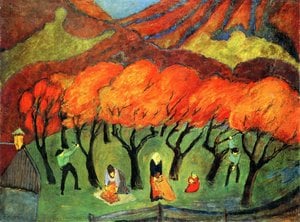
German Born in Berlin Expressionism Wikipedia in 18/32 languages

Gabriele Münter stands as a pivotal figure in the vibrant landscape of early 20th-century German art, a painter whose contributions to Expressionism were long overshadowed but are now rightfully celebrated. She joined his Phalanx school in 1901, where she absorbed the principles of Post-Impressionism and experimented with innovative techniques like using palette knives to apply paint—a method that would become a hallmark of her style.
78of 100
Κορεατική Born in Ευλην Αντιαιρετικός Πινέλος

These paintings transcended mere visual depiction; they embodied Yoo’s profound contemplation of nature's grandeur and resilience—a testament to his ability to distill its essence into pure form and color. His meticulous attention to detail, combined with a masterful command of compositional techniques, elevated his work to the pinnacle of aesthetic achievement. Following his graduation from Bunka Gakuin University in Tokyo in 1938 with a Bachelor of Fine Arts degree, Yoo immersed himself in the vibrant artistic landscape of Japan—a period profoundly shaped by Western avant-garde movements.
79of 100
Polish Born in Leorda Expressionism Wikipedia in 11/32 languages

Weiss's distinctive style is characterized by intense emotion conveyed through muted color palettes and dynamic brushstrokes—a hallmark of Expressionism. His canvases capture psychological states with remarkable sensitivity, reflecting the anxieties and uncertainties of his time. Furthermore, he engaged with Symbolist artists such as Edvard Munch and Gustav Klimt, incorporating evocative imagery and psychological depth into his compositions.
80of 100
Αμερικανός Born in Μπάφαλο Εικαστική Αβημότητα Wikipedia in 12/32 languages

82of 100
Austrian Born in Bzenec Vienna Secession Wikipedia in 13/32 languages

His relocation to Vienna in 1879 marked the beginning of a transformative era for both the artist and the city itself, as he moved from the quietude of his Czech origins toward the vibrant, pulsing energy of a burgeoning metropolis. While he achieved significant professional milestones—including being awarded the prestigious Villa Romana prize in 1905 and serving as a respected professor at the Frauenkunstschule —his personal existence was often shadowed by an innate sense of melancholy.
83of 100
French Born in Paris Expressionism

By the late 1950s, shifting artistic tides toward total abstraction and criticisms regarding his prolific output and lavish lifestyle led to a period of professional alienation. Nevertheless, Buffet’s dedication to his craft never wavered. Despite his immense success, Buffet’s journey was not without its tribulations.
84of 100
German/Dutch Born in Krefeld Der Blaue Reiter Wikipedia in 13/32 languages

The Blaue Reiter’s emphasis on symbolism, spirituality, and the connection between art and nature profoundly impacted Campendonk's work, leading him to incorporate elements of folklore, mythology, and dream imagery into his compositions.
85of 100
Αμερικανός Born in Κεντέρβιλ Αντιεκφραστισμός Wikipedia in 14/32 languages

86of 100
Scottish Expressionism; Surrealism

During his formative years at the Edinburgh College of Art, he forged lasting bonds with contemporaries such as Alan Bold and Alexander Moffat, contributing to a movement dedicated to revitalizing Scottish art through a blend of local heritage and international influence. John Bellany’s contribution to British art history is marked by his ability to elevate regional Scottish identity to a universal stage.
87of 100
Ολλανδός Born in Σέρτοχενμπος Εκφραστισμός, Λουμινισμός Wikipedia in 8/32 languages

88of 100
German Born in Soest Expressionism Wikipedia in 11/32 languages

His service, which earned him the Iron Cross, ultimately led to his untimely death near Langemark, Belgium, in August 1917, at the age of only twenty-six.
90of 100
Αμερικανός Born in Μπέρμινγκχαμ Νεοεκφρασιονισμός Wikipedia in 8/32 languages

Born on October 17, 1955, in Birmingham, Alabama, Marshall’s early life was shaped by the profound social tremors of the American South and the subsequent migration to Los Angeles. From his tenure as a professor at the University of Illinois at Chicago to major retrospective exhibitions like Kerry James Marshall: Mastry at the Museum of Contemporary Art, Chicago, his influence permeates both the academy and the public consciousness.
91of 100
Βέλγρος Born in Γκέντ Φλαμανικός Εκφρασιονισμός Wikipedia in 10/32 languages

During his time in the Netherlands, his work was influenced by the Bergen School and the works of Henri Le Fauconnier. Despite facing financial hardships during the Great Depression, which led to the bankruptcy of the Galerie Le Centaure and the sale of many of his works, he remained dedicated to his craft.
92of 100
French Cubism

As a founding member of the Hetek painting group, he stood at the forefront of a generation that sought to redefine Hungarian and European art through a lens of radical modernity.
93of 100
German Born in Dusseldorf New Objectivity & Realism

His landscapes—particularly “ Early Morning in the Eifel Mountains ”—capture the serene beauty of the Rhineland region with remarkable precision and tonal subtlety.
94of 100
British Biblical scenes, female figures
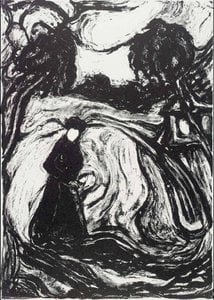
Her use of light and shadow was particularly masterful, imbuing her figures with a sense of depth and psychological complexity. Beyond the technical aspects, Ascher’s process involved a deep engagement with the source material. Her influence can be seen in later generations of artists who sought to infuse their work with personal meaning and social commentary.
95of 100
Belgian Born in Ghent Expressionism, Surrealism Wikipedia in 10/32 languages

Notably, he collaborated on a comic strip series with Jean Ray, further demonstrating his versatility as an artist. His legacy endures as one of the most significant figures of the Belgian Expressionist movement. Van Hecke’s unwavering support provided Van den Berghe with crucial exposure and access to the artistic circles of Brussels and Ghent.
96of 100

A pivotal trip to Russia in 1906 profoundly influenced his artistic direction, exposing him to new perspectives and a more expressive aesthetic. Financial support from art dealer Paul Cassirer allowed Barlach to develop his unique style, focusing on the emotional intensity of human figures.
97of 100
American Born in Βηρυτός ['Assemblage', 'Pop Art', 'Neo-Dada'] Wikipedia in 17/32 languages

99of 100
Ρωσο-Λιθουανός Born in Νόβγκοροντ Εκφραστισμός, Τοπία Πόλεων

100of 100
German Born in Krefeld Expressionism Wikipedia in 10/32 languages

Unlike many artists who sought grand urban centers, Nauen found his creative haven in the Rhineland, a region steeped in folklore, rural beauty, and a deep connection to the land – influences that would irrevocably shape his distinctive style. Nauen’s formal training began at the Kunstakademie Düsseldorf in 1898, where he honed his skills under the tutelage of established masters. While Nauen’s work predates the formal establishment of German Expressionism, it undeniably shares many key characteristics with the movement.
The paintings behind the names
Through time
In figures
| Ηνωμένες Πολιτείες Αμερικής | 20 |
|---|---|
| Γερμανία | 18 |
| Αυστρία | 6 |
| Germany | 6 |
| Ρωσία | 5 |
| Βέλγιο | 3 |
| Ελβετία | 2 |
| Ολλανδία | 2 |
| 1840s | 1 |
|---|---|
| 1850s | 1 |
| 1860s | 10 |
| 1870s | 16 |
| 1880s | 22 |
| 1890s | 9 |
| 1900s | 13 |
| 1910s | 8 |
| 1920s | 10 |
| 1930s | 4 |
| 1940s | 2 |
| 1950s | 3 |
| 1960s | 1 |
All of them, in order
Βασίλι ΚαντίνσκιRussian · 1866–1944 Έντβαρντ ΜουνχΝορβηγικός · 1863–1944Ζαν Μισέλ ΜπασκιάΑμερικανός · 1960–1988Πάουλ ΚλέεGerman and Swiss · 1879–1940Τζάκσον ΠόλοκAmerican · 1912–1956Αμεντέο ΜοντιλιάνιΙταλός · 1884–1920Έγκον ΣίλεΑυστριακός · 1890–1918Φράνσις ΜπέικονΙρλανδός · 1909–1992Γκέρχαρντ ΡίχτερΓερμανός · born 1932Βίλεμ ντε ΚούνινγκΟλλανδός-Αμερικανός · 1904–1997Τζάσπερ ΤζονςAmerican · born 1930Μάρκος ΡόθκοΑμερικανός · 1903–1970
 Φραντς ΜαρκΓερμανός · 1880–1916Όσκαρ ΚοκόσκαΑυστριακός, Τσεχικός, Βρετανικός · 1886–1980Ερνστ Λούντβιχ ΚίρχνερΓερμανός · 1880–1938Άρσιλε ΓκόρκυΑρμένιος-Αμερικανός · 1904–1948Έμιλ ΝόλντεΓερμανικός-Δανικός · 1867–1956Ότο ΝτιξGerman · 1891–1969Τζέιμς ΈνσορΒέλγος · 1860–1949
 Χαΐμ ΣουτίνΓάλλος · 1893–1943Μαξ ΜπέκμανΓερμανός · 1884–1950Φριντενσράιχ ΧουντερτβάσερΑυστριακός · 1928–2000Άνσελμ ΚίφερΓερμανός · born 1945
 Λούσιαν ΦρόιντΒρετανός · 1922–2011Κέτε ΚόλβιτςΓερμανική · 1867–1945Γιώργος ΡουάουλτΓάλλος · 1871–1958Αλεξάντερ ΚάλντερΣκωτσέζος-Αμερικανός · 1898–1976Νταβίντ Αλφάρο ΣικέιροςΜεξικανοίς · 1896–1974Ηλέν FranklinΑμερικανίδα · 1928–2011Κύρος ΤβόμπλιΑμερικανός · 1928–2011Λάιονελ ΦάινινγκερΓερμανός-Αμερικανός · 1871–1956Barnett NewmanΑμερικανός · 1905–1970Φράντισεκ ΚούπκαΤσέχος · 1871–1957
 Παולה Μόντερσον-Μπέκερ1876–1907
 Ιούλιος ΣνάμπελΑμερικανός · born 1951Γεόργκ ΜπασέλιτςΓερμανός · 1938–2026Λη ΚράσνερΑμερικανίδα · 1908–1984Καρλ Σμιτ-ΡότλουφΓερμανός · 1884–1976Χανς ΧαρτγκΓερμανο-Γάλλος · 1904–1989Φρανκ ΆουερμπαχBritish · 1931–2024
 Ρόμπερτ Μάδεργουελ1915–1991Φρανς ΚλινέΑμερικανός · 1910–1962
 Πέτρος ΝτοΐγκΣκωτσέζος · born 1959Μ. Φ. ΧουσείνΙνδός · 1915–2011Αουγκούστ ΜάκεΓερμανός · 1887–1914Αλέξαι Βον ΓιαβλενσκιΡώσος · 1864–1941Φίλιπ ΓκουστόνΚαναδο-Αμερικανός · 1913–1980Λόβις ΚορίντΓερμανός · 1858–1925
 Άλις Νιλ1900–1984Ζάο Γου-Κί1920–2013Γιοχάνες ΊττενΕλβετία · 1888–1967Στανίσουαφ Ιγκνάτσι ΒιτκιέβιτςΠολωνός · 1885–1939Έριχ ΧέκελΓερμανός · 1883–1970Άρνολντ ΣένμπεργκΑυστριανο-Αμερικανός · 1874–1951
 Μαρία ΒερύκκηΡωσική · 1860–1938Μαξ ΠέχσταϊνSpanish · 1881–1955Βίλμος Άμπα-ΝόβακΟυγγρός · 1894–1941Nadežda PetrovićSerbian · 1873–1915
 Ότο Μούλερ1874–1930Κώστας ΠερμέκηςΒελγίζιος · 1886–1952Γιούλιος ΠινκαςΒουλγαρικός · 1885–1930Κριστιανός ΡόλφςΓερμανός · 1849–1938Wilhelm LehmbruckGerman · 1881–1919Οσίπ ΖάντκινΡωσικά-Γαλλικό · 1888–1967Κλήςφορντ ΣτιλλΑμερικανός · 1904–1980Ρίχαρντ ΓκερστλΑυστριακός · 1883–1908Ρίτσαρντ ΔιαμπέκνερΑμερικανός · 1922–1993
 Τζον Μάριν1870–1953Κάρλος Χένρι ΣαϊμςΒρετανός · 1873–1928
 Γιάννης ΤσαρούχηςΈλληνας · 1910–1989
 Αρθούρος ΣίσκινδΑμερικανός · 1903–1991
 Χάνς Χόφμαν1880–1966Arthur SegalRomanian · 1875–1944Άλμπιν Έγκερ-Λιεντς1868–1926Αδόλφος ΡεντίναρντΑμερικανός · 1903–1974Jean-Paul RiopelleCanadian · 1923–2002Gabriele MünterGerman · 1877–1962Γιώργος ΓιουνγκκούκΚορεατική · 1916–2002Wojciech WeissPolish · 1875–1950Αδόλφος ΡεντίναρντΑμερικανός · 1913–1967
 Καρλ ΜπλόσφελντΓερμανός · 1865–1932Max KurzweilAustrian · 1867–1916Bernard BuffetFrench · 1928–1999Heinrich CampendonkGerman/Dutch · 1889–1957Μαρκ ΤόμπιΑμερικανός · 1890–1976John BellanyScottish · 1942–2013Γιαν ΣлуйτερςΟλλανδός · 1881–1957Wilhelm MorgnerGerman · 1891–1917
 Πολ ΤζένκινςΑμερικανός · 1923–2012Κερί Τζέιμς ΜάρσαλΑμερικανός · born 1955Γκιστάβ Ντε ΣμέΒέλγρος · 1877–1943Armand SchonbergerFrench · 1885–1974Werner PeinerGerman · 1897–1984Mary AscherBritish · 1900–1988Frits Van Den BergheBelgian · 1883–1939Ernst Barlach1870–1938Ετέλ ΑντνάνAmerican · 1925–2021
 Λίντς ΓουάρντΑμερικανός · 1905–1985Μστισλάβ ΝτομποζίνσκιΡωσο-Λιθουανός · 1875–1957Heinrich NauenGerman · 1880–1940
Your questions, answered
First place goes to Βασίλι Καντίνσκι (#1); Έντβαρντ Μουνχ (#2) and Ζαν Μισέλ Μπασκιά (#3) complete the podium.
Βασίλι Καντίνσκι (#1), Έντβαρντ Μουνχ (#2), Ζαν Μισέλ Μπασκιά (#3), Πάουλ Κλέε (#4) and Τζάκσον Πόλοκ (#5).
The highest-ranked painters born in Γερμανία are Γκέρχαρντ Ρίχτερ (#9), Φραντς Μαρκ (#13), Ερνστ Λούντβιχ Κίρχνερ (#15), Ότο Ντιξ (#18) and Μαξ Μπέκμαν (#21).
The museums holding the most key works of this list are Μετροπολιτικό Μουσείο Τέχνης (5), Solomon R. Guggenheim Museum (4) and Museum Folkwang (4).
Νέα Υόρκη: 4 of the painters in this list were born there.
Most painters in this list were born in the 1880s (22 of 100), between 1849 and 1960 overall.
The earliest-born painter in this list is Κριστιανός Ρόλφς (#62), born in 1849.
The highest-ranked living painters in this list are Γκέρχαρντ Ρίχτερ (#9), Τζάσπερ Τζονς (#11), Άνσελμ Κίφερ (#23), Ιούλιος Σνάμπελ (#35), Πέτρος Ντοΐγκ (#43) and Κερί Τζέιμς Μάρσαλ (#90).
“This process was less about controlled brushwork and more about a rhythmic, almost primal release of energy onto the surface.” — from our biography of Τζάκσον Πόλοκ (#5).
The highest-ranked painters born in Ηνωμένες Πολιτείες Αμερικής are Ζαν Μισέλ Μπασκιά (#3), Τζάκσον Πόλοκ (#5), Τζάσπερ Τζονς (#11), Αλεξάντερ Κάλντερ (#27) and Ηλέν Franklin (#29).
Ηνωμένες Πολιτείες Αμερικής: 20 of the 100 painters in this list were born there, then Γερμανία (18) and Αυστρία (6).
Our catalogue holds 16,739 works by these painters.
Keep reading
Other movements
 Famous Baroque artistsRembrandt van Rijn · Ρέμπραντ
 Famous Contemporary Realist artistsΟι Συλλέκτριες · Ζαν Φρανσουά Μιγέ
 Famous Impressionist artistsΗ Νύχτα Πλούσια Στα Άστρα (Νέα Υόρκη, MoMA) · Βίνσεντ Βαν Γκογκ
 Famous Romanticist artistsΚρόνος να καταβροχθίζει τον Γιο του · Φρανθίσκο Γκόγια
 Famous Neoclassicist artistsΗ Σταυροφόρος του Μαρά · Ζακ-Λουί Νταβίντ
 Famous Realist artistsΗ Αρχή του Κόσμου · Γκυστάβ Κουρμπέ
 Famous Renaissance artistsΜόνα Λίζα (La Gioconda) · Λεονάρντο Ντα Βίντσι
 Famous Dutch Golden Age artistsΤο Κορίτσι με το Μαργαριτάρι · Γιοχάνες Βερμέερ
 Famous Rococo artistsΗ Πρώτη Επίσκεψη στην Κύθηρα · Αντουάν Βαττώ
 Famous Pop Art artistsΚάνσελς Κάμπελ Πουρ · Άντι Γουόρχολ
Other periods
 Famous Early Medieval artistsSnowy River · Wáng Wéi
 Famous High Medieval artistsΜάδονα σε Μαέστα (Μάδονα Ογνιαντίνι) · Τζόττο
 Famous Late Medieval artistsΗ Αναγγελία και οι Δύο Άγιοι · Σιμόνε Μαρτίνι
 Famous Renaissance artistsΗ Δημιουργία του Αδάμ · Μιχαήλ Άγγελος
 Famous Early Modern artistsΗ Κλήση του Ματθαίου · Καραβάτζο
 Famous 19th Century artistsΝυφάδες του Νερού (ή Λιλιές του Νερού) · Κλόντ Μονέ
 Famous Modern artistsΓκουέρνικα · Πάμπλο Πικάσο
 Famous Contemporary artistsWind Sculpture III (one in a series of nine) · Yinka Shonibare
More rankings