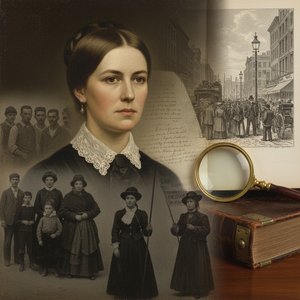
Samuel Sidley: A Victorian Portraitist of Dignified Grace
Samuel Sidley (1829–1896) stands as a significant, yet often understated, figure in 19th-century British art. Primarily known for his distinguished portraits of prominent politicians, intellectuals, and members of the aristocracy, Sidley’s work offers a compelling glimpse into the social fabric and cultural values of Victorian England. His paintings are characterized by a restrained elegance, a meticulous attention to detail, and a subtle psychological depth that elevates them beyond mere likenesses, revealing the character and bearing of his subjects.
Born in Yorkshire, Sidley’s artistic journey began with studies at Manchester School of Art before he transitioned to London and enrolled at the Royal Academy. This formal training provided him with the technical skills necessary for his craft, but it was his keen observational abilities and a refined aesthetic sensibility that truly defined his style. Unlike some of his contemporaries who embraced flamboyant Romanticism, Sidley favored a more measured approach, prioritizing accuracy and dignity in his representations.
The Art of Portraiture: Technique and Style
Sidley’s portraits are notable for their technical mastery and adherence to academic conventions. He was a skilled draughtsman, evident in the precise rendering of clothing textures, facial features, and the subtle nuances of posture. His palette tended towards muted tones – browns, grays, and creams – creating an atmosphere of quiet contemplation and understated elegance. This restrained color scheme allowed his subjects’ personalities to shine through without being overwhelmed by dramatic hues.
A key element of Sidley's style was his ability to capture the essence of his sitters. He didn’t simply record their physical appearance; he sought to convey their character, status, and inner lives. This is particularly evident in portraits like those of Bishop Colenso, presented by his family to the National Portrait Gallery, where the subject’s gravitas and intellectual depth are powerfully communicated. His work often reflects a sense of quiet authority and dignified composure – hallmarks of Victorian ideals.
Notable Portraits and Commissions
Sidley's career was marked by numerous prestigious commissions, solidifying his reputation as one of London’s leading portrait painters. Among his most celebrated works are portraits of Professor Fawcett, a prominent academic; Lady Brassey, the wife of a powerful figure in British society; and, perhaps most famously, the Duke and Duchess of Buckingham. These paintings not only served as official representations but also became treasured family heirlooms, reflecting the esteem in which Sidley was held.
Beyond these well-known portraits, Sidley also produced a series of subject pictures, including *Alice in Wonderland* (engraved and published) and *The Challenge*, demonstrating his versatility and willingness to explore different themes. These works showcased his ability to capture narrative and emotion within a single image.
Historical Context and Legacy
Samuel Sidley’s work is inextricably linked to the Victorian era, a period of immense social, political, and cultural change. His portraits offer valuable insights into the values, aspirations, and anxieties of the time. The emphasis on decorum, respectability, and social standing in his paintings reflects the prevailing norms of Victorian society.
While Sidley may not be as widely celebrated as some of his contemporaries – such as Sir Thomas Lawrence or William Rothenstein – his portraits possess a quiet dignity and understated elegance that continues to resonate with viewers today. He represents a significant, yet often overlooked, voice in the history of British portraiture, offering a nuanced and compelling portrayal of Victorian life.
Further Resources
- Art UK: Samuel Sidley (1829–1896) - Art UK
- Wikipedia: Samuel Sidley
- WahooArt: Samuel Sidley