
1879 - 1954

Life and Artistic Career

Ernst Müller-Gräfe was a German painter and graphic artist born in Nobitz, Germany. He received his training at the Lindenau Drawing School of the Art Association in Altenburg and later studied at the Dresden Academy of Fine Arts under Gotthardt Kuehl and Oskar Zwintscher, becoming a master student in 1898. Following his studies, he worked as a freelance artist in Dresden and operated a private painting school. His career included serving as a soldier on the Western Front during the First World War, during which time he continued to create art, such as the drawing Vor Verdun. Gefangener Tunesier.

Müller-Gräfe's diverse body of work encompassed various media, including oil paintings, graphics, woodcuts, drawings, and pastels. He was also known for his designs for posters, book illustrations, and coats of arms, including the state coat of arms of Thuringia and the municipal seals of 56 municipalities. His artistic output included significant interior decorations, such as the staircase in the Lindenau Museum and the memorial chapel at the St. Annen City Church in Annaberg-Buchholz.

Works and Legacy

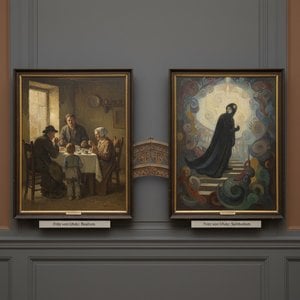
The artist's repertoire included several notable cycles and monumental works. In 1922, he completed a cycle of three large-format expressive individual paintings depicting scenes of happiness, labor, and suffering. Other significant works include the fresco in the Altenburg Crematorium and various murals in Altenburg. His expressive works were later classified as "degenerate" by the National Socialists, leading to the seizure and destruction of many of his paintings, drawings, and prints from various museum collections.

His surviving works and legacy are represented in several institutions, including:
Δοκιμάστε το μάτι σας

Για κάθε ερώτηση υπάρχει μόνο μία σωστή απάντηση.

Ερώτηση 1:
In which city did Ernst Müller-Gräfe study at the Academy of Fine Arts starting in 1897?
Ερώτηση 2:
Which famous expressionist painter was a student of Müller-Gräfe in 1910?
Ερώτηση 3:
Müller-Gräfe designed the coat of arms for which German state?
Ερώτηση 4:
What type of artwork did Müller-Gräfe create for the Lindenau-Museum staircase in 1911?
Ερώτηση 5:
Which event led to many of Müller-Gräfe's expressive works being confiscated and destroyed in 1937?

Ερωτήσεις και Απαντήσεις

Μπορώ να περιηγηθώ στα έργα του/της Ernst Müller-Gräfe ανάλογα με τη διάθεση;

Μπορείτε να περιηγηθείτε στα έργα του Ernst Müller-Gräfe ανάλογα με τη διάθεση στη σελίδα Κόρνερ Αίσθησης, η οποία ταξινομεί τα έργα τέχνης σύμφωνα με τη διάθεση που αποπνέουν.

Σε ποια ιστορική περίοδο δραστηριοποιήθηκε ο/η Ernst Müller-Gräfe;

Ο/Η Ernst Müller-Gräfe δραστηριοποιήθηκε κατά την περίοδο του/της Modern. Η συγκεκριμένη εποχή τοποθετεί τη δραστηριότητα του/της καλλιτέχνη/στη στην ιστορία.

Υπάρχει χρονολόγιο με τα έργα του/της Ernst Müller-Gräfe;

Η σελίδα Χρονολόγιο Έργων του καλλιτέχνη παρουσιάζει τα έργα του Ernst Müller-Gräfe ταξινομημένα ανά ημερομηνία, έτος προς έτος.

Πού μπορώ να δω το χρωματικό προφίλ των έργων του Ernst Müller-Gräfe;

Το χρωματικό προφίλ των έργων του/της Ernst Müller-Gräfe εμφανίζεται στη σελίδα Γενετικό Σύστατο Παλέτας του καλλιτέχνη/της.

Πού και πότε γεννήθηκε ο/η Ernst Müller-Gräfe;

Ο/Η Ernst Müller-Gräfe γεννήθηκε στην/στη Nobitz το 1879.

Υπάρχει μια επισκόπηση όλων των θεμάτων που έχει ζωγραφίσει ο/η Ernst Müller-Gräfe;

Η σελίδα Ατλάς Θεμάτων αναλύει τα έργα του Ernst Müller-Gräfe ανά θέμα.

Από πού προέρχεται ο/η Ernst Müller-Gräfe;

Ο/Η Ernst Müller-Gräfe γεννήθηκε στην/στη Germany.

Μπορώ να επισκεφτώ ένα εικονικό μουσείο με τα έργα του Ernst Müller-Gräfe;

Τα έργα τέχνης του/της Ernst Müller-Gräfe μπορούν να περιηγηθούν σε μια 3D γκαλερί στη σελίδα 3D Μουσείο του καλλιτέχνη/της.

Μπορώ να περιηγηθώ στα έργα του/της Ernst Müller-Gräfe ανά τεχνική;

Η σελίδα Κατά Τεχνική ομαδοποιεί τα έργα του/της Ernst Müller-Gräfe ανά τεχνική.