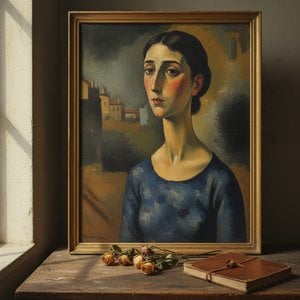
1876 - 1940

Bruno Kruse: Sculptor of Quiet Strength

Bruno Kruse (1876 – 1940) was a German sculptor and medallist whose oeuvre embodies the understated elegance characteristic of Art Deco while simultaneously grappling with profound themes of mortality and remembrance. Born in Düsseldorf, Kruse’s formative years were marked by exposure to the avant-garde artistic currents circulating within the city's Kunstakademie, fostering an appreciation for both classical tradition and experimental innovation that would permeate his entire artistic career. He honed his craft diligently, mastering techniques ranging from bronze casting to stone carving, establishing himself as a respected figure in Düsseldorf’s artistic milieu.
  • Early Life & Education: Kruse's formal training at the Kunstakademie Düsseldorf instilled in him a meticulous approach to craftsmanship and an understanding of sculptural principles rooted in Greco-Roman aesthetics. However, he wasn’t solely confined to academic pursuits; his involvement with socialist circles during the Weimar Republic exposed him to politically charged ideas that would subtly inform his artistic vision.
  • Notable Works: Kruse gained international recognition for several monumental sculptures, notably “Man with Scythe – Quitting Time” (1900), a poignant depiction of death and decay executed in bronze—a testament to Kruse’s ability to convey complex emotions through simplified forms. His work also includes numerous medals commemorating historical figures and events, demonstrating his mastery of detail and precision.

Art Deco Influence & Symbolism Kruse's sculptural style aligns closely with the Art Deco movement, characterized by geometric abstraction, stylized ornamentation, and a fascination with exotic materials. The deliberate flattening of surfaces and the reduction of forms to essential shapes—evident in pieces like “Man with Scythe”—reflect the stylistic ethos of this era, which sought to express dynamism and optimism amidst anxieties about societal change. Kruse’s sculptures frequently incorporate symbolic imagery—such as skulls and withered flowers—to contemplate existential questions concerning life's brevity and the inevitability of decay. These motifs underscore a humanist sensibility that transcends mere aesthetic considerations.
  • Geometric Abstraction: Kruse skillfully utilized geometric shapes to convey emotion and meaning, mirroring the stylistic trends prevalent in Art Deco.
  • Symbolic Imagery: Recurring symbols like skulls and withered flowers served as meditations on mortality and the passage of time—themes central to Kruse’s artistic worldview.

Technique & Materials Kruse's sculptural technique was characterized by unwavering dedication to mastering bronze casting, a process demanding considerable skill and patience. He meticulously studied the properties of metal, experimenting with different alloys to achieve optimal results—a pursuit reflecting his commitment to artistic excellence. Furthermore, Kruse skillfully employed stone carving techniques, utilizing tools honed over decades of experience to sculpt figures with remarkable anatomical accuracy and expressive nuance. His sculptures stand as enduring monuments to his technical prowess and unwavering attention to detail.
  • Bronze Casting: Kruse’s mastery of bronze casting ensured the durability and aesthetic quality of his sculptures.
  • Stone Carving: Precise stone carving techniques allowed Kruse to capture anatomical realism and convey emotional depth in his artworks.

Legacy & Significance Bruno Kruse's sculptural output remains influential within German art history, serving as a cornerstone of Art Deco aesthetics while simultaneously embodying humanist concerns about mortality and remembrance. His work continues to inspire artists today—a testament to the enduring power of his artistic vision. Kruse’s sculptures are housed in museums across Europe, ensuring that his legacy will endure for generations to come—symbols of quiet strength and profound contemplation amidst the complexities of human experience.

Δοκιμάστε το μάτι σας

Για κάθε ερώτηση υπάρχει μόνο μία σωστή απάντηση.

Ερώτηση 1:
What artistic medium is Bruno Kruse primarily known for?
Ερώτηση 2:
Where did Bruno Kruse study art?
Ερώτηση 3:
What is the title of one of Bruno Kruse's most famous sculptures?
Ερώτηση 4:
In what year was Bruno Kruse born?
Ερώτηση 5:
What is Bruno Kruse's nationality?

Ερωτήσεις και Απαντήσεις

Πού μπορώ να βρω τα έργα του Bruno Kruse ομαδοποιημένα ανά παλέτα χρωμάτων;

Στη σελίδα Κατά Παλέτα Χρωμάτων, τα έργα του/της Bruno Kruse ομαδοποιούνται ανάλογα με τις χρωματικές τους παλέτες.

Μπορώ να εξερευνήσω τα έργα του/της Bruno Kruse μέσω λέξεων-κλειδιών;

Στη σελίδα Με Λέξεις-Κλειδιά του Bruno Kruse, τα έργα του καλλιτέχνη ομαδοποιούνται ανά λέξεις-κλειδιά.

Πώς μπορώ να δείτε όλα τα έργα του/της Bruno Kruse;

Μπορείτε να περιηγηθείτε σε όλα τα έργα του/της Bruno Kruse στο αυτή η ιστοσελίδα μέσω της σελίδας με την πλήρη συλλογή τους (Όλα τα έργα).

Πόσα έργα του/της Bruno Kruse είναι διαθέσιμα για περιήγηση;

Μπορείτε να περιηγηθείτε σε 1 έργα τέχνης έργα του Bruno Kruse στη σελίδα Όλα τα έργα.

Ποια χρώματα χρησιμοποίησε πιο συχνά ο/η Bruno Kruse;

Η χρήση χρώματος από τον/την Bruno Kruse στα έργα που περιλαμβάνονται στο αυτή η ιστοσελίδα, μπορεί να μελετηθεί στη σελίδα Γενετικό Σύστατο Παλέτας του καλλιτέχνη/της καλλιτέχνιδας.

Πού μπορώ να βρω στατιστικά στοιχεία για τα έργα του/της Bruno Kruse;

Στατιστικά στοιχεία για τα έργα του/της Bruno Kruse είναι διαθέσιμα στη σελίδα των στατιστικών του/της Στατιστικά επισκεψιμότητας.

Σε ποια ιστορική περίοδο δραστηριοποιήθηκε ο/η Bruno Kruse;

Ο/Η Bruno Kruse δραστηριοποιήθηκε κατά την περίοδο του/της Modern. Η συγκεκριμένη εποχή τοποθετεί τη δραστηριότητα του/της καλλιτέχνη/στη στην ιστορία.

Πού μπορώ να βρω τα έργα του/της Bruno Kruse ομαδοποιημένα ανά τεχνική;

Για να βρείτε όλα τα έργα του/της Bruno Kruse ανά τεχνική, επισκεφθείτε τη σελίδα Κατά Τεχνική του καλλιτέχνη.

Where did Bruno Kruse study art?

Kunstakademie Düsseldorf