

Εκτύπωση giclée ή σε καμβά ποιότητας μουσείου με γρήγορη παραγωγή και ευέλικτες επιλογές φινιρίσματος. ( Αγορά χειροποίητου πίνακα Μετάβαση σε Ψηφιακή Αποτέλεσμα)
Επιλέξτε από τις προκαθορισμένες διαστάσεις μας που διατηρούν τις αρχικές αναλογίες του έργου τέχνης.

Εισάγετε το πλάτος και το ύψος που επιθυμείτε, ώστε να ταιριάζουν στο κάδሮ ή στον τοίχο σας. Μια εκτύπωση μπορεί μόνο να υποστεί κοψίμό και ποτέ να μην γίνει μεγαλύτερη από την αρχική εικόνα, επομένως η επιλογή μεγέθους με διαφορετικό σχήμα συνεπάγεται απώλεια ενός μέρους της εικόνας. Σας στέλνουμε ένα ψηφιακό mockup για έγκριση πριν προχωρήσουμε σε οποιαδήποτε εκτύπωση. Η εικόνα που εμφανίζεται σε αυτή τη σελίδα δεν δείχνει την πραγματική κοπή — μόνο το mockup την παρουσιάζει.
Παγκόσμια Αποστολή () σε 2 εβδομάδες αντί για τις συνήθεις 4/5 εβδομάδες. (8 Νοέμβριος)
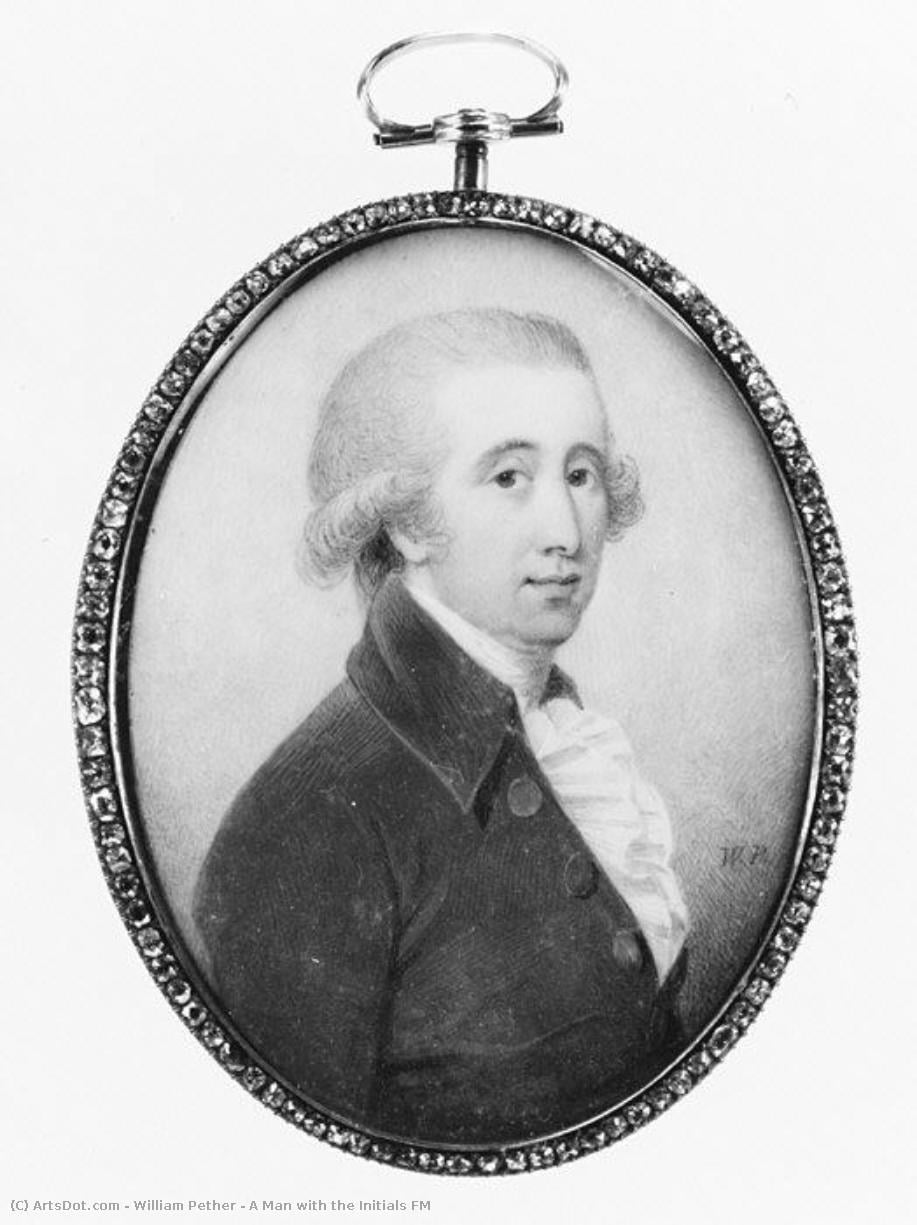
A Man with the Initials FM
Διαστάσεις Αναπαραγωγής

London, 1738. A child is born into a city of growing industry and shifting tastes. William Pether enters the world, eventually finding his way to the studio of Thomas Frye. This apprenticeship marks the beginning of a technical obsession with light. By 1761, he is no longer merely a student but a partner to Frye. The partnership provides a foundation for a career defined by the mezzotint—a method where darkness is carved away to reveal brilliance.
The work emerges from deep blacks. He does not simply draw; he excavates. His hands move across copper plates, translating the heavy shadows of Rembrandt and the dramatic, atmospheric lighting of Joseph Wright of Derby into print. In works like The Jewish Bride or A Lecture on the Orrery, the tension lies in the contrast. The light does not just sit on the surface; it seems to struggle against an encroaching gloom.
Beyond the heavy grain of the mezzotint, Pether’s hand finds a different scale. He moves from the broad, dark textures of large-scale engravings to the delicate precision of ivory. The transition is sharp. Here, the artist becomes a miniaturist, applying thin layers of paint to create intimate portraits that require a much closer gaze.
His reach extends even to the decorative arts. He applies his skill to the surface of porcelain, decorating objects with the same eye for detail found in his drawings. His repertoire is wide and occasionally unexpected:
The momentum of London life eventually gives way to a more fragmented existence. Pether moves between London, Nottingham, and Bristol. The prestige of being a foundation fellow of the Incorporated Society of Artists and a director of the same body remains, yet his physical presence drifts toward the edges of the capital. In Bristol, the grander ambitions of the engraver settle into the practicalities of a drawing-master and picture-cleaner.
The later years are marked by a quiet retreat from the center of the art world. He engages in engraving portraits of local figures like Edward Colston and Samuel Syer, working within the established traditions of his craft. By the time he reaches Montague Street in Bristol, the man who once captured the dramatic light of the masters has largely faded into obscurity. He dies in 1821, leaving behind a body of work that exists in the delicate balance between the deep shadows of the mezzotint and the fine lines of the miniature.

1738 - 1821
 Προεπισκόπηση σε πραγματική κλίμακα
 Αποστολή
 Κοινοποίηση
 Λεπτομέρειες
 Οδηγός

 Λήψη
Λήψη
 Παρόμοια αντικείμενα συλλογής
 Ακτινογραφία
 Παρουσίαση
 Ερωτήσεις & Απαντήσεις
 Στατιστικά
 Περισσότερα






































 Η επιλογή με γυαλί είναι διαθέσιμη μόνο για μεγέθη κάτω από 110 εκ.


