Το έργο τέχνης που εμφανίζεται σε αυτή τη σελίδα προστατεύεται από τους νόμους περί πνευματικών δικαιωμάτων, γεγονός που σημαίνει ότι δεν μπορούμε νομικά να δημιουργήσουμε ή να πουλήσουμε μια ταυτόσημη αναπαραγωγή του. Αυτή η προστασία επιβάλλεται βάσει διεθνών συμφωνιών, όπως η Σύμβαση της Βέρνης καθώς και από τους εθνικούς νόμους, συμπεριλαμβανομένων αυτών που ορίζονται από το Νομοθεσία περί πνευματικών δικαιωμάτων των ΗΠΑ - Τίτλος 17. Όλα τα δικαιώματα κατοχυρωμένα. Απαγορεύεται η αναπαραγωγή χωρίς άδεια.
Αυτή η μέθοδος συμμορφώνεται πλήρως με τους κανονισμούς περί πνευματικών δικαιωμάτων, καθώς δεν περιλαμβάνει την αντιγραφή ή την αναπαραγωγή του προστατευόμενου έργου. Αντίθετα, πρόκειται για μια δημιουργική ερμηνεία — ένα νέο έργο που επηρεάζεται από το πρωτότυπο, χωρίς όμως να είναι πανομοιότυπο με αυτό.
Εκτύπωση giclée ή σε καμβά ποιότητας μουσείου με γρήγορη παραγωγή και ευέλικτες επιλογές φινιρίσματος. ( Αγορά χειροποίητου πίνακα Μετάβαση σε Ψηφιακή Αποτέλεσμα)





























Επιλέξτε από τις προκαθορισμένες διαστάσεις μας που διατηρούν τις αρχικές αναλογίες του έργου τέχνης.

Εισάγετε το πλάτος και το ύψος που επιθυμείτε, ώστε να ταιριάζουν στο κάδሮ ή στον τοίχο σας. Μια εκτύπωση μπορεί μόνο να υποστεί κοψίμό και ποτέ να μην γίνει μεγαλύτερη από την αρχική εικόνα, επομένως η επιλογή μεγέθους με διαφορετικό σχήμα συνεπάγεται απώλεια ενός μέρους της εικόνας. Σας στέλνουμε ένα ψηφιακό mockup για έγκριση πριν προχωρήσουμε σε οποιαδήποτε εκτύπωση. Η εικόνα που εμφανίζεται σε αυτή τη σελίδα δεν δείχνει την πραγματική κοπή — μόνο το mockup την παρουσιάζει.
Παγκόσμια Αποστολή () σε 2 εβδομάδες αντί για τις συνήθεις 4/5 εβδομάδες. (10 Νοέμβριος)
Untitled
Διαστάσεις Αναπαραγωγής
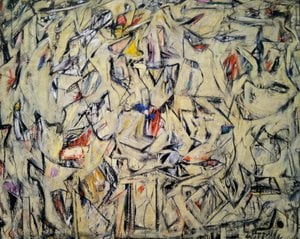
In the pantheon of Abstract Expressionism, few works capture the raw, kinetic energy of the mid-century New York art scene quite like Willem de Kooning’s Interchange. Completed in 1955, this monumental canvas serves as a profound testament to a pivotal moment in artistic evolution—a dramatic departure from de Kooning's earlier, more figurative depictions of the female form toward a bold, visceral exploration of urban landscapes. The painting is not merely a depiction of a city; it is an experience of one. Through a masterful command of expressive brushwork and a deliberate simplification of form, de Kooning invites the viewer into a world where the boundaries between structure and chaos dissolve into a vibrant, rhythmic dance of color and light.
The technical brilliance of Interchange lies in its palpable texture and the artist's heavy use of impasto. By applying paint in thick, deliberate layers with significant pressure, de Kooning created a surface defined by ridges and valleys that catch the light, lending the work a three-dimensional vitality. This technique was heavily influenced by the stark, gestural lines of Franz Kline, whose influence encouraged de Kooning to prioritize movement and emotional weight over meticulous representation. The composition is a deliberate study in asymmetry, utilizing fragmented geometric shapes—rectangles and trapezoids—that appear to collide and overlap amidst swirling, energetic strokes. This creates a sense of beautiful disorientation, mirroring the turbulent, fast-paced psychological landscape of the post-war era.
Beyond its technical prowess, Interchange carries a deep symbolic resonance that speaks to the human condition within the modern metropolis. The palette is dominated by a striking interplay of yellows and blacks, punctuated by sudden, unexpected flashes of blue and red. These colors do not merely sit upon the canvas; they interact with an intensity that suggests the flickering lights and shadowed alleys of a bustling city at dusk. The fragmented shapes can be seen as echoes of urban architecture—the skeletal remains of buildings or the fleeting silhouettes of street life—yet they remain abstract enough to represent the internal, emotional turbulence of the viewer. It is a painting that captures the very essence of "interchange"—the constant, restless movement of ideas, people, and energy that defines modern existence.
For the discerning collector or interior designer, an exquisite reproduction of this masterpiece offers more than just visual decoration; it provides a focal point of profound intellectual and emotional depth. The sheer scale and dynamism of de Kooning's vision make it an ideal centerpiece for spaces that demand character and sophistication. Whether placed in a contemporary gallery-style living room or a curated professional studio, the work brings with it the historical weight of the Abstract Expressionist movement. It serves as a window into a period of unparalleled creative freedom, offering a timeless sense of movement and a sophisticated dialogue between light and shadow that continues to inspire awe decades after its creation.
Οι προτάσεις για τη χρήση (Accent) και τον χώρο (Living Room) που καταγράφονται για το "Untitled" του Βίλλεμ Ντε Κούνινγκ είναι δύο.
Οι χειρόγραφες αντιγράφιες του έργου "Untitled" του Βίλλεμ Ντε Κούνινγκ είναι διαθέσιμες στο αυτή η ιστοσελίδα, μέσω της σελίδας αναπαραγωγή με ζωγραφισμένο με λάδι σε καμβά λινου, από την οποία μπορείτε να πραγματοποιήσετε την παραγγελία σας στην ενότητα Αντιγραφή με Χειρόχειρο Ζωγράφισμα.
Το έργο "Untitled" του Βίλλεμ Ντε Κούνινγκ ανήκει στο ακόμα προστατευόμενο από δικαιώματα αυτορικού. Η διάρκεια της προστασίας των πνευματικών δικαιωμάτων υπολογίζεται από το έτος θανάτου του καλλιτέχνη, ο οποίος συνέβη το 1997.


Explore the profound emotional depth of Abstract Expressionism. From Pollock's dynamic drips to de Kooning's gestural mastery, our expert guide offers art collectors a sophisticated analysis of this transformative movement and its enduring legacy in modern fine art.
 Προεπισκόπηση σε πραγματική κλίμακα
 Αποστολή
 Κοινοποίηση
 Λεπτομέρειες
 Οδηγός

 Λήψη
Λήψη
 Παρόμοια αντικείμενα συλλογής
 Ακτινογραφία
 Παρουσίαση
 Ερωτήσεις & Απαντήσεις
 Στατιστικά

 Περισσότερα









 Η επιλογή με γυαλί είναι διαθέσιμη μόνο για μεγέθη κάτω από 110 εκ.