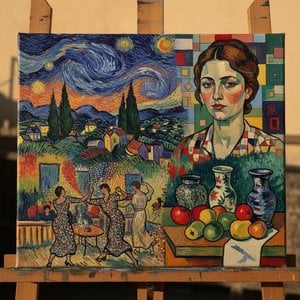
Βιογραφικό Καλλιτέχνη
A Life Painted in Emotion: The World of Vincent van Gogh
Vincent Willem van Gogh, ένα όνομα συνυφασμένο με πάθος καλλιτεχνικής έκφρασης και τρεπτική ευφυΐα, παραμένει μια από τις πιο αναγνωρίσιμες και αγαπημένες μορφές της δυτικής τέχνης. Γεννήθηκε στις 30 Μαρτίου 1853 στο Groot-Zundert, Ολλανδία, το ταξίδι του δεν ήταν μια άμεση αναγνώριση αλλά μια αργή καύσωνα αφοσίωσης, αγωνίας και τελικά, βαθιάς επιρροής. Ο μεγαλύτερος από έξι παιδιά που γεννήθηκαν σε έναν πρεσβύτερο ιερέα, Theodorus van Gogh, η παιδική του εποχή ήταν βαθιά ριζωμένη στην θρησκευτική διαστολή, μια αίσθηση που θα διεισδύσει υποβόθυα στο μεγαλύτερο μέρος της μεταγενέστερης δουλειάς του. Παρά την έμφυτη τάση προς το σκίτσο από νεαρή ηλικία, ο δρόμος του δεν ήταν άμεσα σαφής: διερεύνησε διάφορες καλέσεις – πωλητής τέχνης, δάσκαλος και αποστολός – πριν δεσμευτεί πλήρως για την καλλιτεχνική ζωή. Αυτές οι εμπειρίες, αν και φαινομενικά άσχετες, απέδειξαν ότι ήταν διαμορφωτικές, ενσταλάζοντας σε αυτόν μια βαθιά ενσυναίσθηση για την εργατική τάξη και ένα βαθύ πνευματικό ζήτημα που θα γίνονταν χαρακτηριστικά της καλλιτεχνικής του όρασης. Πρώιμες επιρροές περιελάμβαναν τους Ολλανδούς Μάστερς όπως ο Ρέμπραντ, ο Φρανς Χάλς, οι οποίοι χρησιμοποίησαν με μαεστρία το φως και τις σκιές, καθώς και σύγχρονους Γάλλους ζωγράφους όπως ο Ζαν-Φρεισ Μίλε και ο Καμίλ Κορό, που απεικόνισαν σκηνές της αγροτικής ζωής με μια πικρή ρεαλιστική προσέγγιση.
Από Σκοτάδι στο Φως: Ανάπτυξη Τέχνης και Στυλ
Η σοβαρή αφοσίωση του Van Gogh στην ζωγραφική ξεκίνησε περίπου το 1880, κυρίως αυτοδίδακτος, κινούμενος από μια εσωτερική ανάγκη να εκφράσει τον κόσμο όπως τον αντιλαμβανόταν. Τα πρώτα του έργα αντικατοπτρίζουν την συμπόνια του για τους περιθωριακούς, εστιάζοντας στις ζωές των αγροτών και των εργαζομένων – παραδείγματα είναι τα The Potato Eaters. Αυτά τα πρώιμα έργα χαρακτηρίζονται από σκούρα, γήινα χρώματα και μια άρρηκτη, σχεδόν βίαιη ειλικρίνεια που επιδίωκε να αποτυπώσει την δυσκολία και τη μεγαλοσύνη της αγροτικής ύπαρξης. Μια καθοριστική στιγμή ήταν η μετακόμιση του στο Παρίσι το 1886, όπου εκτέθηκε στον ζωντανό κόσμο της Ενταρκιστικής και Μετά-Ενταρκιστικής τέχνης. Αυτή η συνάντηση μεταμόρφωσε τον ίδιο, εισάγοντας πιο φωτεινά χρώματα στην παλέτα του και ενθαρρύνοντας πειραματισμούς με νέες τεχνικές. Έμαθε από καλλιτέχνες όπως ο Μονέ, ο Ρενώρ και ο Πισαρό, αλλά ποτέ δεν υιοθέτησε πλήρως το στυλ τους: αντίθετα, διηύθυνε τον δικό του μοναδικό δρόμο. Το χαρακτηριστικό του στυλ του αναπτύχθηκε γρήγορα και έγινε αμέσως αναγνωρίσιμο για τα έντονα χρώματα, την εκφραστική χάραξη και την συναισθηματική ένταση. Ο Van Gogh δεν απλά *αντιπροσώπευσε* την πραγματικότητα: επιδίωκε να μεταφέρει το συναίσθημα της ύπαρξης μέσα του, χρησιμοποιώντας impasto – πυκνές στρώσεις χρώματος – για να δημιουργήσει υφή και να ενσαρκώσει μια αισθητή ενέργεια στις καμβάδες του. Αυτή η τεχνική δεν ήταν απλώς αισθητική: ήταν ένα αναπόσπαστο μέρος της εκφραστικής του γλώσσας, επιτρέποντάς του να μεταφέρει εσωτερικές αναταράξεις και εκστατικές χαρές στον καμβά.
Περιοχές Έντασης: Βασικά Έργα και Καλλιτεχνικές Φάσεις
Η καλλιτεχνική πορεία του Van Gogh μπορεί να χωριστεί γενικά σε διακριτές φάσεις, καθένα από τις οποίες χαρακτηρίζεται από μοναδικά χαρακτηριστικά και σημαντικά έργα. Η Ολλανδική Περίοδος (1880-1886), όπως αναφέρθηκε, οριοθετήθηκε από σκούρα χρώματα και απεικονίσεις της αγροτικής ζωής. Η επόμενη Παριζιάνικη Περίοδος (1886-1888) είδε μια δραματική μετατόπιση προς πιο φωτεινά χρώματα και πειραματισμούς με ενταρκιστικές τεχνικές. Ωστόσο, κατά τη διάρκεια της Περιόδου Arles (1888-1889), στην νότια Γαλλία, ο Van Gogh έφτασε σε κορύφωση της δημιουργικής του έντασης. Περιτριγυρισμένος από το λαμπερό φως και τις ζωντανές τοπίες της Προβηγκίας, δημιούργησε μερικά από τα πιο εμβληματικά έργα του: Sunflowers, The Night Café και Starry Night Over the Rhône. Αυτά τα έργα δεν είναι απλώς απεικονίσεις σκηνών: είναι συναισθηματικές τοπίες, γεμάτες ζωή και ενσαρκώνουν μια ανάγκη. Η χαρακτηριστική του τεχνική, η χρήση έντονων χρωμάτων και η εκφραστική χάραξη, επηρέασαν σημαντικά την ανάπτυξη της Ενταρκιστικής τέχνης στην σύγχρονη ιστορία της τέχνης.
Ένα Κληρονομημένο από τον Πόνο: Επιτεύγματα και Ιστορική Σημασία
Παρά το γεγονός ότι αντιμετώπισε απόρριψη και αγωνία κατά τη διάρκεια της ζωής του, ο Van Gogh δημιούργησε πάνω από 2.100 έργα τέχνης σε λιγότερο από μια δεκαετία – περίπου 860 λαρυξ. Αυτή η εκπληκτική παραγωγή είναι μαρτυρία της ακλόνητης αφοσίωσης και της συνεχιζόμενης δημιουργικής του δύναμης. Θαυμάσια, κατά τη διάρκεια της ζωής του, μόνο ένα έργο τέχνης – το The Red Vineyard – πουλήθηκε. Η αναγνώριση ήρθε μεταθύστερα, αργά στην αρχή και με αυξανόμενη δυναμική στις αρχές του 20ου αιώνα. Το έργο του είχε μια βαθιά επιρροή στην ανάπτυξη της σύγχρονης τέχνης, ιδιαίτερα της Ενταρκιστικής και της Φαυβιστικής, εμπνέοντας καλλιτέχνες να δώσουν προτεραιότητα στην συναισθηματική έκφραση έναντι της ρεαλιστικής αναπαράστασης. Η τολμηρή χρήση του χρώματος, οι παραμορφωμένες μορφές και η εκφραστική χάραξη ανοίγουν τον δρόμο για νέες καλλιτεχνικές δυνατότητες. Σήμερα, τα έργα του Van Gogh είναι μερικά από τα πιο αναγνωρίσιμα και πολύτιμα έργα τέχνης στον κόσμο, κατακλύζοντας ρεκόρ τιμών σε δημοπρασίες και προσελκύοντας εκατομμύρια επισκέπτες στα μουσεία



 Προεπισκόπηση
 Αγορά χειροποίητου πίνακα
 Αποστολή
 Κοινοποίηση
 Λεπτομέρειες
 Οδηγός

 Λήψη
Λήψη
 Παρόμοια αντικείμενα συλλογής
 Ακτινογραφία
 Παρουσίαση
 Στατιστικά

 Περισσότερα λεπτομέρεια






































 Η επιλογή με γυαλί είναι διαθέσιμη μόνο για μεγέθη κάτω από 110 εκ.