

Εκτύπωση giclée ή σε καμβά ποιότητας μουσείου με γρήγορη παραγωγή και ευέλικτες επιλογές φινιρίσματος. ( Αγορά χειροποίητου πίνακα Μετάβαση σε Ψηφιακή Αποτέλεσμα)





























Επιλέξτε από τις προκαθορισμένες διαστάσεις μας που διατηρούν τις αρχικές αναλογίες του έργου τέχνης.

Εισάγετε το πλάτος και το ύψος που επιθυμείτε, ώστε να ταιριάζουν στο κάδሮ ή στον τοίχο σας. Μια εκτύπωση μπορεί μόνο να υποστεί κοψίμό και ποτέ να μην γίνει μεγαλύτερη από την αρχική εικόνα, επομένως η επιλογή μεγέθους με διαφορετικό σχήμα συνεπάγεται απώλεια ενός μέρους της εικόνας. Σας στέλνουμε ένα ψηφιακό mockup για έγκριση πριν προχωρήσουμε σε οποιαδήποτε εκτύπωση. Η εικόνα που εμφανίζεται σε αυτή τη σελίδα δεν δείχνει την πραγματική κοπή — μόνο το mockup την παρουσιάζει.
Παγκόσμια Αποστολή () σε 2 εβδομάδες αντί για τις συνήθεις 4/5 εβδομάδες. (7 Νοέμβριος)
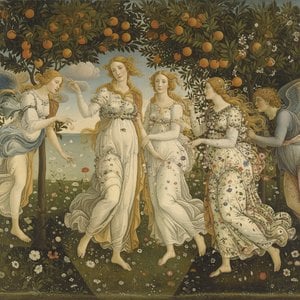
Primavera (detail) (18)
Διαστάσεις Αναπαραγωγής
Sandro Botticelli’s “Primavera,” housed in the Uffizi Gallery of Florence, isn't merely a painting; it’s an invitation into a meticulously crafted dreamscape—a visual embodiment of rebirth and fecundity that continues to captivate audiences centuries later. Completed around 1482 during the height of Florentine artistic fervor under Lorenzo de’ Medici, this monumental panel depicts a vibrant celebration of spring, drawing heavily on classical mythology and humanist ideals.
The painting's genius lies in its masterful composition. Botticelli eschews traditional linear perspective, opting instead for a shallow depth that draws the viewer into the scene’s intimate embrace. Dominating the canvas are two figures—a woman adorned with flowers and surrounded by attendants—and a male nude embracing her. These central characters command attention, their intertwined hands symbolizing connection and perhaps hinting at the complexities of love. The surrounding foliage is rendered in dense detail, creating an illusion of lushness and movement that guides the eye across the expanse of the canvas.
Botticelli’s style is instantly recognizable—characterized by graceful lines, idealized forms, and a remarkable sensitivity to color. He employs sfumato techniques—a subtle blending of tones—to soften contours and create an ethereal atmosphere. Layers upon layers of thin glazes of oil paint achieve luminous effects, particularly noticeable on the skin tones and drapery fabrics. The artist’s meticulous brushwork contributes to a velvety texture that conveys both delicacy and grandeur.
"Primavera" is steeped in symbolism rooted in classical mythology and humanist philosophy. The figures represent Venus, Flora, Zephyr, Chloris, Mercury, and Cupid—each embodying virtues associated with springtime and fertility. Venus embodies beauty and love, while Flora represents the blossoming season. Zephyr, god of the west wind, brings warmth and vitality to the grove, and Chloris transforms into Flora, symbolizing regeneration. The inclusion of Cupid underscores the theme of desire and passion. Beyond these individual symbols, the painting speaks to broader concepts of harmony, balance, and the triumph of life over death—themes central to Renaissance thought.
More than just aesthetically pleasing, “Primavera” evokes a profound emotional response. Its serene beauty and harmonious arrangement convey a sense of tranquility and wonder, transporting viewers back to the artistic milieu of Florence during its golden age. Botticelli’s masterful depiction of human form—particularly Venus—celebrates idealized femininity and embodies the humanist aspiration for perfection. The painting continues to inspire artists and collectors alike, serving as a testament to Botticelli's enduring legacy as one of the most influential painters of the Renaissance.
Οι χρώματα της παλέτας Earthy του έργου "Primavera (detail) (18)" του Σάντρο Μποτicelli ταιριάζουν στον προτεινόμενο χώρο του: ένα Living Room.
Στο πλαίσιο της καλλιτεχνικής κατεύθυνσης Early Renaissance, το έργο "Primavera (detail) (18)" αποπνέει μια Melancholic ατμόσφαιρα.
Το έργο "Primavera (detail) (18)" ταξινομείται ως Iconic.


1445 - 1510 , Ιταλία
Explore the ethereal beauty of Sandro Botticelli's masterpieces. Delve into the profound symbolism, mythological grace, and technical mastery that define the Italian Renaissance through an expert art-historical lens.
 Προεπισκόπηση σε πραγματική κλίμακα
 Αποστολή
 Κοινοποίηση
 Λεπτομέρειες
 Οδηγός

 Λήψη
Λήψη
 Παρόμοια αντικείμενα συλλογής
 Ακτινογραφία
 Παρουσίαση
 Ερωτήσεις & Απαντήσεις
 Στατιστικά


 Περισσότερα









 Η επιλογή με γυαλί είναι διαθέσιμη μόνο για μεγέθη κάτω από 110 εκ.


