Βιογραφικό Καλλιτέχνη
A Master of Emotion: The Life and Legacy of Rogier van der Weyden
Rogier van der Weyden, γεννημένος περίπου το 1400 στην ζωντανή πόλη του Tournai, εντός της σημερινής Βελγίου, αναδύθηκε ως μια κρίσιμη φιγούρα στον άνθιση του πρώιμου νεο-φλαμανδικού ζωγραφικού τοπίου. Ενώ λεπτομέρειες σχετικά με την παιδική του ζωή παραμένουν κάπως ασαφείς, πιστεύεται ότι αρχικά άρχισε να τελειοποιεί τις δεξιότητές του όχι με πινέλο και χρώμα, αλλά ως χρυσοχοΐας. Αυτή η πρώιμη εκπαίδευση ενίσχυσε την ακλόνητη αφοσίωσή του στη λεπτομέρεια και μια εξευγενισμένη αίσθηση του τεχνάσματος – ιδιότητες που θα γίνονταν χαρακτηριστικά του καλλιτεχνικού του στυλ. Η ακρίβεια που απαιτείται για την εργασία με πολύτιμους μετάλλους μεταφράστηκε αναμφίβολα στην εκθαμβητική απεικόνιση υφών, υφασμάτων και εκφράσεων που ορίζουν τα αριστουργήματά του. Δεν απλώς απεικονιζόταν η πραγματικότητα· αναδημιουργούνταν με ακρίβεια, εμπλουτισμένη με μια σχεδόν τιμητική προσοχή στη λεπτομέρεια.
From Tournai to Brussels: A Rising Star
Ήδη το 1427, ο van der Weyden είχε ανέβει στην τάξη του μάστορα στην Συντεχνία του Αγίου Λουκά στο Tournai, μια απόδειξη της αναδυόμενης ταλέντου και δεξιοτεχνίας του. Αυτό σηματοδότησε ένα σημαντικό σημείο καμπής, εδραιώνοντας τη θέση του ως επαγγελματία καλλιτέχνη και ανοίγοντας πόρτες σε σημαντικές παραγγελίες. Η άνοδό του συνεχίστηκε όταν εισήλθε στην υπηρεσία του Φιλίππου του Καλύτερου, Δούκα της Βουργουνδίας, το 1435 – μια πατρωνυφία που θα διαμόρφωνε βαθιά την καριέρα του για το υπόλοιπο της ζωής του. Η εξυπηρέτηση ως κυβερνητικός ζωγράφος δεν προσέφερε μόνο οικονομική ασφάλεια, αλλά και πρόσβαση σε έναν ελίτ κύκλο επιρροής και έκθεση στα πιο διακριτικά μάτια της εποχής. Κατά τη διάρκεια αυτής της περιόδου, το καλλιτεχνικό όραμα του van der Weyden άρχισε πραγματικά να ωριμάζει, απομακρυνόμενος από τις σχετικά αυστηρές συμβάσεις των πρώιμων νεο-φλαμανδικών ζωγράφων προς μια πιο συναισθηματική και ρεαλιστική προσέγγιση. Δεν ζωγραφιζόταν απλώς θρησκευτικές σκηνές· επιδίωκε να προκαλέσει αυθεντικό συναίσθημα στον θεατή, να δημιουργήσει μια εμπειρία που υπερβαίνει την απλή παρατήρηση.
The Language of Feeling: Style and Technique
Η καλλιτεχνική υπογραφή του Rogier van der Weyden είναι αμέσως αναγνωρίσιμη μέσω πολλών καθοριστικών χαρακτηριστικών. Η παλέτα του ήταν εξαιρετικά πλούσια και ποικίλη, ένας ζωντανός χρωματικός πίνακας που επιλέγεται προσεκτικά για να αποφευχθεί η επανάληψη και να δημιουργηθεί βάθος και πολυπλοκότητα στις συνθέσεις του. Είχε μια εξαιρετική ικανότητα να εκφράσει βαθύ συναίσθημα – *πάθος* – ιδιαίτερα σε απεικονίσεις θρησκευτικών θεμάτων, όπως η Λυπητεία, όπου η λύπη και η θλίψη είναι αισθητές. Αυτή η συναισθηματική ένταση δεν επιτυγχάθηκε μέσω δραματικών χειρονομιών ή υπερβολικών εκφράσεων· αντιθέτως, υφανόταν διακριτικά στον ίδιο τον ιστό της ζωγραφικής, μεταδίδοντας την μέσω λεπτών αποχρώσεων στην έκφραση του προσώπου, τη στάση του σώματος και τη σύνθεση. Οι φιγούρες του, ενώ ακολουθούν τις συμβάσεις της εποχής, παρουσιάζουν αυξανόμενο ενδιαφέρον για ρεαλιστική απεικόνιση – όχι μόνο στην ανατομία και τα υφάσματα, αλλά και στην απόδοση των ψυχολογικών καταστάσεων των θεμάτων του. Διαθέτουν μια μεγαλειώδη, σχεδόν γλυπτική ποιότητα, ιδιαίτερα στα μεγαθήρια του, δίνοντάς τους μια έντονη σοβαρότητα και λατρεία. Αποτελεσματικά χρησιμοποίησε λάδι σε ξύλο, χτίζοντας στρώματα διαπεραστικών βερνικιών για να επιτύχει φωτεινά εφέ και να δημιουργήσει μια αίσθηση βάθους και ρεαλισμού που ήταν επαναστατικό για την εποχή του.
Notable Works and Enduring Masterpieces
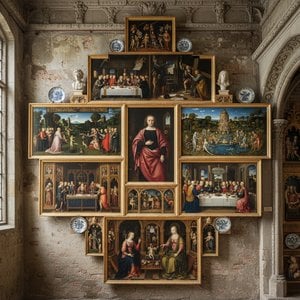
Κατά τη διάρκεια της παραγωγικής καριέρας του, ο van der Weyden δημιούργησε πολλά έργα που αποτελούν μαρτυρία της καλλιτεχνικής του ικανότητας. Το *St Luke Drawing a Portrait of the Madonna*, στεγασμένο στο Μουσείο Τέχνης Βοστόν, παρουσιάζει την τελειότητα του στην ζωγραφική σε ξύλο με λάδι και τη λεπτομερή παρατήρηση. Η *Λυπητεία*, που βρίσκεται στο Μουσείο Beaux-Arts Tournai, στη Βέλγιο, είναι ίσως το πιο διάσημο έργο του – μια δραματική απεικόνιση του πένθους του Χριστού, γνωστή για τη δραματική χρήση του *κυρίαρχου φωτισμού* και την ικανότητά της να προκαλεί βαθιά λύπη στον θεατή. Πολλές εκδόσεις του *The Deposition* υπάρχουν, καθεμία από τις οποίες επιδεικνύει τη δεξιοτεχνία του στην έκφραση πένθους και δραματισμού με εκπληκτική ευαισθησία. Το *Annunciation*, ένα αριστούργημα εξευγενισμένης στυλ και προσοχής στη λεπτομέρεια, επιδεικνύει την ικανότητά του να εμπλουτίζει ακόμη και τα πιο παραδοσιακά θέματα με μια αίσθηση φρεσκάδας και ζωτικότητας. Και τέλος, το περίπλοκο και πλούσιο σε χρώμα *Bladelin Triptych* αποτελεί ένα τεράστιο επίτευγμα – μια σύνθετη αλτήρα που παρουσιάζει ολόκληρο το εύρος των καλλιτεχνικών ικανοτήτων του van der Weyden. Αυτά τα έργα, και πολλά άλλα, συνεχίζουν να γοητεύουν το κοινό σήμερα, εδραιώνοντας τη θέση του ως ένας από τους σημαντικότερους ζωγράφους του 15ου αιώνα.
Historical Significance
Ο Rogier van der Weyden δεν ήταν απλώς ένας καλλιτέχνης· ήταν ένας μεταμορφωτής της τέχνης. Η επιρροή του επεκτάθηκε πολύ πέρα από τα σύνορα της Φλάνδρας. Τα έργα του αναζητούνταν έντονα σε όλη την Ευρώπη, ιδιαίτερα στην Ιταλία και την Ισπανία, όπου εισήγαγε ένα νέο επίπεδο συναισθηματικής βάθους και ρεαλισμού στις τοπικές καλλιτεχνικές παραδόσεις. Παρά τη φημίς του που γνώρισε μια περίοδο σχετικής μείωσης τον 17ο αιώνα, η ανακάλυψή του κατά τον 19ο αιώνα εδραίωσε τη θέση του ως έναν από τους σημαντικότερους ζωγράφους του 15ου αιώνα. Στέκεται δίπλα στον Jan van Eyck και τον Robert Campin ως ένας από τους τρεις “μεγάλους” πρώιμους Φλαμανδούς μάστερες, καθένας από τους οποίους συνέβαλε μοναδικά στην ανάπτυξη της τέχνης του Βορειοευρωπαϊκού Αναγέννησης. Οι καινοτόμες



 Προεπισκόπηση
 Μετάβαση σε Εκτυπώσεις
 Αποστολή
 Κοινοποίηση
 Λεπτομέρειες
 Οδηγός

 Λήψη
Λήψη
 Παρόμοια αντικείμενα συλλογής
 Ακτινογραφία
 Παρουσίαση
 Στατιστικά


 Περισσότερα λεπτομέρεια






































 Η επιλογή με γυαλί είναι διαθέσιμη μόνο για μεγέθη κάτω από 110 εκ.