Βιογραφικό Καλλιτέχνη
Μια Ζωή Αποκαλυφθείσα: Το Ταξίδι του Πιτ Μοντριάν
Ο Pieter Cornelis Mondriaan, γεννημένος το 1872 στην ήσυχη ολλανδική πόλη του Άμερσφοορτ, δεν ακολούθησε έναν δρόμο άμεσης αποκάλυψης στην τέχνη, αλλά μια σταδιακή εξέλιξη. Η παιδική του ηλικία ήταν βαθιά ριζωμένη στην παράδοση· ο θείος του, Frits Mondriaan, ήταν ήδη ένας καταξιωμένος ζωγράφος και αυτή η οικογενειακή σύνδεση τον καθοδήγησε αρχικά προς την τοπιογραφία. Αυτά τα πρώιμα έργα, που θυμίζουν τη Σχολή της Χάγης και τον ολλανδικό ιμπρεσιονισμό – όπως για παράδειγμα *Ο Κόκκινος Μύλος* – αποκαλύπτουν έναν νεαρό καλλιτέχνη να μελετά επιμελώς τη φύση, να τελειοποιεί την τεχνική του, αλλά και να αναζητά διακριτικά κάτι πέρα από την απλή αναπαράσταση. Ακόμη τότε, μια λαχτάρα για απλοποίηση φαινόταν να τραβάει τα πινέλα του. Δεν αρκούνταν στην απλή αντικατοπτρισμό του κόσμου· ήθελε να αποστάξει την ουσία του. Αυτή η πρώιμη περίοδος είδε πειραματισμούς με τον Πουαντιλισμό και τον Φωβισμό, κάθε στυλ προσφέροντας έναν διαφορετικό φακό μέσα από τον οποίο να δει το χρώμα και τη μορφή, αλλά κανένα δεν ικανοποιούσε πλήρως την αναδυόμενη καλλιτεχνική του όραση. Ήταν μια εποχή εξερεύνησης, ένα απαραίτητο προοίμιο για την ριζική απομάκρωση που θα καθόριζε την κληρονομιά του.
Η Παρισινή Αφύπνιση και η Γέννηση του Νεοπλαστικισμού
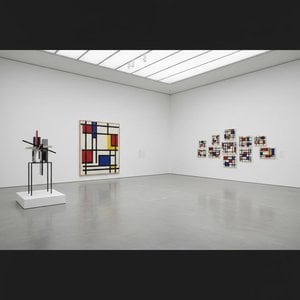
Μια κομβική στιγμή έφτασε το 1912 με τη μετακόμιση του Μοντριάν στο Παρίσι. Η πόλη σφύζαν από πρωτοποριακή ενέργεια και βρέθηκε βυθισμένος στον επαναστατικό κόσμο του Κυβισμού. Αυτή η συνάντηση αποδείχτηκε μεταμορφωτική. Άρχισε να αποδομεί τις μορφές, να τις διασπά σε γεωμετρικά συστατικά στοιχεία, απομακρυνόμενος από την απεικόνιση του *τι* έβλεπε προς την εξερεύνηση του *πώς* το έβλεπε. Όμως ο Μοντριάν δεν υιοθετούσε απλώς ένα νέο στυλ· ξεκίνησε ένα πνευματικό ταξίδι. Βαθιά επηρεασμένος από τη Θεοσοφία – μια μυστικιστική φιλοσοφία που τονίζει τις υποκείμενες πανανθρώπινες αρχές – πίστευε ότι η τέχνη θα μπορούσε να είναι ένα μέσο έκφρασης αυτών των κρυμμένων αληθειών. Αυτή η πεποίθηση τροφοδότησε την ακούραστη επιδίωξή του για αφαίρεση, ωθώντας τον να μειώσει το χρώμα και τη μορφή στα πιο θεμελιώδη στοιχεία τους. Γύρω στο 1917, αυτό το ταξίδι κορυφώθηκε με τη διαμόρφωση του Νεοπλαστικισμού, που συχνά αναφέρεται ως «καθαρή πλαστική τέχνη». Ήταν μια ριζοσπαστική αισθητική που βασίζεται σε ουσιαστικές μορφές – ευθείες γραμμές, ορθές γωνίες – και μια περιορισμένη παλέτα: πρωτογενή χρώματα (κόκκινο, μπλε, κίτρινο), μαύρο, λευκό και γκρι. Για τον Μοντριάν, αυτή η μείωση δεν αφορούσε την κενότητα· αφορούσε την αποκάλυψη της υποκείμενης αρμονίας του σύμπαντος, μια οπτική εκδήλωση της πνευματικής τάξης. Συνίδρυσε το κίνημα *De Stijl* με τον Theo van Doesburg για να προωθήσει αυτές τις ιδέες, εδραιώνοντας τον Νεοπλαστικισμό ως καθοριστική δύναμη στη σύγχρονη τέχνη. Αριστουργήματα όπως η *Σύνθεση με Κόκκινο, Μπλε και Κίτρινο* και ο *Πίνακας αρ. 2 Σύνθεση αρ. V* στέκονται ως μαρτυρίες αυτής της περιόδου, εμβληματικές αναπαραστάσεις της ακλόνητης δέσμευσής του στην γεωμετρική αγνότητα.
Ρυθμοί της Νέας Υόρκης: Μια Ύστερη Ανθοφορία
Η έκρηξη του Β' Παγκοσμίου Πολέμου ανάγκασε τον Μοντριάν να εγκαταλείψει την Ευρώπη το 1940, βρίσκοντας καταφύγιο στην πολυσύχναστη μητρόπολη της Νέας Υόρκης. Αυτή η μετεγκατάσταση αποδείχτηκε απροσδόκητα αναζωογονητική. Η άκαμπτη δομή του πλέγματος της πόλης – σε έντονη αντίθεση με τα πιο οργανικά τοπία που γνώριζε – συνέρχονταν με τις καλλιτεχνικές του αρχές. Τα μεταγενέστερα έργα του, ιδιαίτερα ο *Broadway Boogie Woogie* (1943), αντανακλούν αυτή την επιρροή. Διατηρώντας τα βασικά δόγματα του Νεοπλαστικισμού, ο πίνακας εισάγει μια δυναμική ενέργεια, έναν ζωντανό ρυθμό εμπνευσμένο από τη ζωηρή ζωή της πόλης και τη τζαζ μουσική. Οι ευθείες γραμμές είναι ακόμα παρούσες, αλλά χορεύουν και τέμνονται με μεγαλύτερη ελευθερία, δημιουργώντας μια αίσθηση κίνησης και χαράς. Ήταν σαν ο Μοντριάν να είχε βρει μια νέα γλώσσα μέσα στο καθιερωμένο λεξιλόγιό του, έναν τρόπο έκφρασης της πολυπλοκότητας της σύγχρονης αστικής ύπαρξης μέσω της απλότητας της γεωμετρικής αφαίρεσης. Συνέχισε να τελειοποιεί το στυλ του μέχρι τον θάνατό του το 1944, αφήνοντας πίσω ένα έργο που συνεχίζει να σαγηνεύει και να εμπνέει.
Μια Διαρκής Κληρονομιά: Η Ανθεκτική Επιρροή του Μοντριάν
Η επίδραση του Piet Mondrian στον κόσμο της τέχνης είναι ανεκτίμητη. Δεν ήταν απλώς ένας καλλιτέχνης· ήταν ένας οραματιστής που άλλαξε ριζικά την κατανόησή μας για την αφαίρεση και τις δυνατότητές της να εκφράζει πανανθρώπινες αλήθειες. Το έργο του επηρέασε βαθιά άπειρους καλλιτέχνες, κινήματα και πειθαρχίες. Ο Αφηρημένος Εκφρασισμός, ο Μινιμαλισμός και η Ζωγραφική Χρωματικού Πεδίου χρωστούν ένα χρέος στον πρωτοποριακό του πνεύμα. Όμως η επιρροή του εκτείνεται πολύ πέρα από τον καμβά. Οι αρχές του Νεοπλαστικισμού – απλότητα, σαφήνεια, γεωμετρική τάξη – έχουν διεισδύσει στην αρχιτεκτονική, το σχέδιο και τη μόδα. Από έπιπλα και υφάσματα μέχρι προσόψεις κτιρίων και γραφικά σχέδια, η αισθητική του Μοντριάν συνεχίζει να διαμορφώνει τον οπτικό μας κόσμο. Παραμένει μια εμβληματική μορφή στη σύγχρονη τέχνη, ένα σύμβολο της ακούραστης επιδίωξης της αφαίρεσης και



 Προεπισκόπηση
 Αγορά χειροποίητου πίνακα
 Αποστολή
 Κοινοποίηση
 Λεπτομέρειες
 Οδηγός

 Λήψη
Λήψη
 Παρόμοια αντικείμενα συλλογής
 Ακτινογραφία
 Παρουσίαση
 Στατιστικά
 Περισσότερα λεπτομέρεια






































 Η επιλογή με γυαλί είναι διαθέσιμη μόνο για μεγέθη κάτω από 110 εκ.