Λάβετε ένα αρχείο έτοιμο για εκτύπωση, με ποιότητα πολύ ανώτερη από την προεπισκόπηση στον ιστότοπο. Κάθε ψηφιακή εικόνα που διαθέτουμε προέρχεται από ένα αρχείο υψηλής ανάλυσης στη βάση δεδομένων μας —συνήθως με πλάτος 5.000 έως 15.000 pixel— ώστε να μπορείτε να εκτυπώσετε σε μεγάλο μέγεθος, να κάνετε στενές κοψιμές ή να αναπαράγετε τις λεπτομέρειες με απόλυτη εμπιστοσύνη.
Κανένα αρχείο δεν φεύγει από το στούντιο μας χωρίς να υποστεί επεξεργασία. Ένας ειδικός ψηφιακών εικόνων ελέγχει τα χρώματα σε σύγκριση με το πρωτότυπο έργο και τα διορθώνει αν χρειαστεί, στη συνέχεια βελτιώνει την καθαρότητα και τις λεπτομέρειες με επαγγελματικά εργαλεία αφαίρεσης ατέλειων — παραμένοντας πάντα πιστός στις πινελιές και το ύφος του καλλιτέχνη. Το αποτέλεσμα είναι μια εικόνα που μοιάζει με το ίδιο το αριστούργημα και όχι με ένα σκανάρισμα με φίλτρα.
Εγκρίνετε πριν την ολοκλήρωση: ο ειδικός μας σας στέλνει την εικόνα μέσω e-mail εντός 72 ωρών για επανεξέταση. Δεν είστε ικανοποιημένοι; Ζητήστε βελτιώσεις ή διορθώσεις, ή ζητήστε επιστροφή χρημάτων εάν η ποιότητα δεν ανταποκρίνεται στις προσδοκίες σας.
Αυτή είναι η ποιότητα στην οποία εμπιστεύονται οι εκδότες, τα design studios, οι γκαλερί και τα εκτυπωτήρια.
Κατεβάστε ένα αρχείο υψηλής ανάλυσης για προσωπική χρήση, εκτύπωση και δημιουργικά έργα. ( Μετάβαση σε Εκτυπώσεις Αγορά χειροποίητου πίνακα)
Όταν επιλέγετε το WahooArt.com, δεν αποκτάτε απλώς μια εικόνα – λαμβάνετε ένα επαγγελματικά αναβαθμισμένο ψηφιακό έργο τέχνης, δημιουργημένο με ακρίβεια και με εγγύηση ικανοποίησης. Δείτε όλα όσα περιλαμβάνονται στην παραγγελία σας, αυτόματα:
Το ψηφιακό σας αρχείο εικόνας υψηλής ανάλυσης θα σας σταλεί μέσω email εντός 72 ωρών από την παραγγελία σας — έτοιμο για άμεση χρήση.
Το έργο σας βελτιστοποιείται επαγγελματικά με τη χρήση προηγμένων εργαλείων Τεχνητής Νοημοσύνης και χειροκίνητης επεξεργασίας, εξασφαλίζοντας μέγιστη λεπτομέρεια, ευκρίνεια και ακρίβεια χρωμάτων.
Απώλησες ή διαγράψατε κατά λάθος το αρχείο σας; Μην ανησυχείτε — θα σας το ξαναστείλομε οποιαδήποτε στιγμή, δωρεάν.
Απολαύστε αμέσως τα έργα τέχνης σας χωρίς δασμούς, φόρους ή έξοδα αποστολής - οι ψηφιακές λήψεις είναι πάντα αφορεশিপτεία.
Εξασφαλίζουμε ότι η ψηφιακή σας εικόνα αποτυπώνει τα αυθεντικά χρώματα όσο το δυνατόν πιστότερα, χρησιμοποιώντας επαγγελματικά εργαλεία και διαχείριση χρωμάτων.
Εάν δεν είστε ικανοποιημένοι με την ψηφιακή σας εικόνα, θα την τροποποιήσουμε ή θα σας επιστρέψουμε το 100% εντός 100 ημερών — χωρίς κανένα ερώτημα.
Δεν είστε ικανοποιημένοι; Λάβετε πλήρη επιστροφή των χρημάτων σας εντός 100 ημερών από τη λήψη του ψηφιακού σας αρχείου — χωρίς κανένα ερώτημα.
Αγοράστε 3 εικόνες, κάντε εξοικονόμηση 10% - Αγοράστε 5, κάντε εξοικονόμηση 15% - Αγοράστε 10+, κάντε εξοικονόμηση 20%. Ιδανικό για δημιουργικά έργα, γκαλερί και agencies.
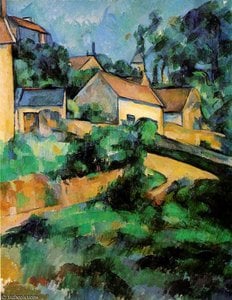
Paul Cézanne's “Study – Landscape at Auvers” isn’t merely a depiction of a Provençal village; it’s a carefully constructed meditation on perception, color, and the very essence of seeing. Painted in 1890 during his sojourn in the small village of Auvers-sur-Oise, just outside Paris, this work embodies the core tenets of Post-Impressionism – a movement Cézanne profoundly shaped – moving beyond the fleeting effects of light to explore underlying forms and structures. It’s a painting that invites prolonged contemplation, revealing layers of meaning with each return visit.
Cézanne's approach was revolutionary for his time. He wasn’t interested in faithfully reproducing what he saw; instead, he sought to capture the *idea* of the landscape – its underlying geometry and the way it interacts with light. Notice how he employs flattened planes of color, reminiscent of Seurat’s pointillism but imbued with a far more expressive intent. These aren't simply decorative hues; they are carefully chosen to define shapes and create a sense of solidity within the composition. The greens and blues of the hills are not blended smoothly, but rather applied in distinct blocks, suggesting volume and depth through color alone. This deliberate manipulation of form anticipates the abstract explorations of Cubism that would follow.
Auvers-sur-Oise itself held a particular significance for Cézanne. He had been invited there by his friend, Vincent van Gogh, who was struggling with mental illness and depression. While the two artists shared a mutual respect, their creative approaches were vastly different. Cézanne’s work in Auvers reflects a quiet intensity, a focused observation of the local environment. The village houses, rendered with simplified forms and bold colors, are not presented as charming rustic dwellings but rather as fundamental building blocks within a larger spatial arrangement. He meticulously observed the way light fell upon these structures, translating that experience onto the canvas with an almost architectural precision.
The inclusion of two figures – a man and a woman – adds a subtle layer of narrative to the scene. They are not actively engaged in any particular activity; instead, they seem to be simply present within the landscape, integrated into its fabric. Their placement is deliberate, drawing the eye across the composition and reinforcing Cézanne’s emphasis on spatial relationships. Some scholars suggest these figures represent Cézanne's wife, Marguérite, and their son, Paul, offering a glimpse into his personal life amidst his artistic endeavors.
Cézanne’s masterful use of color is central to the painting’s impact. He employs a limited palette – primarily blues, greens, browns, and ochres – but manipulates these colors with remarkable skill. The warm yellows and oranges of the sunlight contrast sharply with the cooler tones of the landscape, creating a dynamic interplay of light and shadow. He doesn't shy away from using non-naturalistic color combinations, prioritizing visual harmony over literal representation. This bold approach was revolutionary at the time, challenging traditional notions of how landscapes should be depicted.
Furthermore, Cézanne’s brushstrokes are deliberately visible, adding a tactile quality to the painting. They aren't blended or smoothed out; instead, they retain their individual character, creating a sense of movement and energy. This technique reflects his belief that the artist’s hand is an integral part of the creative process – a testament to the act of seeing itself.
"Study – Landscape at Auvers" stands as a pivotal work in art history, bridging the gap between Impressionism and modernism. It demonstrates Cézanne’s profound understanding of form, color, and spatial relationships, paving the way for subsequent generations of artists to explore new ways of representing reality. Its influence can be seen in the works of Picasso, Matisse, and countless others who followed in his footsteps. Today, reproductions of this iconic painting continue to captivate viewers with its quiet beauty and enduring power.
To experience the full richness of Cézanne’s vision, explore high-quality hand-painted oil reproduction prints available at WahooArt. Discover how these faithful recreations capture the essence of this groundbreaking masterpiece, bringing a touch of Provençal serenity to your home or studio.
Η προτεινόμενη χρήση μιας εκτύπωσης του "Study - Landscape at Auvers" είναι η Accent.
Το έργο "Study - Landscape at Auvers" του Πωλ Σεζάν προσφέρει μια Serene ατμόσφαιρα και προτείνεται για έναν/μια Living Room. Η διάθεση αναφέρεται στο συναίσθημα που το έργο προσφέρει στον χώρο γύρω του.
Το έργο "Study - Landscape at Auvers" δημιουργήθηκε από τον/την Πωλ Σεζάν με το στυλ του/της Post-Impressionism. Ο καλλιτέχνης και το καλλιτεχνικό κίνημα προσδιορίζουν την παράδοση του έργου.


1839 - 1906 , Γαλλία
 Προεπισκόπηση σε πραγματική κλίμακα
 Αποστολή
 Κοινοποίηση
 Λεπτομέρειες
 Οδηγός

 Λήψη
Λήψη
 Παρόμοια αντικείμενα συλλογής
 Ακτινογραφία
 Παρουσίαση
 Ερωτήσεις & Απαντήσεις
 Στατιστικά

 Περισσότερα