Oil On CanvasWallArtRomanticism
 186719th Century
 57.0 x 36.0 cm
Χειροποίητη oil painting σε καμβά στο δικό σας μέγεθος και πλαίσιο, κατά παραγγελία από τους καλλιτέχνες μας. ( Αγορά εκτύπωσης Αγορά ψηφιακής εικόνας)





























Επιλέξτε από τις προκαθορισμένες διαστάσεις μας που διατηρούν τις αρχικές αναλογίες του έργου τέχνης.

Μπορείτε να ορίσετε δικές σας διαστάσεις ώστε το έργο να ταιριάζει σε ένα συγκεκριμένο πλαίσιο ή χώρο. Εάν το επιλεγμένο μέγεθος δεν συμπίπτει με τις αναλογίες της αρχικής εικόνας, θα περικοψούμε το έργο ή θα επεκτείνουμε τη ζωγραφιά με πρόσθετα χειρόγραφα στοιχεία. Ένα ψηφιακό προσχέδιο θα σας αποσταλεί για έγκριση πριν την έναρξη της παραγωγής.
Παρακαλούμε σημειώστε ότι η προεπισκόπηση στην οθόνη δεν αντικατοπτρίζει την πραγματική περικοπή ή επέκταση. Μόνο το προσχέδιο θα δείξει με ακρίβεια την τελική σύνθεση.
Παρόλο που είναι διαθέσιμα προσαρμοσμένα μεγέθη, συνιστούμε να επιλέξετε μια διάσταση από τη λίστα των προκαθορισμένων μεγεθών για τη διατήρηση των αρχικών αναλογιών.
Παγκόσμια Αποστολή () σε 3-4 εβδομάδες αντί για τις συνήθεις 5 εβδομάδες. (6 Σεπτέμβριος). Χωρίς συμβιβασμούς στην ποιότητα.


Amour in Plaster
Διαστάσεις Αναπαραγωγής
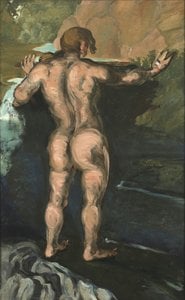
Paul Cézanne’s "Amour in Plaster," painted in 1867, offers a fascinating window into the artist's early development and his exploration of Romantic themes. This oil-on-canvas work (57 x 36 cm) depicts a plaster statue of a nude woman with her back to the viewer, leaning against what appears to be a tree or wall within a garden setting. The painting is characterized by its delicate handling of light and shadow, creating an atmosphere of quiet contemplation and subtle sensuality.
The central focus of "Amour in Plaster" is the statue itself, rendered with remarkable detail despite its seemingly fragile material. Cézanne’s attention to the woman's hair, which appears windblown, adds a sense of movement and life to the otherwise static form. The surrounding environment—the leaves visible on the tree or wall—introduces an element of natural beauty that contrasts with the artificiality of the plaster statue. The choice of a plaster figure is significant; it suggests a fleeting beauty, a temporary representation of ideal feminine form, hinting at themes of fragility and impermanence often explored in Romantic art.
"Amour in Plaster" exemplifies Cézanne's transitional style, blending elements of Romanticism with emerging realist tendencies. While the subject matter—a nude female figure in a natural setting—is rooted in Romantic tradition, Cézanne’s approach to depicting form and light demonstrates a move towards greater objectivity. Unlike the dramatic narratives often found in Romantic paintings, "Amour in Plaster" presents a more introspective scene, inviting viewers to contemplate the beauty of the statue and its relationship to the surrounding environment. Early influences on Cézanne included artists like Gustave Courbet, whose realist approach emphasized depicting subjects as they appeared in everyday life, and the Barbizon school painters who focused on capturing the effects of light and atmosphere in landscapes.
Created during a period when Cézanne was still finding his artistic voice, "Amour in Plaster" represents an important step in his development towards the groundbreaking innovations that would later define his mature style. This work predates his full embrace of Impressionism and his eventual pioneering role in Cubism. It’s considered part of his “dark period,” a time when he experimented with darker palettes and more introspective themes. Understanding this painting within Cézanne's broader artistic trajectory reveals its significance as a bridge between the Romantic past and the modernist future.
"Amour in Plaster" evokes a sense of quiet melancholy and understated beauty. The statue’s turned back invites viewers to project their own emotions and interpretations onto the scene, creating a deeply personal experience. The painting's subtle use of light and shadow enhances its emotional depth, drawing the viewer into a world of contemplation and introspection. This work, though less celebrated than some of Cézanne’s later masterpieces, remains a testament to his early talent and foreshadows the revolutionary artistic vision that would profoundly influence generations of artists to come.


1839 - 1906 , Γαλλία

Master the intricate art of plaster bas-relief with our expert guide for art students. Learn professional techniques in material selection, texture carving, and pigment integration to create soulful, dimensionally rich sculptural masterpieces.

Explore the structural genius of Paul Cézanne. Discover how his mastery of geometric form and color bridged Impressionism and Cubism in this definitive guide for art enthusiasts and collectors.

Master the nuances of three-dimensional art with our expert guide. Explore sculptural history, from Phidias to Neoclassicism, and learn to evaluate materiality, form, and technique like a true connoisseur. Elevate your collection with profound insights into the world of sculpture.

 Δείτε σε πραγματικό χώρο
 Αποστολή
 Κοινοποίηση
 Λεπτομέρειες

 Λήψη
Λήψη
 Παρόμοια αντικείμενα συλλογής
 Ακτινογραφία
 Παρουσίαση
 Διαβάστε περισσότερα







 Η επιλογή με γυαλί είναι διαθέσιμη μόνο για μεγέθη κάτω από 110 εκ.