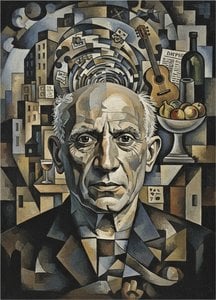
The Two Saltimbanques (1901) από τον/την Πάμπλο Πικάσο, αναπαραγωγή λαδω絵 ζωγραφικής με χειρόπληκτο τεχνικό από έναν κορυφαίο καλλιτέχνη
Προεπισκόπηση σε πραγματική κλίμακα Προεπισκόπηση σε AR Μετάβαση σε Εκτυπώσεις Μετάβαση σε Ψηφιακή Αποτέλεσμα Αποστολή
Λεπτομέρειες Οδηγός Προσθήκη στα αγαπημένα Λήψη Παρόμοια αντικείμενα συλλογής Ακτινογραφία Παρουσίαση Ερωτήσεις & Απαντήσεις Λήψη παρουσίασης Στατιστικά

The Two Saltimbanques Αντιγραφή ελαιογραφίας με χειρό painted τεχνική

Experience Pablo Picasso's 'The Two Saltimbanques'! A captivating Cubist portrait of circus performers, rendered in vibrant oil on canvas. Own a stunning reproduction today!

Συνιδρυτής του Κυβισμού και δημιουργός του Γκέρνικα. Ανακαλύψτε σήμερα τα επαναστατικά έργα του Πάμπλο Πικάσο.

Το έργο τέχνης που εμφανίζεται σε αυτή τη σελίδα προστατεύεται από τους νόμους περί πνευματικών δικαιωμάτων, γεγονός που σημαίνει ότι δεν μπορούμε νομικά να δημιουργήσουμε ή να πουλήσουμε μια ταυτόσημη αναπαραγωγή του. Αυτή η προστασία επιβάλλεται βάσει διεθνών συμφωνιών, όπως η Σύμβαση της Βέρνης καθώς και από τους εθνικούς νόμους, συμπεριλαμβανομένων αυτών που ορίζονται από το Νομοθεσία περί πνευματικών δικαιωμάτων των ΗΠΑ - Τίτλος 17. Όλα τα δικαιώματα κατοχυρωμένα. Απαγορεύεται η αναπαραγωγή χωρίς άδεια.

Ως μια σεβαστή και νόμιμη εναλλακτική, προσφέρουμε προσαρμοσμένα, χειροποίητα έργα τέχνης εμπνευσμένα από το πρωτότυπο. Οι έμπειροι και επαγγελματίες καλλιτέχνες μας μελετούν προσεκτικά το στυλ, τη διάθεση και την καλλιτεχνική ουσία του πρωτοτύπου, ώστε να δημιουργήσουν ένα νέο, μοναδικό έργο που προκαλεί την ίδια αίσθηση — παραμένοντας όμως μια πρωτότυπη δημιουργία από μόνη της.

Αυτή η μέθοδος συμμορφώνεται πλήρως με τους κανονισμούς περί πνευματικών δικαιωμάτων, καθώς δεν περιλαμβάνει την αντιγραφή ή την αναπαραγωγή του προστατευόμενου έργου. Αντίθετα, πρόκειται για μια δημιουργική ερμηνεία — ένα νέο έργο που επηρεάζεται από το πρωτότυπο, χωρίς όμως να είναι πανομοιότυπο με αυτό.

Χειροποίητη Αναπαραγωγή σε Έλαιο

Χειροποίητη ελαιογραφία σε καμβά στο δικό σας μέγεθος και πλαίσιο, κατά παραγγελία από τους καλλιτέχνες μας. ( Μετάβαση σε Εκτυπώσεις Μετάβαση σε Ψηφιακή Αποτέλεσμα)

Corner sample of the P118B picture frame: μολυσμένο πολυστερίνη, 5 cm wide and 3 cm thick
P118B €10
Corner sample of the P118H picture frame: μολυσμένο πολυστερίνη, 5 cm wide and 3 cm thick
P118H €10
Corner sample of the P118W picture frame: μολυσμένο πολυστερίνη, 5 cm wide and 3 cm thick
P118W €10
Corner sample of the P438Z picture frame: μολυσμένο πολυστερίνη, 5.5 cm wide and 3.5 cm thick
P438Z €10
Corner sample of the P508JH picture frame: μολυσμένο πολυστερίνη, 7 cm wide and 3.5 cm thick
P508JH €12
Corner sample of the P508YH picture frame: μολυσμένο πολυστερίνη, 7 cm wide and 3.5 cm thick
P508YH €12
Corner sample of the P805H picture frame: μολυσμένο πολυστερίνη, 5 cm wide and 3.5 cm thick
P805H €10
Corner sample of the P805Z picture frame: μολυσμένο πολυστερίνη, 5 cm wide and 3.5 cm thick
P805Z €10
Corner sample of the P919BZ picture frame: μολυσμένο πολυστερίνη, 7 cm wide and 3.5 cm thick
P919BZ €10
Corner sample of the P919G picture frame: μολυσμένο πολυστερίνη, 7 cm wide and 3.5 cm thick
P919G €10
Corner sample of the P919XJ picture frame: μολυσμένο πολυστερίνη, 7 cm wide and 3.5 cm thick
P919XJ €10
Corner sample of the P959ZH picture frame: μολυσμένο πολυστερίνη, 5 cm wide and 3 cm thick
P959ZH €10
Corner sample of the P968JZ picture frame: μολυσμένο πολυστερίνη, 6 cm wide and 4 cm thick
P968JZ €12
Corner sample of the W106C picture frame: πλήρες ξύλο, 5 cm wide and 3 cm thick
W106C €8
Corner sample of the W218G picture frame: πλήρες ξύλο, 5 cm wide and 3 cm thick
W218G €10
Corner sample of the W218JH picture frame: πλήρες ξύλο, 5 cm wide and 3 cm thick
W218JH €8
Corner sample of the W218Y picture frame: πλήρες ξύλο, 5 cm wide and 3 cm thick
W218Y €10
Corner sample of the W307PJ picture frame: πλήρες ξύλο, 6 cm wide and 3 cm thick
W307PJ €10
Corner sample of the W316G picture frame: πλήρες ξύλο, 6 cm wide and 3 cm thick
W316G €10
Corner sample of the W316PJ picture frame: πλήρες ξύλο, 6 cm wide and 3 cm thick
W316PJ €8
Corner sample of the W316Y picture frame: πλήρες ξύλο, 6 cm wide and 3 cm thick
W316Y €10
Corner sample of the W398PJ picture frame: πλήρες ξύλο, 5 cm wide and 3 cm thick
W398PJ €8
Corner sample of the W4111J picture frame: πλήρες ξύλο, 6.5 cm wide and 3.5 cm thick
W4111J €10
Corner sample of the W500HY picture frame: πλήρες ξύλο, 7 cm wide and 5 cm thick
W500HY €15
Corner sample of the W500JH picture frame: πλήρες ξύλο, 7 cm wide and 5 cm thick
W500JH €15
Corner sample of the W692G picture frame: πλήρες ξύλο, 8 cm wide and 4 cm thick
W692G €12
Corner sample of the W849H picture frame: πλήρες ξύλο, 5 cm wide and 3 cm thick
W849H €8
Corner sample of the W940BG picture frame: πλήρες ξύλο, 7.5 cm wide and 4.5 cm thick
W940BG €15
Corner sample of the W953PJ picture frame: πλήρες ξύλο, 6 cm wide and 3.5 cm thick
W953PJ €8

Πρότυπο
κατόπιν παραγγελίας
CM
INCH

Επιλέξτε από τις προκαθορισμένες διαστάσεις μας που διατηρούν τις αρχικές αναλογίες του έργου τέχνης.

πλάτος
ύψος

Πληκτρολογήστε το πλάτος και το ύψος που επιθυμείτε, ώστε να ταιριάζουν στο κάδሮ ή στον τοίχο σας. Ε เนื่องจาก πρόκειται για χειροποίητη ζωγραφική, σε περίπτωση διαστάσεων με διαφορετικό σχήμα, ο καλλιτέχνης μπορεί να ζωγραφίσει λίγο παραπάνω γύρω από το έργο ή να αφαιρέσει ένα μέρος — η επιλογή είναι δική σας. Σας στέλνουμε ένα ψηφιακό mockup για έγκριση πριν ξεκινήσει η δημιουργία του έργου. Η εικόνα που εμφανίζεται σε αυτή τη σελίδα δεν δείχνει το τελικό αποτέλεσμα — μόνο το mockup το αναδεικνύει.

Παραδείγματα αλλαγών: Αντικατάσταση προσώπου με φωτογραφία του πελάτη· Προσθήκη κατοικίδιου (π.χ., αντικατάσταση γάτας με σκύλο)· Ενσωμάτωση κρυφού μηνύματος στο φόντο· Αλλαγή τοπίου ή στοιχείων του φόντου.
Μετά την παραγγελία, η ομάδα του WahooArt.com θα στείλει email στον πελάτη με οδηγίες και θα παρέχει μια προεπισκόπηση προσχεδίου

Παγκόσμια Αποστολή () σε 3-4 εβδομάδες αντί για τις συνήθεις 5 εβδομάδες. (9 Νοέμβριος). Χωρίς συμβιβασμούς στην ποιότητα.

Δωρεάν γρήγορη διεθνής αποστολή
Κάμβας από Λινό Υψηλής Ποιότητας
Πλήρης ασφάλιση μεταφοράς
Εγγύηση επιστροφής δασμών και φόρων εισαγωγής
Εγγύηση Απόλυτης Ομοιότητας Χρωμάτων
Πολιτική Επιστροφής 100 Ημερών (Μόνο σε περίπτωση ελαττωμάτων)
Εγγύηση επιστροφής 100% των χρημάτων
Προσφορά για πολλαπλές παραγγελίες

Συνολική Τιμή

€ 243

The Two Saltimbanques

Μέσο Αναπαραγωγής

Διαστάσεις Αναπαραγωγής

-

Τελική Τιμή

€ 243

Σημαντικά στοιχεία

  • Subject or theme: Saltimbanques (circus performers)
  • Dimensions: 24 x 36 in (61 x 91 cm)
  • Artistic style: Cubist, Rose Period
  • Year: 1901
  • Title: The Two Saltimbanques
  • Medium: Oil on canvas

ΚВИΖ Τέχνης

Για κάθε ερώτηση υπάρχει μόνο μία σωστή απάντηση.

Ερώτηση 1:
What art movement is most closely associated with Pablo Picasso’s ‘The Two Saltimbanques’?
Ερώτηση 2:
During which period of his career was ‘The Two Saltimbanques’ primarily created?
Ερώτηση 3:
What is a ‘saltimbanque’?
Ερώτηση 4:
The muted background in ‘The Two Saltimbanques’ is characterized by what element?
Ερώτηση 5:
Where can ‘The Two Saltimbanques’ be found today?

The Enigmatic Dance of Saltimbanques: Picasso’s Exploration of Urbanity and Performance

Pablo Picasso's “The Two Saltimbanques,” painted in 1901, is more than a simple portrait; it’s a vibrant snapshot of early 20th-century Barcelona—a city grappling with rapid industrialization and the displacement of its traditional population. This captivating oil on canvas, currently residing at The Museum Quartier Des Héronnières in Fontainebleau, France, offers a profound glimpse into Picasso's burgeoning artistic vision during his formative years, specifically within the context of his Rose Period – a period marked by a shift from the melancholic blues to warmer, more nuanced tones and subject matter.

The painting immediately draws the eye with its two figures, likely itinerant circus performers known as saltimbanques. They occupy a muted background, dominated not by realistic space but by geometric shapes and patterns—a hallmark of Picasso’s pioneering exploration into Cubism. This wasn't merely an aesthetic choice; it reflected a deliberate attempt to dismantle traditional perspective and represent the world from multiple viewpoints simultaneously, mirroring the fragmented experience of urban life at the turn of the century. The figures themselves are rendered with a remarkable blend of realism and abstraction – their faces partially obscured, their bodies subtly distorted, suggesting both vulnerability and resilience.

A Window into Picasso’s Early Career & the Rise of Cubism

To fully appreciate “The Two Saltimbanques,” it's crucial to understand Pablo Picasso’s trajectory. Born in Málaga, Spain, in 1881, he quickly demonstrated an extraordinary talent for art, nurtured initially by his father, a professional artist. Picasso’s early training laid the groundwork for his later revolutionary approach, but he chafed against the rigid academic constraints of the Royal Academy of San Fernando in Madrid, preferring to study the works of masters like Velázquez and Goya independently. It was during his time in Paris that Picasso truly began to experiment with new forms of expression, ultimately co-founding Cubism alongside Georges Braque. This movement sought to break free from conventional representation, challenging viewers to actively engage with the artwork and reconstruct its meaning.

The Rose Period, which encompassed works like “The Two Saltimbanques,” was a transitional phase for Picasso. It followed his intensely emotional Blue Period, characterized by somber tones and themes of poverty and despair. The shift to warmer colors and subjects like circus performers reflected a move towards a more optimistic outlook, though the underlying sense of displacement and social commentary remained present. The saltimbanques themselves became a recurring motif in Picasso’s work during this period, symbolizing the marginalized figures often overlooked by mainstream society.

Deconstructing Form & Interpreting Symbolism

Notice how Picasso deconstructs the forms of his subjects. The figures aren't presented as solid, unified entities; instead, they are broken down into geometric planes and overlapping shapes. This fragmentation isn’t arbitrary; it reflects a desire to capture the essence of the subject – their movement, their energy – rather than simply replicating its appearance. The wine glasses in the foreground, partially obscured, hint at shared companionship and perhaps even a fleeting moment of respite amidst the challenges of itinerant life. The muted background, with its repetitive patterns, creates a sense of unease and suggests the chaotic nature of the urban environment.

Beyond their literal representation, the saltimbanques carry symbolic weight. They represent a transient population – performers who travel from town to town, relying on their skills for survival. Their presence in the painting speaks to themes of poverty, social alienation, and the precariousness of existence within a rapidly changing society. Picasso’s masterful use of color and form invites us to contemplate these complex issues alongside the captivating dance of these enigmatic figures.

A Legacy of Innovation & Artistic Influence

"The Two Saltimbanques" is considered one of the most important works from Picasso's Rose Period, a pivotal moment in his artistic development. It stands as a testament to his innovative spirit and his profound impact on the course of modern art. Alongside “Family of Saltimbanques,” this painting exemplifies Picasso’s evolving style and his growing influence on subsequent generations of artists. Today, it remains a powerful symbol of Cubism's revolutionary approach to representation and a poignant reminder of the human condition within the context of urban transformation. You can explore more works by Pablo Picasso at WahooArt and delve deeper into Cubism on the Kunstmuseum Bern, Switzerland page on WahooArt.

Ερωτήσεις και Απαντήσεις

Παρουσιάζει το "The Two Saltimbanques" έντονες αντιθέσεις φωτός και σκότους;

Το έργο "The Two Saltimbanques" του Πάμπλο Πικάσο παρουσιάζει μια Statement αντίθεση μεταξύ των φωτεινών και των σκιοπαραγωγού του περιοχών.

Ποιος είναι ο καλλιτέχνης πίσω από το "The Two Saltimbanques";

Ο καλλιτέχνης πίσω από το "The Two Saltimbanques" είναι ο/η Πάμπλο Πικάσο. Το έργο καταχωρείται υπό το όνομα του/της Πάμπλο Πικάσο.

Περί τι αφορά το "The Two Saltimbanques";

Το έργο "The Two Saltimbanques" του Πάμπλο Πικάσο απεικονίζει: saltimbanques, circus performers, picasso, cubism, figures, geometric shapes, wine glasses, composition.


Εξερευνήστε έργα τέχνης ταξινομημένα ανά θέμα, στυλ και χαρακτηριστικά.