

Το έργο τέχνης που εμφανίζεται σε αυτή τη σελίδα προστατεύεται από τους νόμους περί πνευματικών δικαιωμάτων, γεγονός που σημαίνει ότι δεν μπορούμε νομικά να δημιουργήσουμε ή να πουλήσουμε μια ταυτόσημη αναπαραγωγή του. Αυτή η προστασία επιβάλλεται βάσει διεθνών συμφωνιών, όπως η Σύμβαση της Βέρνης καθώς και από τους εθνικούς νόμους, συμπεριλαμβανομένων αυτών που ορίζονται από το Νομοθεσία περί πνευματικών δικαιωμάτων των ΗΠΑ - Τίτλος 17. Όλα τα δικαιώματα κατοχυρωμένα. Απαγορεύεται η αναπαραγωγή χωρίς άδεια.
Αυτή η μέθοδος συμμορφώνεται πλήρως με τους κανονισμούς περί πνευματικών δικαιωμάτων, καθώς δεν περιλαμβάνει την αντιγραφή ή την αναπαραγωγή του προστατευόμενου έργου. Αντίθετα, πρόκειται για μια δημιουργική ερμηνεία — ένα νέο έργο που επηρεάζεται από το πρωτότυπο, χωρίς όμως να είναι πανομοιότυπο με αυτό.
Εκτύπωση giclée ή σε καμβά ποιότητας μουσείου με γρήγορη παραγωγή και ευέλικτες επιλογές φινιρίσματος. ( Αγορά χειροποίητου πίνακα Μετάβαση σε Ψηφιακή Αποτέλεσμα)





























Επιλέξτε από τις προκαθορισμένες διαστάσεις μας που διατηρούν τις αρχικές αναλογίες του έργου τέχνης.

Εισάγετε το πλάτος και το ύψος που επιθυμείτε, ώστε να ταιριάζουν στο κάδሮ ή στον τοίχο σας. Μια εκτύπωση μπορεί μόνο να υποστεί κοψίμό και ποτέ να μην γίνει μεγαλύτερη από την αρχική εικόνα, επομένως η επιλογή μεγέθους με διαφορετικό σχήμα συνεπάγεται απώλεια ενός μέρους της εικόνας. Σας στέλνουμε ένα ψηφιακό mockup για έγκριση πριν προχωρήσουμε σε οποιαδήποτε εκτύπωση. Η εικόνα που εμφανίζεται σε αυτή τη σελίδα δεν δείχνει την πραγματική κοπή — μόνο το mockup την παρουσιάζει.
Παγκόσμια Αποστολή () σε 2 εβδομάδες αντί για τις συνήθεις 4/5 εβδομάδες. (9 Νοέμβριος)
The toilette
Διαστάσεις Αναπαραγωγής
In the quiet, sun-drenched summer of 1906, amidst the rugged beauty of the Pyrenees village of Gósol, Pablo Picasso captured a moment that would forever alter the trajectory of modern art. La Toilette is far more than a mere depiction of a daily ritual; it is a profound meditation on femininity and the dual nature of the human spirit. During this celebrated Rose Period, Picasso moved away from the somber, monochromatic tones of his Blue Period, embracing instead a palette of warm ochres, soft pinks, and muted reds. This shift in color was not merely aesthetic but emotional, signaling a period of relative stability and burgeoning passion fueled by his relationship with Fernande Olivier. In this intimate tableau, we find ourselves voyeurs to a private world, where the boundaries between the sensual and the modest begin to blur.
The composition presents a captivating study in contrasts, utilizing two figures—both modeled after Fernande—to explore different facets of womanhood. On one side, a nude figure stands frontally, her body caught in the act of self-admiration as she gazes into a mirror. This figure embodies a raw, uninhibited vitality, a celebration of the flesh that feels both timeless and immediate. In stark contrast, a second, clothed figure sits in profile, her demeanor quiet and perhaps even timid. Through this juxtaposition, Picasso creates a psychological depth that transcends the physical subject matter, inviting the viewer to contemplate the interplay between vulnerability and strength, between the public persona and the private self.
While La Toilette retains a certain charm reminiscent of Naïve Art, it is secretly pregnant with the revolutionary ideas that would soon birth Cubism. Picasso’s technique in this piece demonstrates a masterful command of flattened planes and geometric simplification. He eschews the heavy, academic realism of his predecessors, opting instead for broken brushstrokes and a deliberate reduction of form. By fragmenting the contours of the figures, he begins to experiment with how light and volume can be suggested through surface rather than traditional shading. This approach draws heavily from the influence of Paul Cézanne, whose work taught Picasso that an artist could capture the essence of a subject by treating nature through the cylinder, the sphere, and the cone.
For the discerning collector or interior designer, the allure of this piece lies in its ability to anchor a space with both historical weight and aesthetic grace. The painting’s soft, earthy tones allow it to integrate seamlessly into a variety of sophisticated environments, from a contemporary minimalist gallery setting to a classic, richly textured study. It possesses an understated elegance that does not demand attention through loudness, but rather commands it through its quiet, rhythmic composition. To possess a high-quality reproduction of this work is to bring a piece of art history’s most transformative era into one's personal sanctuary, offering a daily encounter with the very moment when the foundations of modernism were being laid.
Beyond its stylistic innovations, La Toilette is steeped in historical echoes. Picasso’s fascination with ancient iconography—particularly the dignified, profile-oriented depictions found in Egyptian art—is palpable here. By positioning his subjects with such monumental stillness, he elevates a mundane moment of grooming into something sacred and eternal. The mirror itself serves as a powerful symbol of introspection and the fragmented perception of reality, a theme that would become central to the Cubist movement. As we look upon this work, we are not just seeing a woman preparing for her day; we are witnessing the birth of a new way of seeing, where the subject is no longer a fixed entity but a collection of perspectives, moments, and emotions captured in a single, breathless instant.
Η ατμόσφαιρα του έργου "The toilette" του Πάμπλο Πικάσο είναι Romantic, ενώ ο συναισθηματικός του τόνος είναι Reflective.
Τα χρώματα του "The toilette" παρουσιάζουν μια φωτεινότητα επιπέδου Bright Balance.
Το έργο "The toilette" δημιουργήθηκε από τον/την Πάμπλο Πικάσο, που γεννήθηκε στην/στη Ισπανία, στο πλαίσιο του movements Cubist Realism. Η καταγωγή του/της καλλιτέχνη συνδέει το έργο με το Cubist Realism, όπως αυτό προβάλλεται από καλλιτέχνες της/του Ισπανία.

1881 - 1973 , Ισπανία

Embark on a journey through the revolutionary world of Cubism. Discover how masters like Picasso redefined perspective through Analytical and Synthetic techniques in this expert-led guide for art enthusiasts and collectors.
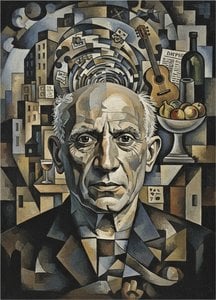
Explore the profound evolution of Cubism through an expert analysis of Pablo Picasso's revolutionary works. From Analytical to Synthetic Cubism, discover the techniques that redefined modern art and learn how to curate these iconic masterpieces for your private collection.

Unveil the radical revolution of Cubism. Explore how masters like Picasso and Braque redefined modern art through fragmented forms and geometric abstraction, offering profound insights for discerning collectors of fine art history and masterpieces.
 Προεπισκόπηση σε πραγματική κλίμακα
 Αποστολή
 Κοινοποίηση
 Λεπτομέρειες
 Οδηγός

 Λήψη
Λήψη
 Παρόμοια αντικείμενα συλλογής
 Ακτινογραφία
 Παρουσίαση
 Ερωτήσεις & Απαντήσεις
 Στατιστικά

 Περισσότερα









 Η επιλογή με γυαλί είναι διαθέσιμη μόνο για μεγέθη κάτω από 110 εκ.


