

Το έργο τέχνης που εμφανίζεται σε αυτή τη σελίδα προστατεύεται από τους νόμους περί πνευματικών δικαιωμάτων, γεγονός που σημαίνει ότι δεν μπορούμε νομικά να δημιουργήσουμε ή να πουλήσουμε μια ταυτόσημη αναπαραγωγή του. Αυτή η προστασία επιβάλλεται βάσει διεθνών συμφωνιών, όπως η Σύμβαση της Βέρνης καθώς και από τους εθνικούς νόμους, συμπεριλαμβανομένων αυτών που ορίζονται από το Νομοθεσία περί πνευματικών δικαιωμάτων των ΗΠΑ - Τίτλος 17. Όλα τα δικαιώματα κατοχυρωμένα. Απαγορεύεται η αναπαραγωγή χωρίς άδεια.
Αυτή η μέθοδος συμμορφώνεται πλήρως με τους κανονισμούς περί πνευματικών δικαιωμάτων, καθώς δεν περιλαμβάνει την αντιγραφή ή την αναπαραγωγή του προστατευόμενου έργου. Αντίθετα, πρόκειται για μια δημιουργική ερμηνεία — ένα νέο έργο που επηρεάζεται από το πρωτότυπο, χωρίς όμως να είναι πανομοιότυπο με αυτό.
Εκτύπωση giclée ή σε καμβά ποιότητας μουσείου με γρήγορη παραγωγή και ευέλικτες επιλογές φινιρίσματος. ( Αγορά χειροποίητου πίνακα Μετάβαση σε Ψηφιακή Αποτέλεσμα)





























Επιλέξτε από τις προκαθορισμένες διαστάσεις μας που διατηρούν τις αρχικές αναλογίες του έργου τέχνης.

Εισάγετε το πλάτος και το ύψος που επιθυμείτε, ώστε να ταιριάζουν στο κάδሮ ή στον τοίχο σας. Μια εκτύπωση μπορεί μόνο να υποστεί κοψίμό και ποτέ να μην γίνει μεγαλύτερη από την αρχική εικόνα, επομένως η επιλογή μεγέθους με διαφορετικό σχήμα συνεπάγεται απώλεια ενός μέρους της εικόνας. Σας στέλνουμε ένα ψηφιακό mockup για έγκριση πριν προχωρήσουμε σε οποιαδήποτε εκτύπωση. Η εικόνα που εμφανίζεται σε αυτή τη σελίδα δεν δείχνει την πραγματική κοπή — μόνο το mockup την παρουσιάζει.
Παγκόσμια Αποστολή () σε 2 εβδομάδες αντί για τις συνήθεις 4/5 εβδομάδες. (11 Νοέμβριος)
The Mirror
Διαστάσεις Αναπαραγωγής
Pablo Picasso's 1932 painting, “The Mirror,” isn’t a straightforward depiction of a reflective surface; it’s a profoundly layered exploration of identity, perception, and the unsettling nature of self-representation. Captured in a deceptively simple composition – a woman reclining on the floor with her head resting against a mirror – the work immediately draws us into a space of quiet contemplation. The painting's power lies not in its realism but in the deliberate ambiguity surrounding the figures present, creating an atmosphere of psychological depth rarely found in Picasso’s earlier Cubist explorations.
The initial impression is one of vulnerability and repose. The woman, rendered with a loose, expressive brushstroke characteristic of Picasso's later work, appears lost in thought or perhaps drifting into sleep. Her posture suggests both surrender and a certain melancholy. However, the inclusion of two secondary figures – a man partially visible at the top left and another near the bottom right – introduces an element of unease. They are not fully integrated into the scene; their presence feels almost spectral, as if they represent fragments of memory or perhaps alternate versions of herself. This deliberate fragmentation mirrors the fractured nature of identity that Picasso so often explored in his art.
“The Mirror” firmly places Picasso within the context of his mature style, bridging the gap between his earlier Cubist experiments and the more emotionally charged works he produced during the 1930s. While retaining elements of Cubism – the fractured planes, multiple perspectives, and flattened space – the painting moves beyond purely analytical deconstruction. The forms are less rigidly geometric and more fluid, allowing for a greater sense of organic movement and psychological intensity. The color palette is muted, dominated by browns, grays, and ochres, contributing to the overall mood of introspection and quiet sadness.
Picasso’s technique here demonstrates a remarkable control over his materials. He employs a layering of paint – glazes and scumbles – that creates a rich surface texture and imbues the figures with a palpable sense of physicality. The mirror itself isn't rendered as a perfect, flawless reflection; it’s subtly distorted, adding to the painting’s unsettling quality. This deliberate imperfection suggests that the image presented is not an objective truth but rather a subjective interpretation – a fragmented representation of reality filtered through the woman’s own consciousness.
The mirror, of course, is central to the painting's symbolism. It represents not just a physical surface for reflection but also the complex process of self-awareness. Picasso frequently used mirrors as metaphors for the elusive nature of identity, suggesting that we are always both observer and observed, subject and object. The woman’s head resting against it implies a confrontation with her own image – a moment of introspection where she is forced to confront her own vulnerabilities and uncertainties.
The presence of the two secondary figures adds another layer of complexity. They could represent lost loves, forgotten memories, or perhaps even aspects of herself that she has suppressed. Their ambiguous positioning reinforces the idea that identity is not a fixed entity but rather a constantly evolving construct shaped by experience and relationships. Ultimately, “The Mirror” invites us to contemplate the mysteries of selfhood and the ways in which we perceive ourselves and others – a timeless theme explored with Picasso’s characteristic brilliance and emotional depth.
Για να δείτε μια προεπισκόπηση μιας αναπαραγωγής του έργου "The Mirror" του Πάμπλο Πικάσο, ανοίξτε τη σελίδα Προεπισκόπηση του έργου.
Μπορείτε να αγοράσετε μια ψηφιακή εικόνα του έργου "The Mirror" του Πάμπλο Πικάσο στη σελίδα Ψηφιακό Αρχείο Εικόνας: λήψη ψηφιακής εικόνας υψηλής ανάλυσης.
Μπορείτε να κατεβάσετε την εικόνα του έργου "The Mirror" του Πάμπλο Πικάσο από τη σελίδα Λήψη ψηφιακού αρχείου: λήψη ψηφιακής εικόνας υψηλής ανάλυσης.


Embark on a journey through the revolutionary world of Cubism. Discover how masters like Picasso redefined perspective through Analytical and Synthetic techniques in this expert-led guide for art enthusiasts and collectors.
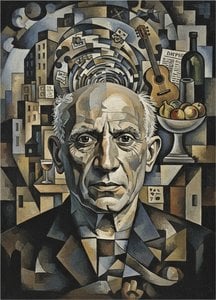
Explore the profound evolution of Cubism through an expert analysis of Pablo Picasso's revolutionary works. From Analytical to Synthetic Cubism, discover the techniques that redefined modern art and learn how to curate these iconic masterpieces for your private collection.

Unveil the radical revolution of Cubism. Explore how masters like Picasso and Braque redefined modern art through fragmented forms and geometric abstraction, offering profound insights for discerning collectors of fine art history and masterpieces.
 Προεπισκόπηση σε πραγματική κλίμακα
 Αποστολή
 Κοινοποίηση
 Λεπτομέρειες
 Οδηγός

 Λήψη
Λήψη
 Παρόμοια αντικείμενα συλλογής
 Ακτινογραφία
 Παρουσίαση
 Ερωτήσεις & Απαντήσεις
 Στατιστικά

 Περισσότερα









 Η επιλογή με γυαλί είναι διαθέσιμη μόνο για μεγέθη κάτω από 110 εκ.


