Αγοράστε μια ψηφιακή εικόνα υψηλής ανάλυσης και βελτιωμένης ποιότητας, πολύ ανώτερης από την προεπισκόπηση στο διαδίκτυο.
Κάθε αρχείο προετοιμάζεται σχολαστικά από τους εξειδικευμένους συνεργάτες μας, με τη χρήση προηγμένων εργαλείων και χειροκίνητου ρετουσαρίσματος υψηλής ακρίβειας. Εξασφαλίζουμε ότι κάθε εικόνα προσφέρει εξαιρετική ευκρίνεια, απόλυτη πιστότητα στο χρώμα και λεπτομερή ανάδραση των λεπτομερειών.
Το τελικό αρχείο παραδίδεται μέσω email εντός 72 ωρών, βελτιστοποιημένο για άμεση χρήση σε επαγγελματικά, εκδοτικά και έντυπα περιβάλλοντα. Πρόκειται για την ίδια ποιότητα που εμπιστεύονται κορυφαία studios σχεδιασμού, εκδότες και γκαλερί.
Κατεβάστε ένα αρχείο υψηλής ανάλυσης για προσωπική χρήση, εκτύπωση και δημιουργικά έργα. ( Αγορά εκτύπωσης Αγορά χειροποίητου πίνακα)
Όταν επιλέγετε το WahooArt.com, δεν αποκτάτε απλώς μια εικόνα – λαμβάνετε ένα επαγγελματικά αναβαθμισμένο ψηφιακό έργο τέχνης, δημιουργημένο με ακρίβεια και με εγγύηση ικανοποίησης. Δείτε όλα όσα περιλαμβάνονται στην παραγγελία σας, αυτόματα:

Το ψηφιακό σας αρχείο εικόνας υψηλής ανάλυσης θα σας σταλεί μέσω email εντός 72 ωρών από την παραγγελία σας — έτοιμο για άμεση χρήση.

Το έργο σας βελτιστοποιείται επαγγελματικά με τη χρήση προηγμένων εργαλείων Τεχνητής Νοημοσύνης και χειροκίνητης επεξεργασίας, εξασφαλίζοντας μέγιστη λεπτομέρεια, ευκρίνεια και ακρίβεια χρωμάτων.

Απώλησες ή διαγράψατε κατά λάθος το αρχείο σας; Μην ανησυχείτε — θα σας το ξαναστείλομε οποιαδήποτε στιγμή, δωρεάν.

Απολαύστε αμέσως τα έργα τέχνης σας χωρίς δασμούς, φόρους ή έξοδα αποστολής - οι ψηφιακές λήψεις είναι πάντα αφορεশিপτεία.

Εξασφαλίζουμε ότι η ψηφιακή σας εικόνα αποτυπώνει τα αυθεντικά χρώματα όσο το δυνατόν πιστότερα, χρησιμοποιώντας επαγγελματικά εργαλεία και διαχείριση χρωμάτων.

Εάν δεν είστε ικανοποιημένοι με την ψηφιακή σας εικόνα, θα την αναθεωρήσουμε ή θα σας επιστρέψουμε το 100% της αξίας της εντός 100 ημερών - χωρίς κανένα ερώτημα.

Δεν είστε ικανοποιημένοι; Λάβετε πλήρη επιστροφή των χρημάτων σας εντός 100 ημερολογιακών ημερών από τη λήψη του ψηφιακού σας αρχείου — χωρίς κανένα ερώτημα.

Αγοράστε 3 εικόνες, κάντε εξοικονόμηση 10% - Αγοράστε 5, κάντε εξοικονόμηση 15% - Αγοράστε 10+, κάντε εξοικονόμηση 20%. Ιδανικό για δημιουργικά έργα, γκαλερί και agencies.
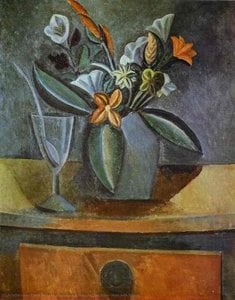
Pablo Picasso's “Flowers on a Table 1,” painted in 1907, isn’t merely a depiction of a vase and its contents; it’s a pivotal moment in the development of Cubism – a radical departure from traditional representation that would forever alter the course of art history. This particular iteration, often considered one of Picasso's earliest explorations of the style alongside “Still Life with Fruit,” offers a fascinating glimpse into his nascent ideas about form and space. The painting’s yellowish tint, hinting at age and perhaps even a faded memory, immediately establishes an atmosphere of quiet contemplation, inviting us to step closer and decipher the fragmented reality presented before us.
The scene is deceptively simple: a metal vase, holding a collection of everyday objects – scissors, a knife, spoons, a bowl, a cup, and a bottle – arranged on a table. However, Picasso doesn’t offer a unified, cohesive view. Instead, he dismantles the forms, breaking them down into geometric shapes and presenting multiple perspectives simultaneously. The vase itself isn't rendered as a single, solid volume; it appears to be constructed from overlapping planes of color and line, suggesting its inherent instability and challenging our perception of depth. This deliberate fracturing is characteristic of Cubism’s core principle – to represent objects not as they appear to the eye in a single moment, but as they are perceived by the mind, assembled from various viewpoints.
“Flowers on a Table 1” stands as a crucial stepping stone toward what would become known as Analytical Cubism. Following his encounter with Paul Cézanne’s work – particularly the artist's emphasis on geometric forms and multiple viewpoints – Picasso began to experiment with breaking down objects into their constituent parts, analyzing them from different angles before reassembling them in an abstract composition. This process is evident here; each element—the vase, the utensils—is dissected and presented as a collection of interlocking planes, creating a sense of dynamism and spatial ambiguity. The lack of traditional shading or modeling further emphasizes this fragmented approach, forcing the viewer to actively engage with the artwork and reconstruct its form in their own mind.
Interestingly, Picasso’s exploration of still life coincided with a period of personal upheaval. His sister Conchita's death profoundly affected him, and themes of loss and mortality subtly permeate his work during this time. While not overtly melancholic, the painting carries an undercurrent of fragility and impermanence—a reflection perhaps of the transient nature of beauty and the inevitability of decay. The muted color palette contributes to this mood, creating a sense of quiet introspection.
Despite its abstract qualities, “Flowers on a Table 1” is deeply rooted in the everyday. The objects depicted – a vase, scissors, knives, spoons—are familiar and commonplace, yet Picasso elevates them to an artistic level through his innovative approach. These tools of domesticity become symbols of human activity, hinting at the rituals and routines of daily life. The arrangement itself can be interpreted as a meditation on order versus chaos, suggesting a delicate balance between functionality and abstraction. The inclusion of the chair in the background subtly anchors the scene within a recognizable space, providing a point of reference for the viewer’s interpretation.
“Flowers on a Table 1” is more than just a still life; it’s a manifesto. It represents a radical shift in artistic thinking, paving the way for future generations of artists to explore abstraction and challenge traditional notions of representation. Picasso’s pioneering work laid the foundation for Synthetic Cubism, where he began incorporating collage elements into his paintings, further blurring the boundaries between art and reality. Today, reproductions of this seminal piece continue to captivate viewers with its innovative composition, evocative atmosphere, and profound exploration of form and perception. WahooArt offers meticulously crafted hand-painted reproductions that faithfully capture the essence of this groundbreaking artwork, allowing you to experience Picasso’s revolutionary vision firsthand.


1881 - 1973 , Ισπανία

 Δείτε σε πραγματικό χώρο
 Αποστολή
 Κοινοποίηση
 Λεπτομέρειες

 Λήψη
Λήψη
 Παρόμοια αντικείμενα συλλογής
 Ακτινογραφία
 Παρουσίαση
 Διαβάστε περισσότερα