A Vision of Suffering: Decoding Hans Memling’s Crucifixion Scene
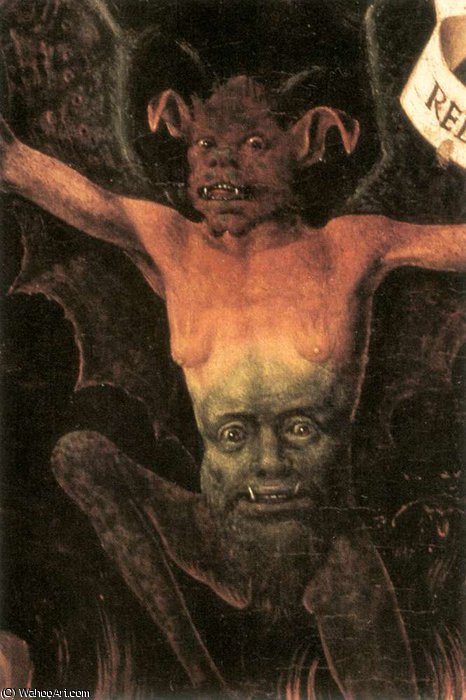
This striking, yet unsettling painting by Hans Memling presents a deeply evocative and unusual depiction of a demonic figure undergoing crucifixion. While untitled (catalogued as 9957), the work immediately draws the viewer into a complex interplay of religious iconography, psychological torment, and masterful artistic technique characteristic of the Early Netherlandish period.
Subject & Composition
The central focus is a monstrous being – part human, part demon – contorted upon a cross. The creature’s features are deliberately grotesque, with horns and wings signaling its infernal nature. This isn't a traditional depiction of Christ’s Passion; instead, Memling presents us with the *punishment* of a demonic entity. Two smaller figures inhabit the background, their roles ambiguous but suggesting witnesses to this extraordinary event. The composition is carefully balanced despite the disturbing subject matter, drawing the eye towards the central figure and emphasizing its suffering.
Style & Technique
Memling, a master trained in the workshop of Rogier van der Weyden, demonstrates his signature style here: meticulous detail, luminous color palettes, and an almost enamel-like finish achieved through layering oil paint. The precision with which he renders textures – from the creature’s skin to the wood of the cross – is remarkable.
His use of light and shadow isn't dramatic *chiaroscuro*, but a subtle modeling that gives form and volume, enhancing the realism even within this fantastical scene. This technique aligns with the broader artistic trends of 15th-century Bruges, where Memling flourished as a leading painter.
Historical & Religious Context
During the late medieval period, fascination with demons and the battle between good and evil was prevalent.
This painting likely served as a visual reminder of divine justice and the ultimate triumph of Christianity over demonic forces. It’s important to note that depictions of devils were not solely intended to frighten; they also functioned as moral lessons, warning viewers against succumbing to temptation. Memling's patrons often included clergymen and wealthy merchants, suggesting this work may have been commissioned for private devotion or displayed within a religious context.
Symbolism & Interpretation
The crucifixion itself is laden with symbolism, traditionally representing sacrifice and redemption. However, applying this to a demonic figure introduces a fascinating paradox. Is Memling depicting the fall of Lucifer? A punishment inflicted upon a particularly wicked demon? Or perhaps an allegory for the consequences of sin? The ambiguity invites contemplation.
- The wings suggest fallen status.
- The horns are classic signifiers of diabolism.
- The act of crucifixion, typically reserved for Christ, is powerfully subverted here.
Emotional Impact & Aesthetic Appeal
Despite its unsettling subject matter, the painting possesses a strange beauty. Memling’s technical skill and attention to detail are captivating. The work evokes feelings of unease, pity (perhaps surprisingly), and awe at the artist's ability to render such a disturbing vision with such finesse.
For collectors and interior designers, this piece offers a unique statement – a blend of historical artistry, religious symbolism, and psychological depth. A high-quality reproduction would serve as a compelling focal point in any space, sparking conversation and inviting closer inspection. It’s a work that rewards sustained viewing, revealing new layers of meaning with each encounter.



 Αγοράστε την αναπαραγωγή
 Αποστολή
 Κοινοποίηση
 Λεπτομέρειες

 Λήψη
Λήψη
 Παρόμοια έργα
 Ακτινογραφία
 Παρουσίαση
 Περισσότερα λεπτομέρεια






































 Η επιλογή με γυαλί είναι διαθέσιμη μόνο για μεγέθη κάτω από 110 εκ.