Δείτε σε πραγματικό χώροΔείτε σε πραγματικό χώρο Προεπισκόπηση σε ARΠροεπισκόπηση σε AR Μετάβαση σε Εκτυπωση Μετάβαση σε ΕκτυπωσηΑγορά χειροποίητου πίνακα Αγορά χειροποίητου πίνακα ΑποστολήΑποστολή
ΛεπτομέρειεςΛεπτομέρειες Προσθήκη στα αγαπημένα Προσθήκη στα αγαπημένα ΛήψηΛήψη Παρόμοια αντικείμενα συλλογήςΠαρόμοια αντικείμενα συλλογής ΑκτινογραφίαΑκτινογραφία ΠαρουσίασηΠαρουσίαση ΣτατιστικάΣτατιστικά

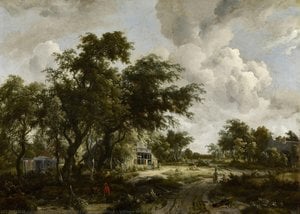
LA FORET DE CHENES

Meindert Hobbema's "La Forêt de Chênes" captures a serene Dutch woodland scene with masterful atmospheric perspective and luminous detail, showcasing the artist’s signature style.

Meindert Hobbema: Dutch landscape master known for serene wooded scenes & atmospheric light. Explore his detailed paintings of canals, roads, & buildings from 17th-century Amsterdam.

Αγοράστε μια ψηφιακή εικόνα υψηλής ανάλυσης και βελτιωμένης ποιότητας, πολύ ανώτερης από την προεπισκόπηση στο διαδίκτυο.

Κάθε αρχείο προετοιμάζεται σχολαστικά από τους εξειδικευμένους συνεργάτες μας, με τη χρήση προηγμένων εργαλείων και χειροκίνητου ρετουσαρίσματος υψηλής ακρίβειας. Εξασφαλίζουμε ότι κάθε εικόνα προσφέρει εξαιρετική ευκρίνεια, απόλυτη πιστότητα στο χρώμα και λεπτομερή ανάδραση των λεπτομερειών.

Το τελικό αρχείο παραδίδεται μέσω email εντός 72 ωρών, βελτιστοποιημένο για άμεση χρήση σε επαγγελματικά, εκδοτικά και έντυπα περιβάλλοντα. Πρόκειται για την ίδια ποιότητα που εμπιστεύονται κορυφαία studios σχεδιασμού, εκδότες και γκαλερί.

Ψηφιακή εικόνα

Κατεβάστε ένα αρχείο υψηλής ανάλυσης για προσωπική χρήση, εκτύπωση και δημιουργικά έργα. (Μετάβαση σε Εκτυπωση Μετάβαση σε ΕκτυπωσηΑγορά χειροποίητου πίνακα Αγορά χειροποίητου πίνακα)

Συνολικό Κόστος

$ 24,90

Περιλαμβάνεται σε κάθε παραγγελία ψηφιακής εικόνας

Επαγγελματική Ψηφιακή Παράδοση με Εγγύηση

Όταν επιλέγετε το WahooArt.com, δεν αποκτάτε απλώς μια εικόνα – λαμβάνετε ένα επαγγελματικά αναβαθμισμένο ψηφιακό έργο τέχνης, δημιουργημένο με ακρίβεια και με εγγύηση ικανοποίησης. Δείτε όλα όσα περιλαμβάνονται στην παραγγελία σας, αυτόματα:

shipping_icon
Άμεση αποστολή μέσω email

Το ψηφιακό σας αρχείο εικόνας υψηλής ανάλυσης θα σας σταλεί μέσω email εντός 72 ωρών από την παραγγελία σας — έτοιμο για άμεση χρήση.

canvas_icon
Ψηφιακό Αρχείο με Τεχνητή Νοημοσύνη

Το έργο σας βελτιστοποιείται επαγγελματικά με τη χρήση προηγμένων εργαλείων Τεχνητής Νοημοσύνης και χειροκίνητης επεξεργασίας, εξασφαλίζοντας μέγιστη λεπτομέρεια, ευκρίνεια και ακρίβεια χρωμάτων.

insurance_icon
Δωρεάν επανεκδόσεις مدى ζωής

Απώλησες ή διαγράψατε κατά λάθος το αρχείο σας; Μην ανησυχείτε — θα σας το ξαναστείλομε οποιαδήποτε στιγμή, δωρεάν.

tax_icon
Χωρίς Τελωνειακούς Φόρους - Ποτέ

Απολαύστε αμέσως τα έργα τέχνης σας χωρίς δασμούς, φόρους ή έξοδα αποστολής - οι ψηφιακές λήψεις είναι πάντα αφορεশিপτεία.

color_icon
Εγγύηση Ακριβούς Χρωματισμού

Εξασφαλίζουμε ότι η ψηφιακή σας εικόνα αποτυπώνει τα αυθεντικά χρώματα όσο το δυνατόν πιστότερα, χρησιμοποιώντας επαγγελματικά εργαλεία και διαχείριση χρωμάτων.

return_icon
Εγγύηση Ικανοποίησης 100 Ημερών

Εάν δεν είστε ικανοποιημένοι με την ψηφιακή σας εικόνα, θα την τροποποιήσουμε ή θα σας επιστρέψουμε το 100% εντός 100 ημερών - χωρίς κανένα ερώτημα.

guarantee_icon
100% Εγγύηση Επιστροφής Χρήματος

Δεν είστε ικανοποιημένοι; Λάβετε πλήρη επιστροφή των χρημάτων σας εντός 100 ημερών από τη λήψη του ψηφιακού σας αρχείου - χωρίς κανένα ερώτημα.

discount_icon
Εκπτώσεις για μαζικές παραγγελίες

Αγοράστε 3 εικόνες, κάντε εξοικονόμηση 10% - Αγοράστε 5, κάντε εξοικονόμηση 15% - Αγοράστε 10+, κάντε εξοικονόμηση 20%. Ιδανικό για δημιουργικά έργα, γκαλερί και agencies.

Γρήγορα στοιχεία

  • Year: 1660s
  • Medium: Oil on canvas
  • Movement: Golden Age Dutch
  • Subject or theme: Forest landscape
  • Location: Louvre, Paris
  • Notable elements: Atmospheric perspective
  • Influences: Jacob van Ruysdael

A Serene Woodland Vision – Unveiling “La Forêt de Chênes”

Meindert Hobbema’s “La Forêt de Chênes,” a captivating landscape painting from the late 17th century, isn't merely a depiction of a forest; it’s an immersive experience. Painted during a period of relative obscurity for the artist himself, yet increasingly appreciated in later decades, this work embodies the quiet grandeur and atmospheric depth that defined the Dutch Golden Age. Hobbema, a devoted pupil of Jacob van Ruysdael, masterfully captures the essence of the Dutch countryside – not through dramatic vistas or heroic figures, but with an exquisite sensitivity to light, texture, and the subtle poetry of nature. The painting transports us to a cool, dappled woodland, where sunlight filters through the dense canopy, casting long shadows and illuminating patches of moss-covered earth.

La Forêt de Chênes by Meindert Hobbema

The Language of Light and Shadow – Technique and Style

Hobbema’s technique is characterized by a remarkable layering of paint, creating an astonishingly realistic sense of depth and texture. He employs atmospheric perspective with exquisite precision—distant trees fade into a hazy blue-grey, while the foreground oaks stand proud and detailed, their rough bark rendered with meticulous care. The brushstrokes are visible yet controlled, contributing to the painting’s overall sense of realism without sacrificing elegance. The color palette is predominantly earthy – deep greens, browns, and greys dominate, punctuated by subtle hints of yellow and orange in the foliage, suggesting a late afternoon sun. This masterful use of light and shadow isn't simply decorative; it evokes a profound feeling of tranquility and solitude. The composition itself—a winding path leading into the heart of the forest—draws the viewer’s eye deeper into this serene world.

A Dutch Golden Age Masterpiece – Historical Context

“La Forêt de Chênes” is a quintessential example of the Dutch Golden Age landscape tradition. Following in the footsteps of Jacob van Ruysdael, Hobbema focused on capturing the beauty of the Netherlands’ rural landscapes—not grand historical scenes or mythological narratives, but intimate glimpses into everyday life and the natural world. During this period, the Dutch Republic was experiencing a flourishing economy and a burgeoning artistic scene, and landscape painting became increasingly popular as a means of celebrating the country's prosperity and its connection to nature. Hobbema’s work reflects this cultural shift, offering a contemplative escape from the bustle of urban life.

Symbolism and Emotional Resonance – More Than Just a Landscape

Beyond its technical brilliance, “La Forêt de Chênes” resonates with deeper symbolic meaning. The towering oaks, often associated with strength, longevity, and wisdom, stand as silent witnesses to the passage of time. The winding path invites us on a journey of discovery, suggesting a connection between humanity and nature. The painting’s overall mood is one of peaceful contemplation—a reminder of the beauty and serenity that can be found in the natural world. It's a scene designed not just to be observed, but to be felt – a quiet invitation to slow down, breathe deeply, and connect with something larger than ourselves.

Bringing “La Forêt de Chênes” into Your Space

Reproductions of Hobbema’s “La Forêt de Chênes” offer a beautiful way to bring this timeless masterpiece into your home or office. Whether you choose a large-scale canvas print or a smaller metal poster, the painting's atmospheric depth and serene beauty will undoubtedly enhance any space. Consider framing it in a natural wood frame to complement the artwork’s earthy tones, or displaying it alongside other landscape paintings from the Dutch Golden Age for a cohesive and visually stunning collection.


Βιογραφικό Καλλιτέχνη

The Quiet Master of Dutch Landscape

Meindert Lubbertszoon Hobbema remains a figure shrouded in relative obscurity compared to his contemporaries like Rembrandt and Vermeer, yet he stands as one of the most distinctive voices within the Golden Age of Dutch art. His landscapes—characterized by an exquisite level of detail and imbued with a palpable sense of atmosphere—capture the serene beauty of rural Holland with remarkable precision. While biographical documentation remains somewhat elusive, scholars have pieced together a portrait of an artist deeply rooted in his era, profoundly influenced by the masters of his time and committed to capturing the subtle nuances of light, texture, and the natural world. Born in Amsterdam around 1638, Hobbema’s early life was shaped by the vibrant artistic energy of the Dutch Golden Age. He entered the professional sphere through a formal apprenticeship under Jacob van Ruysdael beginning approximately 1657. This formative period was essential, as it allowed him to absorb Ruysdael's masterful technique for rendering landscapes with luminous color palettes and meticulous observation. Through this lineage, Hobbema inherited a tradition of storytelling through scenery, where the placement of a tree or the bend of a path served to guide the viewer’s eye through a carefully composed natural drama.

Evolution of Style and Technique

The partnership with Ruysdael was far more than a mere educational period; it fostered an intellectual and stylistic exchange that propelled Hobbema’s artistic evolution. While his early works often mirrored the river scenes and compositions of his mentor, Hobbema gradually developed a distinctive vision marked by a heightened sensitivity to light and color. By around 1662, the influence of Ruysdael had solidified into a style that was uniquely his own—one characterized by a preference for muted tones, textured brushstrokes, and an unwavering focus on capturing the natural world as it appeared to the eye. His mature works are celebrated for their ability to capture the subtle interplay of sunlight filtering through dense foliage and the way light dances across woodland paths. Unlike the more dramatic or stormy landscapes found in other Dutch traditions, Hobbema’s oeuvre often leans toward a peaceful, structured realism. He possessed an unparalleled ability to render:
  • The intricate textures of bark and moss on ancient trees.
  • The atmospheric depth created by receding woodland vistas.
  • The quiet, rhythmic movement of sunlight through leafy canopies.
  • The humble beauty of rural roads, canals, and rustic buildings.

Legacy and Historical Significance

Hobbema’s contribution to the Dutch landscape tradition lies in his ability to elevate the mundane aspects of the countryside into subjects of profound contemplative beauty. His paintings do not merely document the topography of 17th-century Holland; they evoke a sense of stillness and permanence. Through his mastery of light and composition, he transformed simple wooded scenes into complex studies of nature's quiet grandeur. Though he may not have achieved the global celebrity of the era's portraitists, his historical significance is cemented by his role in perfecting the landscape genre. His work serves as a vital link in the evolution of Dutch realism, providing a window into a period where the mastery of light and the observation of nature became the ultimate expressions of artistic truth. Today, his paintings remain cherished for their ability to transport the viewer to a tranquil, sun-dappled world that feels both intimately real and timelessly poetic.
Meindert Hobbema

Meindert Hobbema

1638 - 1709 , Netherlands

Γρήγορα στοιχεία

  • Artistic Movement Or Style: Golden Age Dutch Landscape Art
  • Artists Or Movements Influenced By This Artist: Rembrandt
  • Artists Who Influenced This Artist: Jacob van Ruysdael
  • Date Of Birth: Amsterdam, Netherlands (1638)
  • Date Of Death: December 1709
  • Full Name: Meindert Lubbertszoon Hobbema
  • Nationality: Dutch
  • Notable Artworks:
    • A Watermill 1
    • Wooded Landscape with Cottages
    • Cottages in a Wood
  • Place Of Birth: Amsterdam