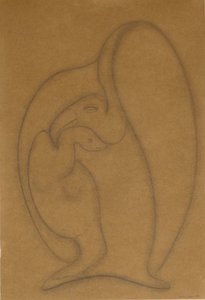
Martinet Pierre: The Romantic Echoes of Napoleon
The canvases of Martinet Pierre, a largely overlooked figure of 19th-century French art, possess a captivating intensity—a potent blend of romanticism and historical drama centered almost exclusively around the enigmatic figure of Napoleon Bonaparte. Born in the tumultuous years following the Napoleonic Wars, Pierre’s work isn't merely a chronicle of military triumph; it’s an exploration of power, vulnerability, and the enduring legacy of a man who simultaneously embodied both grandeur and melancholy. His paintings, particularly those depicting ‘Le Major’ (The General) and other equestrian portraits, resonate with a profound understanding of human psychology, capturing not just the outward appearance of authority but also the subtle nuances of emotion beneath the surface.
Pierre's early life remains somewhat shrouded in mystery, though biographical details are scarce. He was apprenticed to an engineer and draftsman, skills that undoubtedly informed his meticulous attention to detail and anatomical accuracy—qualities crucial to rendering the imposing physique of Napoleon with such convincing realism. Interestingly, a later search reveals he was initially trained as an ornithologist, suggesting a keen observational eye for nature and a sensitivity to light and shadow – elements which would later become hallmarks of his artistic style. This unexpected background hints at a mind accustomed to detailed study and a capacity for appreciating the delicate balance within complex systems, perhaps contributing to his ability to portray the weight of command and the burden of leadership.
His career began amidst the fervor surrounding Napoleon’s return from exile, a period when the emperor's image was meticulously cultivated through propaganda. Martinet didn’t simply replicate this official iconography; instead, he seemed driven by a desire to delve deeper into the man himself. He wasn’t interested in glorifying military victories but rather in conveying the internal state of the figure—the weariness, the strategic calculation, and even, occasionally, a flicker of vulnerability within the emperor's gaze. This is particularly evident in ‘Le Major,’ where Napoleon isn’t presented as an invincible warrior but as a man wrestling with the immense responsibility of his position.
The Equestrian Portrait: A Revolutionary Form
Martinet’s choice to depict Napoleon on horseback was itself a deliberate and significant artistic decision. The equestrian portrait, a tradition dating back to the Renaissance, had been largely abandoned by the mid-19th century, deemed overly ornate and associated with the pomp of previous eras. However, Martinet revived this format, imbuing it with a new sense of realism and psychological depth. He understood that the horse wasn’t merely a vehicle for power; it was an extension of the rider's will, a symbol of control and dominance. The dynamic interaction between man and beast—the subtle shift in posture, the shared gaze—creates a powerful visual metaphor for the relationship between leadership and authority.
His technique involved painstaking detail – meticulously rendered saddles, harnesses, and armor, all reflecting the era’s military fashion. He employed a rich palette of browns, golds, and reds, colors that evoke both the grandeur of imperial power and the warmth of human emotion. The lighting is particularly masterful, creating dramatic contrasts that highlight the contours of Napoleon's face and body, emphasizing his strength and determination while simultaneously hinting at the shadows of doubt and responsibility.
Influences and Artistic Style
Martinet’s style can be characterized as a synthesis of Romanticism and Neoclassicism. He inherited from the Romantics a fascination with emotion, drama, and the sublime—qualities evident in his dynamic compositions and expressive brushwork. However, he also embraced the clarity and precision of Neoclassical art, particularly in his rendering of anatomy and detail. The influence of earlier masters, such as Jacques-Louis David, is subtly present in his carefully constructed figures and balanced compositions.
Beyond artistic influences, Martinet’s work reflects a broader cultural context—the lingering fascination with Napoleon after the fall of the Empire. His paintings capture not just the historical figure but also the enduring myth of Napoleon—a complex blend of hero and villain, visionary leader and ruthless dictator. The artist's ability to convey this duality is what makes his portraits so compelling and enduring.
Legacy and Rediscovery
Despite his talent, Martinet’s work remained largely obscure for much of the 20th century. His paintings were often overlooked in favor of more celebrated artists of the period. However, in recent decades, there has been a growing interest in his oeuvre—a renewed appreciation for his unique artistic vision and technical skill. The rediscovery of ‘Cheval de Napoléon Ier La Belle’ and ‘Cheval de Napoléon Ier Le Major,’ among other works, is testament to the enduring power of his art.
Today, Martinet Pierre stands as a significant, if somewhat enigmatic, figure in French Romanticism. His paintings offer a poignant glimpse into the mind of Napoleon Bonaparte—a man who continues to fascinate and inspire debate centuries after his death. His work serves as a reminder that even within grand historical narratives, it is the individual human experience that ultimately holds the greatest power to captivate and endure.



 Προεπισκόπηση
 Μετάβαση σε Εκτυπώσεις
 Αποστολή
 Κοινοποίηση
 Λεπτομέρειες
 Οδηγός

 Λήψη
Λήψη
 Παρόμοια αντικείμενα συλλογής
 Ακτινογραφία
 Παρουσίαση
 Στατιστικά
 Περισσότερα λεπτομέρεια






































 Η επιλογή με γυαλί είναι διαθέσιμη μόνο για μεγέθη κάτω από 110 εκ.