Exploring the Quiet Intensity of Rothko’s Untitled Still Life
The painting “Untitled (still life)” by Mark Rothko stands as a testament to the artist's masterful ability to distill complex emotions into deceptively simple forms—a cornerstone of Abstract Expressionism and a captivating subject for discerning art enthusiasts. Measuring an unknown dimension, this piece emerged from a period marked by profound personal upheaval yet yielded an image brimming with contemplative beauty.
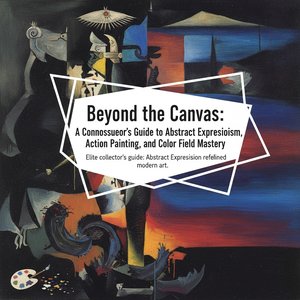
- Subject Matter: At first glance, the composition presents a seemingly straightforward depiction of a tabletop arrangement. However, Rothko eschews representational accuracy, prioritizing instead the conveyance of feeling. A central bowl dominates the visual space, surrounded by two vases positioned on either side—a deliberate choice that contributes to the overall sense of balance and stillness.
- Style & Technique: Rothko’s signature style is characterized by large rectangular blocks of color – a technique he termed “color field painting.” In this untitled work, he employs layered washes of pigment, creating subtle gradations and blending hues that evoke an ethereal quality. The absence of discernible contours or recognizable objects amplifies the impact of color itself, transforming it into the primary vehicle for expressing emotion.
Historical Context: Embracing Existential Concerns
Created during Rothko’s formative years as an artist—roughly between 1940 and 1950—the painting reflects the broader anxieties of the post-war era. Abstract Expressionism arose in response to the devastation of World War II, rejecting traditional artistic conventions in favor of spontaneous gesture and emotional intensity. Artists like Rothko sought to grapple with existential questions about human existence, confronting themes of mortality and searching for solace amidst chaos.
Symbolic Resonance: Beyond Mere Color
While seemingly devoid of explicit imagery, “Untitled (still life)” is laden with symbolic significance. The bowl could represent containment—perhaps reflecting Rothko’s own preoccupation with confronting difficult emotions—while the vases symbolize growth and renewal. Even the inclusion of a head portrait adds another layer of complexity, hinting at contemplation and introspection. Rothko deliberately avoids providing answers; instead, he invites viewers to engage in their own emotional exploration.
Emotional Impact: A Meditation on Quietude
The painting’s enduring appeal lies in its ability to evoke a profound sense of calm and melancholy. The muted colors—primarily reds, yellows, and blues—create an atmosphere of subdued luminosity that draws the eye inward. Rothko's masterful manipulation of color achieves something remarkable: it bypasses rational thought, tapping directly into primal emotions. It’s a piece designed not to impress but to resonate deeply within the viewer’s subconscious, prompting reflection on themes of beauty, sorrow, and the human condition.


![Untitled (still Life) [recto] — Μάρκος Ρόθκο](/media/artworks/images-full/81/76/8176c34b64f9b62d916edb9a2704ad25.jpg)
 Δείτε σε πραγματικό χώρο
 Αγορά χειροποίητου πίνακα
 Αποστολή
 Κοινοποίηση
 Λεπτομέρειες

 Λήψη
Λήψη
 Παρόμοια αντικείμενα συλλογής
 Ακτινογραφία
 Παρουσίαση
 Stats
Stats
 Διαβάστε περισσότερα






































 Η επιλογή με γυαλί είναι διαθέσιμη μόνο για μεγέθη κάτω από 110 εκ.