A Meditation on Darkness and Light: Examining Mark Rothko’s Untitled
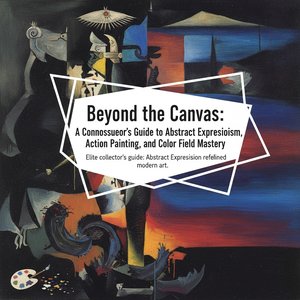
Mark Rothko's "Untitled," completed in 1945, stands as a cornerstone of American Abstract Expressionism—a movement that sought to transcend representational art and delve into the realm of emotion and psychological experience. This monumental Color Field painting, measuring 74 x 60 cm, immediately captivates with its subdued palette dominated by earthy hues – predominantly browns and ochres – punctuated by subtle washes of crimson and violet. Yet, it’s not merely color that commands attention; rather, it is the masterful orchestration of vertical rectangles that create a profound sense of stillness and contemplation.
Style and Technique: Embracing Minimalism
Rothko's approach to painting was radically reductive, prioritizing pure pigment over illusionistic detail. He famously described his method as “painting with feeling,” eschewing brushstrokes in favor of applying wet paint onto canvas in thin layers—a technique known as alla prima. This deliberate avoidance of visible marks contributes significantly to the artwork’s textural quality; a rough surface reveals subtle variations in tone and color, hinting at the artist's physicality and process. The rectangles themselves are stacked horizontally, creating an immersive experience for the viewer, inviting them into a space devoid of recognizable forms or narratives. This minimalist aesthetic aligns with the broader philosophical currents of the postwar era, reflecting a desire to confront existential anxieties without resorting to traditional symbols or imagery.
Historical Context: Echoes of Trauma and Uncertainty
Painted in the immediate aftermath of World War II, “Untitled” reflects the pervasive atmosphere of disillusionment and uncertainty that gripped Europe and America. Rothko’s personal history—marked by emigration from Latvia amidst political instability and the loss of his father—fueled a preoccupation with themes of mortality and trauma. The painting's somber colors and ambiguous composition resonate with this emotional landscape, mirroring the anxieties inherent in confronting the horrors of war and grappling with questions of faith and purpose. It’s important to note that Rothko was deeply influenced by Eastern Orthodox Christianity, which instilled in him a reverence for silence and contemplation—values that are powerfully conveyed through the artwork's visual language.
Symbolism: Layers of Meaning Beneath Surface Calm
Despite its apparent simplicity, “Untitled” is laden with symbolic significance. The rectangles themselves can be interpreted as representing spiritual realms or psychological states – blocks of color conveying profound emotion without explicit articulation. The subtle crimson and violet hues evoke feelings of passion and vulnerability, hinting at the complexities of human experience. Furthermore, the deliberate lack of focal point encourages viewers to engage in a personal dialogue with the artwork, prompting reflection on themes of darkness and light—representing opposing forces that coexist within the human psyche. As noted in Rothko Chapel’s description, “The painting invites contemplation about the nature of existence.”
Emotional Impact: A Journey Into Inner Space
Ultimately, "Untitled" succeeds in transporting the viewer to a realm beyond rational thought, fostering an experience of profound emotional resonance. The artwork's stillness and luminosity create a meditative atmosphere, encouraging introspection and facilitating a connection with one’s own inner landscape. It is precisely this ability to evoke feeling—to bypass intellectual analysis—that distinguishes Rothko’s work from other artistic endeavors of his time. Viewing this reproduction offers an opportunity to appreciate the enduring power of abstract art to communicate universal truths about human emotion and spirituality.
Ερωτήσεις & Απαντήσεις
Προς ποιο καλλιτεχνικό ρεύμα ανήκει το έργο "Untitled" του Μάρκος Ρόθκο;
Το έργο "Untitled" ανήκει στο καλλιτεχνικό ρεύμα Abstract Expressionism. Το ρεύμα αυτό υποδηλώνει την καλλιτεχνική παράδοση στην οποία περιλαμβάνεται το έργο.
Πότε δημιουργήθηκε το "Untitled";
Η δημιουργία του έργου "Untitled" του Μάρκος Ρόθκο χρονολογείται στο έτος 1945.
Ποιο είναι το σχήμα και οι διαστάσεις του έργου "Untitled" του Μάρκος Ρόθκο;
Το έργο "Untitled" του Μάρκος Ρόθκο έχει διαστάσεις ενός Portrait με 74 x 60 cm.
Το έργο "Untitled" διαθέτει προεπισκόπηση σε augmented reality;
Το έργο "Untitled" διαθέτει προεπισκόπηση με τεχνητή πραγματικότητα: η σελίδα Προεπισκόπηση AR του έργου σας επιτρέπει να το δείτε στον δικό σας χώρο μέσω μιας συμβατής συσκευής.
Ποιος είναι ο καλλιτέχνης πίσω από το "Untitled";
Το έργο "Untitled" αποδίδεται στον/στην Μάρκος Ρόθκο.
Για τι χρήση συνιστάται μια αναπαραγωγή του έργου "Untitled" του Μάρκος Ρόθκο;
Η προτεινόμενη χρήση μιας εκτύπωσης του "Untitled" είναι η Mood.
Σε τι ηλικία δημιούργησε ο/η Μάρκος Ρόθκο το "Untitled";
Ο/Η Μάρκος Ρόθκο ήταν 42 ετών όταν δημιούργησε το "Untitled" το 1945. Η ηλικία υπολογίζεται από το έτος γέννησης του καλλιτέχνη, 1903.



 Προεπισκόπηση
 Αγορά χειροποίητου πίνακα
 Αποστολή
 Κοινοποίηση
 Λεπτομέρειες
 Οδηγός

 Λήψη
Λήψη
 Παρόμοια αντικείμενα συλλογής
 Ακτινογραφία
 Παρουσίαση
 Στατιστικά


 Περισσότερα λεπτομέρεια






































 Η επιλογή με γυαλί είναι διαθέσιμη μόνο για μεγέθη κάτω από 110 εκ.