A Meditation on Color and Absence: Exploring Mark Rothko’s Untitled 91
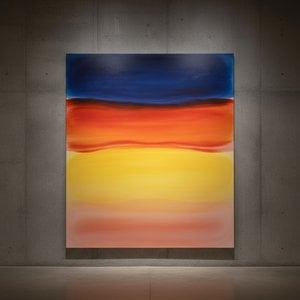
The painting “Untitled 91” by Mark Rothko stands as a testament to the profound power of abstract expressionism—a movement that sought to transcend representational art, prioritizing emotion and intuition over precise depiction. Measuring an unknown dimension, this monumental canvas commands attention not through recognizable imagery but through its masterful manipulation of color and texture, inviting viewers into a contemplative experience unlike any other. Created sometime between 1960 and 1970, during Rothko’s prolific period of artistic exploration, it embodies the core tenets of his distinctive style: large rectangular blocks of pigment layered upon each other to create luminous fields that bleed into one another.
- Style & Technique: Rothko's approach was revolutionary for its time. He eschewed traditional brushstrokes, opting instead for a technique known as “condensation,” where paint is applied thinly and evenly, allowing it to merge seamlessly with adjacent layers. This method prioritizes the visual experience—the way light interacts with color—above any intellectual understanding of form.
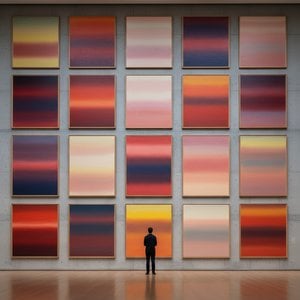
- Color Palette: Dominating the composition are hues of red and white. The crimson rectangles pulsate with an inner vibrancy, while the paler shades provide a subtle counterpoint, creating a dynamic interplay between warmth and coolness. Rothko meticulously calibrated these colors to evoke feelings of serenity and melancholy simultaneously.
- Historical Context: Rothko emerged from the crucible of postwar American art, reacting against the formalism of European modernism. He aligned himself with fellow artists like Willem de Kooning and Jackson Pollock, forging a path toward expressive abstraction that resonated deeply with the anxieties and uncertainties of the era.
Symbolic Resonance: While Rothko famously resisted interpretations of his work—declaring he wished to avoid “telling anyone what it is”—scholars have noted recurring motifs suggestive of spiritual contemplation. The rectangular blocks can be seen as representing cells or fragments of consciousness, mirroring the artist’s own preoccupation with existential questions. The subtle gradations of color symbolize transitions between states of being and invite viewers to consider the mysteries of life and death.
Emotional Impact: Viewing “Untitled 91” is an immersive encounter—a deliberate attempt to bypass rational thought and tap into primal emotions. Rothko’s canvases are designed to elicit a visceral response, prompting reflection on themes of solitude, vulnerability, and the sublime. The luminous quality of the paint encourages viewers to linger in contemplation, allowing the colors to wash over them and fostering a sense of profound stillness.
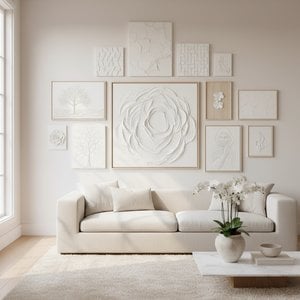
- Interior Design Considerations: When incorporating reproductions of Rothko’s paintings into interior spaces, consider pairing them with neutral backgrounds—such as gray or beige—to maximize their impact. The artwork's subtle hues will create a calming atmosphere and serve as a focal point for conversation.
Ultimately, “Untitled 91” transcends mere visual representation; it’s an invitation to engage in a dialogue with the viewer’s own inner landscape—a beautifully crafted reminder that art can communicate truths beyond words.
Ερωτήσεις και Απαντήσεις
Τι επίπεδα κορεσμού και έντασης παρουσιάζει το "Untitled 91" του Μάρκος Ρόθκο;
Το έργο "Untitled 91" του Μάρκος Ρόθκο χαρακτηρίζεται από κορεσμό Clear Color Presence και ένταση Vivid.
Περί τι αφορά το "Untitled 91";
Τα θέματα που περιλαμβάνονται στο "Untitled 91" του Μάρκος Ρόθκο περιλαμβάνουν το/τα color field painting, red circles, emotional depth, minimalism, canvas texture, rothko style, geometric forms. Μαζί, συνοψίζουν το περιεχόμενο του έργου τέχνης.
Πώς μπορώ να δω μια προεπισκόπηση της αναπαραγωγής του "Untitled 91" του Μάρκος Ρόθκο;
Η σελίδα Προεπισκόπηση του έργου "Untitled 91" σας επιτρέπει να δείτε μια προεπισκόπηση του έργου πριν την παραγγελία.



 Προεπισκόπηση σε πραγματική κλίμακα
 Αγορά χειροποίητου πίνακα
 Αποστολή
 Κοινοποίηση
 Λεπτομέρειες
 Οδηγός

 Λήψη
Λήψη
 Παρόμοια αντικείμενα συλλογής
 Ακτινογραφία
 Παρουσίαση
 Q&A
Q&A Στατιστικά
 Περισσότερα






































 Η επιλογή με γυαλί είναι διαθέσιμη μόνο για μεγέθη κάτω από 110 εκ.