A Meditation on Color and Absence: Examining Mark Rothko’s “No. 9”
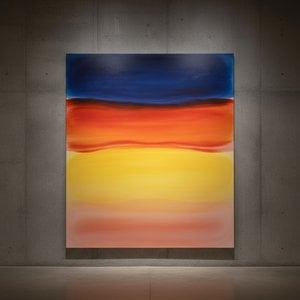
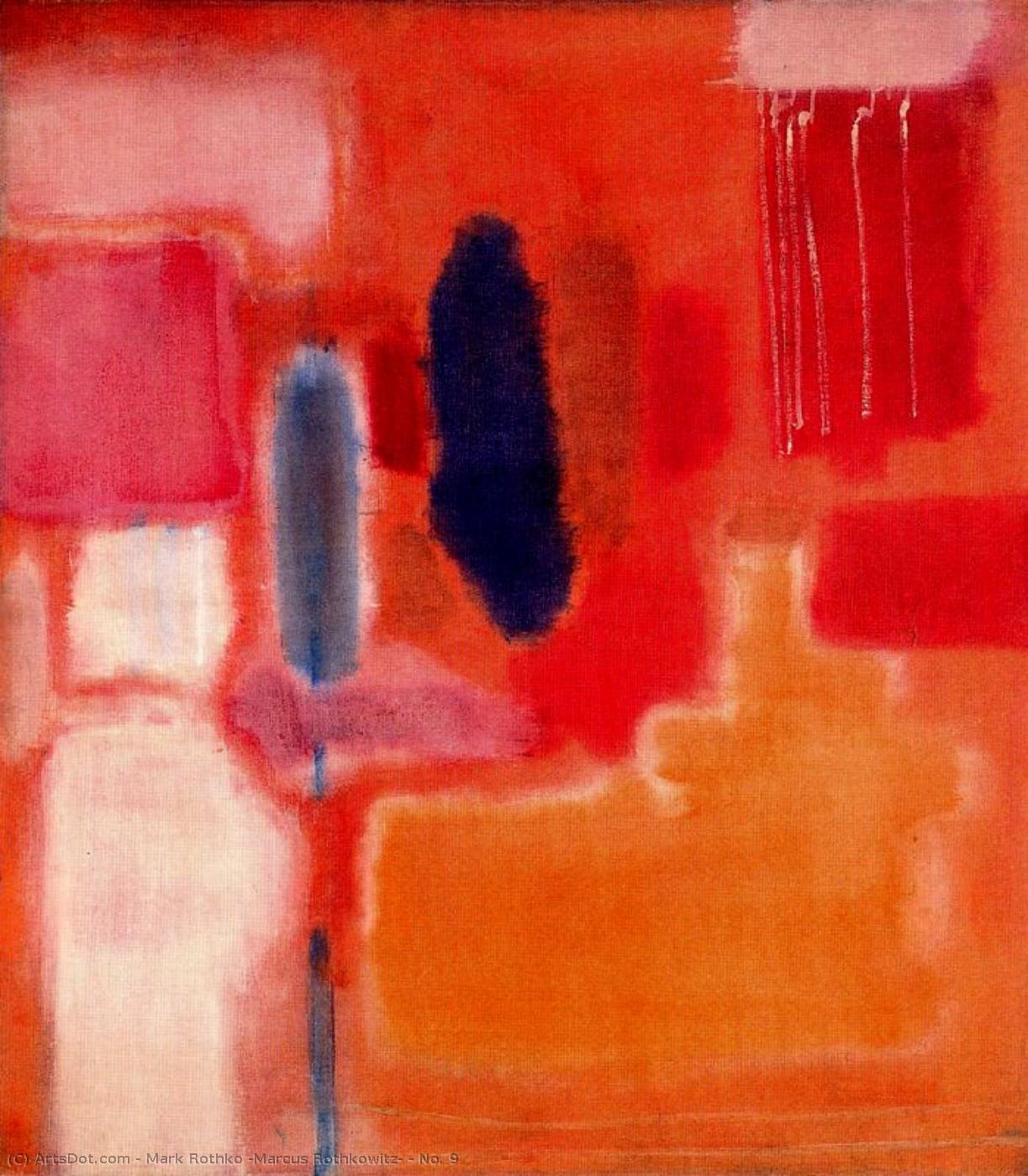
“No. 9,” painted in 1948, stands as a cornerstone of Abstract Expressionism and embodies the profound emotional resonance that characterizes Mark Rothko's oeuvre. More than just pigment on canvas, it represents an attempt to distill experience into its purest form—a deliberate stripping away of detail to reveal the underlying essence of feeling. The artwork’s deceptively simple composition consists of stacked rectangles of crimson and tangerine hues, punctuated by subtle bands of azure. These shapes aren't merely decorative; they are carefully calibrated to create a visual rhythm that draws the viewer inward, fostering contemplation rather than active observation.
The Genesis of Color Field Painting
Rothko’s approach to painting—often termed “Color Field”—was revolutionary for its time. Rejecting traditional representational art, he sought to bypass intellectual analysis and tap directly into primal emotions. Influenced by Zen Buddhism and Eastern philosophy, Rothko believed that color itself could convey spiritual truths. He meticulously layered thin washes of pigment onto the canvas, achieving a velvety surface texture that seemed to absorb light rather than reflect it. This technique—a deliberate departure from brushstrokes—was painstakingly developed over years of experimentation, prioritizing tonal harmony and luminosity above all else. The resulting canvases are less about depicting a scene or subject matter and more about presenting an immersive experience for the viewer.
Symbolism Within Minimalism
Despite its apparent lack of visual complexity, “No. 9” is laden with symbolic significance. Rothko himself famously described his paintings as "windows onto eternity," suggesting that they aspire to transcend the limitations of human perception and access a realm beyond the tangible world. The dominant reds and oranges evoke feelings of warmth, passion, and vitality—colors associated with life force and primal instinct. Simultaneously, the blues introduce an element of melancholy and introspection, representing sorrow, contemplation, and perhaps even transcendence. These contrasting hues coexist in equilibrium, mirroring the complexities of human experience itself.
Historical Context: The Postwar Landscape
“No. 9” emerged from the aftermath of World War II, a period marked by disillusionment and uncertainty. Artists like Rothko responded to the trauma of the conflict with an earnest desire for spiritual renewal. Color Field painting arose as a reaction against the anxieties of Surrealism and Cubism, offering solace in its quiet contemplation and prioritizing emotional expression over intellectual precision. The canvas embodies the spirit of this era—a yearning for beauty amidst darkness, a belief in the transformative power of art to communicate profound truths about human existence.
Emotional Resonance: An Invitation to Reflection
Ultimately, “No. 9” succeeds in eliciting an emotional response that transcends mere visual stimulation. Its subtle gradations of color invite viewers to linger before it, allowing them to immerse themselves in its contemplative atmosphere. The absence of discernible form encourages a surrender to feeling—a recognition that art can communicate truths beyond the realm of rational thought. Like many of Rothko’s paintings, “No. 9” remains an enduring testament to the power of color and silence to provoke introspection and inspire awe. It serves as a poignant reminder that beauty can reside in simplicity and that profound emotion can be conveyed without resorting to elaborate imagery.
Ερωτήσεις & Απαντήσεις
Ποιον καλλιτέχνη αποδίδεται το "No. 9";
Ο καλλιτέχνης πίσω από το "No. 9" είναι ο/η Μάρκος Ρόθκο. Το έργο καταχωρείται υπό το όνομα του/της Μάρκος Ρόθκο.
Πόσο είχε ηλικία ο/η Μάρκος Ρόθκο όταν δημιούργησε το "No. 9" το 1948;
Όταν δημιουργήθηκε το "No. 9" το 1948, ο/η Μάρκος Ρόθκο - γεννημένος/η το 1903 - ήταν μόλις 45 ετών.
Σε ποια χρονιά δημιουργήθηκε το "No. 9" του Μάρκος Ρόθκο;
Το έργο "No. 9" χρονολογείται από το 1948. Η ημερομηνία το τοποθετεί μέσα στην καριέρα του/της Μάρκος Ρόθκο και την εποχή του/της.
Πώς μπορώ να ανακαλύψω έργα τέχνης παρόμοια με το "No. 9" του Μάρκος Ρόθκο;
Έργα παρόμοια με το "No. 9" περιλαμβάνονται στη σελίδα Παρόμοια έργα του έργου.
Πώς περιγράφεται η παλέτα χρωμάτων του "No. 9" του Μάρκος Ρόθκο;
Το έργο "No. 9" του Μάρκος Ρόθκο χρησιμοποιεί μια χρωματική παλέτα Dark. Η παλέτα αυτή συνοψίζει τον συνολικό χρωματικό χαρακτήρα του έργου.
Ποια είναι η αισθητή φωτεινότητα του έργου "No. 9" του Μάρκος Ρόθκο;
Ως προς την αισθητή φωτεινότητα, το έργο "No. 9" του Μάρκος Ρόθκο είναι bright.
Πού μπορώ να δω μια προεπισκόπηση του "No. 9";
Η σελίδα Προεπισκόπηση του έργου "No. 9" σας επιτρέπει να δείτε μια προεπισκόπηση του έργου πριν την παραγγελία.


 Προεπισκόπηση
 Αγορά χειροποίητου πίνακα
 Αποστολή
 Κοινοποίηση
 Λεπτομέρειες
 Οδηγός

 Λήψη
Λήψη
 Παρόμοια αντικείμενα συλλογής
 Ακτινογραφία
 Παρουσίαση
 Στατιστικά


 Περισσότερα λεπτομέρεια






































 Η επιλογή με γυαλί είναι διαθέσιμη μόνο για μεγέθη κάτω από 110 εκ.