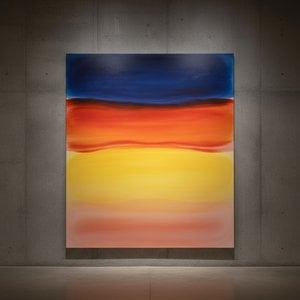
No. 37 or No. 19: A Deep Dive into Rothko's Color Fields
Mark Rothko, a towering figure in the Abstract Expressionist movement, created No. 37 or No. 19, a painting that embodies the essence of his artistic philosophy. This piece, characterized by its bold and vibrant color fields, invites viewers to immerse themselves in an emotional journey. The artwork currently resides within the esteemed collection of the Art Institute of Chicago.
Abstract Expressionism: A Movement Rooted in Emotion
Abstract Expressionism emerged as a distinct art movement in the United States following World War II. It emphasized the expression of emotions through non-representational forms and colors, marking a significant departure from traditional representational art. Artists like Mark Rothko, Jackson Pollock, and Clyfford Still were key figures in this movement, seeking to convey profound human experiences through pure abstraction.
Chromatic Composition and Technique
No. 37 or No. 19 is a quintessential example of Rothko's signature style, featuring large fields of flat solid color that generate areas of a flat plane and unbroken surface. The painting is dominated by vibrant hues of orange and red, intersected with patches of contrasting colors such as black, white, grey, and yellow. The fluent application of oil paint creates a visually engaging texture, embodying Rothko's hallmark blending of shapes and colors. He achieved this effect through layering thin washes of color, allowing the underlying layers to subtly influence the final appearance – a technique that contributes significantly to the painting’s depth and luminosity. The absence of defined edges between the color blocks further enhances the sense of atmospheric space.
Emotional Resonance and Symbolism
Rothko's mastery in manipulating color fields is evident in this composition, inviting viewers to immerse themselves in the depth and emotive quality of the colors and forms. The abstract forms are seemingly placed in an intuitive manner, evoking a range of emotions and thoughts through their ambiguous and non-representational nature. While Rothko resisted definitive interpretations of his work, he intended for these color fields to create a contemplative space where viewers could confront profound feelings – joy, sorrow, or even the sublime. The colors themselves are not merely decorative; they act as vehicles for conveying complex emotional states. The interplay of warm and cool tones creates a dynamic tension that resonates deeply within the viewer.
Legacy and Influence
Mark Rothko's influence on contemporary art is profound. His color field painting style has inspired numerous artists, including Daniella Schweinsberg, Anya Spielman, and Richard Caldicott. His iconic works continue to be celebrated for their ability to evoke powerful emotions and thoughts. For those interested in exploring more of Rothko's works or learning about other artists associated with Abstract Expressionism, visit Abstract Expressionism on WahooArt. Additionally, the Museum of Modern Art (MoMA) in New York City has an extensive collection of Abstract Expressionist art, including works by Rothko and other prominent artists of the movement.



 Προεπισκόπηση
 Μετάβαση σε Εκτυπώσεις
 Αποστολή
 Κοινοποίηση
 Λεπτομέρειες
 Οδηγός

 Λήψη
Λήψη
 Παρόμοια αντικείμενα συλλογής
 Ακτινογραφία
 Παρουσίαση
 Στατιστικά

 Περισσότερα λεπτομέρεια






































 Η επιλογή με γυαλί είναι διαθέσιμη μόνο για μεγέθη κάτω από 110 εκ.