The Weight of Duty: An Exploration of Rothko’s ‘Antigone’
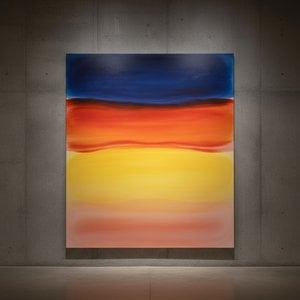
Mark Rothko's “Antigone,” a monumental work from 1960, isn’t merely a painting; it’s an immersive experience. Born in Latvia and shaped by the anxieties of his early life – a childhood steeped in displacement and loss – Rothko sought to distill profound human emotions into their purest form: color. This piece, rendered in oil on canvas, immediately draws the viewer into a space of quiet contemplation, dominated by vast, rectangular blocks of pale gray and ivory white. These aren’t simply colors; they are vessels for feeling, radiating an almost palpable sense of sorrow and unresolved conflict. The composition is deceptively simple – a series of nude figures, both seated and standing, arranged in a horizontal frieze – yet within this restraint lies a complex narrative, echoing the tragic myth it derives its name from.
- The Figures: Two faces, sketched with an almost ethereal quality, gaze out at us from the upper right quadrant. Their obscured features invite projection; we become complicit in their silent suffering. A seated figure, presumably Antigone herself, embodies defiance and a stubborn adherence to moral principle. The other figures – a standing presence and another seated beside her – suggest a community grappling with the consequences of a deeply flawed decree.
- Color as Emotion: Rothko’s masterful use of color is paramount. The muted tones aren't comforting; they are heavy, laden with the weight of grief and injustice. The subtle shifts in hue create an atmosphere of unease, mirroring the emotional turmoil at the heart of the myth.
- Spatial Ambiguity: The painting’s horizontal format and lack of clear perspective contribute to a sense of disorientation, reflecting the fractured state of the characters' lives and the breakdown of societal order.
Echoes of Myth and Modernity
Rothko deliberately avoided explicit representation, opting instead for an abstract approach that allowed viewers to project their own interpretations onto the canvas. “Antigone” is deeply rooted in Sophocles’ tragedy, a story of familial loyalty versus state authority. The painting captures the essence of Antigone's struggle – her refusal to obey Creon’s unjust decree and her willingness to sacrifice herself for what she believes is right. However, Rothko transcends mere illustration; he elevates the myth to a universal meditation on morality, duty, and the human condition. The stark simplicity of the forms contrasts sharply with the profound emotional weight conveyed through color, creating a dialogue between ancient narrative and modern expressionism.
Rothko’s work is often associated with Color Field painting, a movement that emphasized large areas of flat, unmodulated color to evoke an emotional response in the viewer. This approach was influenced by his time at the Rothko Chapel in Houston, Texas, where he created fourteen monumental paintings designed to create a contemplative space.
The Process and the Feeling
As documented by art critic Arthur Danto, who wrote extensively about Rothko’s work, “Antigone” reveals the artist's deliberate process. Rothko didn’t begin with a preconceived image; instead, he layered thin washes of paint, allowing them to bleed and interact, creating subtle shifts in color and texture. The surface is not smooth or polished but retains traces of this physical act of creation – scrubbed areas, transparent layers, and areas of dense opacity—a testament to the artist’s engagement with the medium. This visible process underscores the painting's emotional intensity; it feels as though we are witnessing a raw, unfiltered expression of grief and defiance.
The Rothko Chapel’s influence is particularly evident in “Antigone,” where the use of color and scale aims to create a similarly immersive experience for the viewer. The chapel's fourteen paintings, including "Antigone," are designed to evoke contemplation and emotional resonance, reflecting Rothko’s belief that art should be capable of communicating profound human experiences without resorting to representational imagery.
Bringing ‘Antigone’ Home: A Reproduction for Reflection
A hand-painted reproduction of “Antigone” offers a unique opportunity to bring this powerful work into your home or office. WahooArt meticulously recreates Rothko's nuanced color palette and textural layering, capturing the essence of his artistic vision with exceptional detail. More than just a decorative piece, this reproduction serves as a constant reminder of the complexities of human morality, the weight of duty, and the enduring power of art to evoke profound emotion. Consider it not merely a painting, but an invitation to contemplate the timeless themes explored within its luminous depths.
Ερωτήσεις & Απαντήσεις
Τι ατμόσφαιρα αποπνέει το "Antigone";
Το έργο "Antigone" του Μάρκος Ρόθκο περιγράφεται ως Calm ως προς τη διάθεσή του. Αυτή η ταξινόμηση μπορεί να βοηθήσει στον συνδυασμό του έργου με ένα κατάλληλο περιβάλλον.
Σε ποια περίοδο της καριέρας του/της Μάρκος Ρόθκο ανήκει το "Antigone";
Το "Antigone" αντιπροσωπεύει την περίοδο Late Period του Μάρκος Ρόθκο.
Για τι χρήση συνιστάται μια αναπαραγωγή του έργου "Antigone" του Μάρκος Ρόθκο;
Μια αναπαραγωγή του έργου "Antigone" του Μάρκος Ρόθκο προτείνεται για Statement. Αυτή η πρόταση προκύπτει από το θέμα, τη διάθεση και τα χρώματα του έργου.



 Προεπισκόπηση
 Μετάβαση σε Εκτυπώσεις
 Αποστολή
 Κοινοποίηση
 Λεπτομέρειες
 Οδηγός

 Λήψη
Λήψη
 Παρόμοια αντικείμενα συλλογής
 Ακτινογραφία
 Παρουσίαση
 Στατιστικά
 Περισσότερα λεπτομέρεια






































 Η επιλογή με γυαλί είναι διαθέσιμη μόνο για μεγέθη κάτω από 110 εκ.