


 TemperaNaive Art / Primitivism
 Modern
 150.0 x 188.0 cm
Χειροποίητη oil painting σε καμβά στο δικό σας μέγεθος και πλαίσιο, κατά παραγγελία από τους καλλιτέχνες μας. ( Αγορά εκτύπωσης Αγορά ψηφιακής εικόνας)





























Επιλέξτε από τις προκαθορισμένες διαστάσεις μας που διατηρούν τις αρχικές αναλογίες του έργου τέχνης.

Μπορείτε να ορίσετε δικές σας διαστάσεις ώστε το έργο να ταιριάζει σε ένα συγκεκριμένο πλαίσιο ή χώρο. Εάν το επιλεγμένο μέγεθος δεν συμπίπτει με τις αναλογίες της αρχικής εικόνας, θα περικοψούμε το έργο ή θα επεκτείνουμε τη ζωγραφιά με πρόσθετα χειρόγραφα στοιχεία. Ένα ψηφιακό προσχέδιο θα σας αποσταλεί για έγκριση πριν την έναρξη της παραγωγής.
Παρακαλούμε σημειώστε ότι η προεπισκόπηση στην οθόνη δεν αντικατοπτρίζει την πραγματική περικοπή ή επέκταση. Μόνο το προσχέδιο θα δείξει με ακρίβεια την τελική σύνθεση.
Παρόλο που είναι διαθέσιμα προσαρμοσμένα μεγέθη, συνιστούμε να επιλέξετε μια διάσταση από τη λίστα των προκαθορισμένων μεγεθών για τη διατήρηση των αρχικών αναλογιών.
Παγκόσμια Αποστολή () σε 3-4 εβδομάδες αντί για τις συνήθεις 5 εβδομάδες. (6 Σεπτέμβριος). Χωρίς συμβιβασμούς στην ποιότητα.


The descent from cross
Διαστάσεις Αναπαραγωγής
Marc Chagall’s “The Descent from Cross,” completed in 1976, stands as a testament to the artist's enduring fascination with biblical narratives and his unparalleled ability to translate dreams into vibrant visual language. Painted in Naïve Art style—a movement characterized by its rejection of academic conventions and embrace of childlike spontaneity—the canvas embodies Chagall’s signature aesthetic: fantastical figures interwoven with recognizable landscapes, bathed in luminous yellows and blues that evoke memories of Vitebsk, Belarus.
The painting depicts Mary cradling Jesus after his crucifixion. However, Chagall eschews traditional depictions of sorrowful piety; instead, he presents a scene brimming with movement and ethereal beauty. Figures float upwards towards the heavens, their bodies elongated and distorted in ways that defy anatomical realism—a deliberate stylistic choice intended to convey spiritual transcendence rather than literal representation.
Historically situated within the broader context of Jewish-Christian relations in Europe during the mid-20th century—particularly following Kristallnacht, the “Night of Broken Glass,” a pogrom that targeted synagogues and Jewish property—the painting reflects Chagall’s personal experiences as a survivor of persecution. Yet, despite its fraught historical backdrop, “The Descent from Cross” transcends political concerns to offer a universal meditation on faith, compassion, and the enduring power of hope.
Symbolism permeates every element of the composition. The upward-spiraling figures represent ascension into paradise, mirroring the biblical imagery of Christ’s resurrection. The luminous yellows dominate the palette—a color associated with divine light and joy—contrasting sharply with the darker hues that symbolize earthly suffering. Chagall's recurring motifs—flying horseshoes (representing Jewish protection), stylized landscapes reminiscent of Vitebsk—further enrich the painting’s symbolic tapestry.
Ultimately, “The Descent from Cross” resonates deeply with viewers through its evocative emotional impact. It captures a moment of profound vulnerability and tenderness amidst overwhelming darkness—a reminder that even in times of despair, beauty and spiritual solace can persist. Its luminous colors and fluid brushstrokes invite contemplation and inspire awe, cementing Chagall’s place as one of the most influential artists of his era.

1887 - 1985 , Βέλγραδι

Ανακαλύψτε τα 25 κορυφαία έργα τέχνης του Mark Rothko! Εξερευνήστε την ιστορία, τη φιλοσοφία & τα χρώματα των πιο εμβληματικών αφηρημένων πινάκων. Υψηλής ποιότητας αναπαραγωγές & ιδέες διακόσμησης στο WahooArt.com.

Ανακαλύψτε τις 10 πιο εμβληματικές λιθογραφίες που επαναπροσδιόρισαν την τέχνη! Ιστορίες καλλιτεχνών, τεχνικές & χρώματα. Βρείτε αναπαραγωγές υψηλής ποιότητας για να εμπνεύσετε το σπίτι σας. Εξερευνήστε τη συλλογή στο WahooArt.com

Ανακαλύψτε τα 25 κορυφαία έργα τέχνης του Jacopo Tintoretto! Εξερευνήστε τη βενετσιάνικη Αναγέννηση, την έντονη χρωματική παλέτα και τις ιστορικές αφηγήσεις. Υψηλής ποιότητας αναπαραγωγές πινάκων στο WahooArt.com.
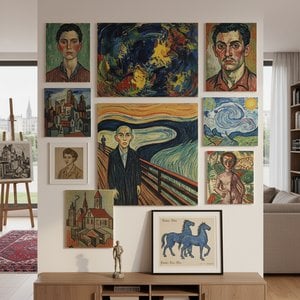
Ανακαλύψτε τα 10 κορυφαία έργα του Εξπρεσιονισμού! Μάθετε για τους Munch, Van Gogh & άλλους σπουδαίους καλλιτέχνες. Βρείτε αναπαραγωγές πινάκων υψηλής ποιότητας και εμπνευστείτε για τη διακόσμηση του χώρου σας στην WahooArt.com.

Ανακαλύψτε τα 10 αριστουργήματα του Γερμανικού Εξπρεσιονισμού! Munch, Kirchner & άλλοι καλλιτέχνες που καθόρισαν μια εποχή. Ιστορίες τέχνης, έντονα χρώματα και συναισθηματική δύναμη. Βρείτε πίνακες εξπρεσιονισμού υψηλής ποιότητας στο WahooArt.gr

 Δείτε σε πραγματικό χώρο
 Αποστολή
 Κοινοποίηση
 Λεπτομέρειες

 Λήψη
Λήψη
 Παρόμοια αντικείμενα συλλογής
 Ακτινογραφία
 Παρουσίαση
 Διαβάστε περισσότερα







 Η επιλογή με γυαλί είναι διαθέσιμη μόνο για μεγέθη κάτω από 110 εκ.


