x
Δείτε σε πραγματικό χώροΔείτε σε πραγματικό χώρο Προεπισκόπηση σε ARΠροεπισκόπηση σε AR Αγορά εκτύπωσης Αγορά εκτύπωσηςΑγορά ψηφιακής εικόνας Αγορά ψηφιακής εικόνας ΑποστολήΑποστολή
ΛεπτομέρειεςΛεπτομέρειες Προσθήκη στα αγαπημένα Προσθήκη στα αγαπημένα ΛήψηΛήψη Παρόμοια αντικείμενα συλλογήςΠαρόμοια αντικείμενα συλλογής ΑκτινογραφίαΑκτινογραφία ΠαρουσίασηΠαρουσίαση

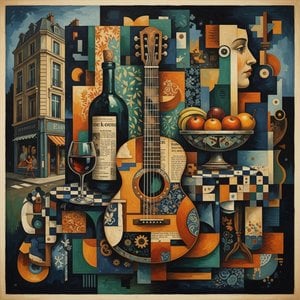
Guitar on a Table

Explore Juan Gris's 'Guitar on a Table,' a masterpiece of Synthetic Cubism from 1915. Discover its geometric forms, vibrant colors & artistic significance.

Ο Χουάν Γκρίς (1887-1927) ήταν ένας ισπανός ζωγράφος και γλύπτης, πρωτοπόρος του κυβισμού. Δημιούργησε έργα με γεωμετρικά σχήματα & έντονες χρωματικές παλέτες, επηρεάζοντας την τέχνη του 20ου αιώνα.

Χειροποίητη Αναπαραγωγή σε Έλαιο

Χειροποίητη oil painting σε καμβά στο δικό σας μέγεθος και πλαίσιο, κατά παραγγελία από τους καλλιτέχνες μας. (Αγορά εκτύπωσης Αγορά εκτύπωσηςΑγορά ψηφιακής εικόνας Αγορά ψηφιακής εικόνας)

P118B $10
P118H $10
P118W $10
P438Z $10
P508JH $12
P508YH $12
P805H $10
P805Z $10
P919BZ $10
P919G $10
P919XJ $10
P959ZH $10
P968JZ $12
W106C $8
W218G $10
W218JH $8
W218Y $10
W307PJ $10
W316G $10
W316PJ $8
W316Y $10
W398PJ $8
W4111J $10
W500HY $15
W500JH $15
W692G $12
W849H $8
W940BG $15
W953PJ $8

Πρότυπο μέγεθος
κατόπιν παραγγελίας
CM
INCH

Επιλέξτε από τις προκαθορισμένες διαστάσεις μας που διατηρούν τις αρχικές αναλογίες του έργου τέχνης.

πλάτος
ύψος

Μπορείτε να ορίσετε δικές σας διαστάσεις ώστε το έργο να ταιριάζει σε ένα συγκεκριμένο πλαίσιο ή χώρο. Εάν το επιλεγμένο μέγεθος δεν συμπίπτει με τις αναλογίες της αρχικής εικόνας, θα περικοψούμε το έργο ή θα επεκτείνουμε τη ζωγραφιά με πρόσθετα χειρόγραφα στοιχεία. Ένα ψηφιακό προσχέδιο θα σας αποσταλεί για έγκριση πριν την έναρξη της παραγωγής.
Παρακαλούμε σημειώστε ότι η προεπισκόπηση στην οθόνη δεν αντικατοπτρίζει την πραγματική περικοπή ή επέκταση. Μόνο το προσχέδιο θα δείξει με ακρίβεια την τελική σύνθεση.
Παρόλο που είναι διαθέσιμα προσαρμοσμένα μεγέθη, συνιστούμε να επιλέξετε μια διάσταση από τη λίστα των προκαθορισμένων μεγεθών για τη διατήρηση των αρχικών αναλογιών.

Παραδείγματα αλλαγών: Αντικατάσταση προσώπου με φωτογραφία του πελάτη· Προσθήκη κατοικίδιου (π.χ., αντικατάσταση γάτας με σκύλο)· Ενσωμάτωση κρυφού μηνύματος στο φόντο· Αλλαγή τοπίου ή στοιχείων του φόντου.
Μετά την παραγγελία, η ομάδα του WahooArt.com θα στείλει email στον πελάτη με οδηγίες και θα παρέχει μια προεπισκόπηση προσχεδίου

Παγκόσμια Αποστολή () σε 3-4 εβδομάδες αντί για τις συνήθεις 5 εβδομάδες. (27 Αύγουστος). Χωρίς συμβιβασμούς στην ποιότητα.

why_choose_icon
Δωρεάν γρήγορη διεθνής αποστολή
why_choose_icon
Κάμβας από Λινό Υψηλής Ποιότητας
why_choose_icon
Πλήρης ασφάλιση μεταφοράς
why_choose_icon
Εγγύηση Επιστροφής Δασμών και Φόρων
why_choose_icon
Εγγύηση Απόλυτης Ομοιότητας Χρωμάτων
why_choose_icon
Πολιτική Επιστροφής 60 Ημερών (Μόνο σε περίπτωση ελαττωμάτων)
why_choose_icon
Εγγύηση επιστροφής 100% των χρημάτων
why_choose_icon
Προσφορά για μαζικές παραγγελίες

Συνολική Τιμή

$ 272

reproduction

Guitar on a Table

Μέσο Αναπαραγωγής

Διαστάσεις Αναπαραγωγής

-

Συνολική Τιμή

$ 272

Γρήγορα στοιχεία

  • Dimensions: 73 x 92 cm
  • Location: Kröller-Müller Museum
  • Artistic style: Synthetic Cubism
  • Artist: Juan Gris
  • Notable elements or techniques: Synthetic Cubism, geometric forms
  • Medium: Oil on canvas
  • Subject or theme: Still life with guitar and objects

ΚВИΖ Τέχνης

Για κάθε ερώτηση υπάρχει μόνο μία σωστή απάντηση.

Ερώτηση 1:
What artistic movement is Juan Gris’s ‘Guitar on a Table’ most closely associated with?
Ερώτηση 2:
How many strings does the guitar in the painting have, deviating from a typical representation?
Ερώτηση 3:
Where is ‘Guitar on a Table’ currently housed?
Ερώτηση 4:
What is the primary focus of Synthetic Cubism, as exemplified in this painting?

Guitar on a Table: A Synthesis of Form and Music

Juan Gris's "Guitar on a Table," painted in 1915, stands as a quintessential example of Synthetic Cubism. This captivating artwork, measuring 73 x 92 cm and housed at the Kröller-Müller Museum in Otterlo, Netherlands, transcends a simple depiction of an object; it's an exploration of form, perspective, and the interplay between reality and abstraction. Gris masterfully deconstructs and reassembles familiar elements—a guitar, books, and table surfaces—into a harmonious composition characterized by geometric shapes and a carefully considered color palette.

The Artist: Juan Gris – A Pioneer of Cubism

  • Born: March 23, 1887, Madrid, Spain
  • Died: May 11, 1927

José Victoriano González-Pérez, known as Juan Gris, was a pivotal figure in the development of Cubism. After studying engineering and demonstrating early artistic talent through drawings for periodicals, he moved to Paris in 1906, immersing himself in the vibrant art scene. There, he befriended Pablo Picasso and Georges Braque, becoming an integral part of the Cubist movement. Gris’s style evolved over time, but his dedication to Cubism remained constant, marked by a unique approach that emphasized composition and color.

Analyzing the Composition: Synthetic Cubism in Action

"Guitar on a Table" exemplifies Synthetic Cubism, a phase characterized by simplified forms, overlapping planes, and a focus on overall composition rather than deconstruction. The central motif is a guitar, rendered with five strings instead of the usual six—a deliberate choice by Gris to move away from realistic representation and emphasize the abstract nature of his artistic vision. This intentional alteration extends to the musical staff, depicted with fewer lines than typical. The surrounding elements – books and other objects – create a sense of cluttered harmony. The color palette is rich and nuanced, featuring shades of blue, brown, green, and speckled patterns that add texture and depth. Gris skillfully interweaves delineations reminiscent of guitar strings and the instrument’s curves with elements of the table surface, showcasing his mastery in fragmenting reality while maintaining a sense of visual coherence.

Artistic Significance and Symbolism

Gris's work, including "Guitar on a Table," significantly contributed to the evolution of Cubism. His approach to Synthetic Cubism, with its emphasis on composition and color, enriched the movement’s diversity. The recurring motif of the Spanish guitar reflects Gris's cultural heritage and his artistic fascination with the shapes of musical instruments. Beyond being a representation of an object, this painting is an exploration of form and perspective, inviting viewers to interpret the fragmented reality portrayed. The deliberate simplification and abstraction challenge conventional notions of representation, prompting contemplation on the nature of perception and the artist’s role in shaping our understanding of the world.


Βιογραφία Καλλιτέχνη

A Spanish Visionary of Cubism: The Life and Art of Juan Gris

Born José Victoriano González-Pérez in Madrid in 1887, the artist who would become known as Juan Gris embarked on a journey that profoundly shaped the course of early 20th-century art. His initial path wasn’t immediately aligned with the canvas and brush; he pursued engineering at the prestigious School of Arts and Sciences, revealing an analytical mind – a trait that would later deeply inform his artistic approach. Even during these formative years, a creative spark flickered, evidenced by his contributions to local periodicals through drawings, hinting at a burgeoning visual talent waiting to be unleashed. It was in 1905 that he adopted the pseudonym Juan Gris, a name resonating with newfound identity and purpose as he began formal painting studies under José Moreno Carbonero – a pivotal shift that set him firmly on a trajectory toward artistic innovation.

Parisian Awakening and the Embrace of Cubism

The year 1906 marked a transformative relocation to Paris, a city then brimming with an unparalleled artistic energy. Gris immersed himself completely in this vibrant milieu, forging enduring friendships with luminaries such as Henri Matisse, Georges Braque, and Fernand Léger. Initially, he engaged in satirical illustration for publications like *L'Assiette au Beurre*, diligently honing his observational skills and cultivating a keen sense of visual wit – a skill that would prove invaluable in his later work. However, the magnetic pull of Pablo Picasso proved particularly influential, shaping his artistic sensibilities and pushing him toward experimentation with radical new forms. Around 1910, Gris began to dedicate himself wholeheartedly to painting, deliberately moving away from caricature and embracing the burgeoning language of Cubism – a movement that demanded a complete reimagining of representation. This wasn’t mere imitation; it was a deliberate quest to distill the essence of form and space, seeking a new visual order—a fundamental shift in how he perceived and depicted reality.

The Geometry of Perception: Style and Key Works

Juan Gris's artistic output is characterized by an extraordinary clarity and intellectual rigor. He didn’t simply deconstruct objects; he meticulously reconstructed them, emphasizing geometric forms and a carefully considered palette. This approach led to what became known as his “crystal period,” exemplified in masterpieces such as *Still Life Before an Open Window* (1912) and *Place Ravignan* (1915). These works showcase a remarkable interplay of planes and angles, creating a sense of depth and solidity while simultaneously challenging conventional notions of perspective. He moved beyond the purely analytical phase, developing a more organized and synthetic approach, prioritizing order and precision. His exploration of color was equally deliberate, often employing harmonious palettes that complemented his geometric structures. Notable examples include *Guitar in front of the sea* (1925), a testament to his simplified forms and unwavering adherence to cubist principles, and *Homage à Pablo Picasso* (1912), which signaled his growing recognition within the avant-garde art world – a bold declaration of artistic independence.

The Pioneering Use of Collage

A defining characteristic of Gris’s mature style was his innovative use of *papier collé*, or collage—a technique he embraced wholeheartedly after 1913. He didn't merely incorporate pre-existing images; instead, he meticulously selected real-world materials – newspaper clippings, fabric scraps, and other everyday objects – and integrated them directly into his paintings. This wasn’t simply a decorative element; it was a fundamental shift in the relationship between painting and reality, blurring the boundaries between the two and adding layers of texture, meaning, and social commentary to his work. The inclusion of these fragments—representing the fragmented nature of modern experience—became a hallmark of his style, reflecting both his intellectual curiosity and his engagement with the world around him.

Legacy and Lasting Influence

Juan Gris’s contribution to Cubism extends far beyond mere stylistic innovation; he brought an unparalleled level of intellectual depth and structural clarity to the movement. He moved past the analytical phase, towards a more organized and synthetic approach, emphasizing order and precision. His work profoundly influenced the Purist style championed by Amédée Ozenfant and Charles Edouard Jeanneret (Le Corbusier), advocating for a return to classical principles of form and composition. Gris’s emphasis on geometric forms, harmonious color palettes, and the integration of everyday objects into his art established him as a pivotal figure in 20th-century art. His legacy continues to inspire artists today, demonstrating the enduring power of Cubism and the visionary genius of Juan Gris – a Spanish master who reshaped our understanding of perception and representation, leaving an indelible mark on the history of modern art.
Χουάν Γκρισ

Χουάν Γκρισ

1887 - 1927 , Ισπανία

Γρήγορα στοιχεία

  • Artistic Movement Or Style: Κυβισμός
  • Artists Or Movements Influenced By This Artist:
    • Purism
    • Ozenfant
    • Le Corbusier
  • Artists Who Influenced This Artist:
    • Picasso
    • Matisse
    • Braque
  • Date Of Birth: 23 Μαρτίου 1887
  • Date Of Death: 11 Μαΐου 1927
  • Full Name: José Victoriano González-Pérez
  • Nationality: Ισπαñός
  • Notable Artworks:
    • Guitar στο θάλασσα
    • Hommage Picasso
    • Miller
  • Place Of Birth: Μαδρίτη, Ισπανία
Εξερευνήστε έργα τέχνης ταξινομημένα ανά θέμα, στυλ και χαρακτηριστικά.