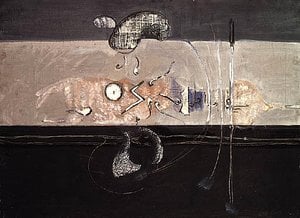
Το έργο τέχνης που εμφανίζεται σε αυτή τη σελίδα προστατεύεται από τους νόμους περί πνευματικών δικαιωμάτων, γεγονός που σημαίνει ότι δεν μπορούμε νομικά να δημιουργήσουμε ή να πουλήσουμε μια ταυτόσημη αναπαραγωγή του. Αυτή η προστασία επιβάλλεται βάσει διεθνών συμφωνιών, όπως η Σύμβαση της Βέρνης καθώς και από τους εθνικούς νόμους, συμπεριλαμβανομένων αυτών που ορίζονται από το Νομοθεσία περί πνευματικών δικαιωμάτων των ΗΠΑ - Τίτλος 17. Όλα τα δικαιώματα κατοχυρωμένα. Απαγορεύεται η αναπαραγωγή χωρίς άδεια.
Αυτή η μέθοδος συμμορφώνεται πλήρως με τους κανονισμούς περί πνευματικών δικαιωμάτων, καθώς δεν περιλαμβάνει την αντιγραφή ή την αναπαραγωγή του προστατευόμενου έργου. Αντίθετα, πρόκειται για μια δημιουργική ερμηνεία — ένα νέο έργο που επηρεάζεται από το πρωτότυπο, χωρίς όμως να είναι πανομοιότυπο με αυτό.
Εκτύπωση giclée ή σε καμβά ποιότητας μουσείου με γρήγορη παραγωγή και ευέλικτες επιλογές φινιρίσματος. ( Αγορά χειροποίητου πίνακα Μετάβαση σε Ψηφιακή Αποτέλεσμα)
Επιλέξτε από τις προκαθορισμένες διαστάσεις μας που διατηρούν τις αρχικές αναλογίες του έργου τέχνης.

Εισάγετε το πλάτος και το ύψος που επιθυμείτε, ώστε να ταιριάζουν στο κάδሮ ή στον τοίχο σας. Μια εκτύπωση μπορεί μόνο να υποστεί κοψίμό και ποτέ να μην γίνει μεγαλύτερη από την αρχική εικόνα, επομένως η επιλογή μεγέθους με διαφορετικό σχήμα συνεπάγεται απώλεια ενός μέρους της εικόνας. Σας στέλνουμε ένα ψηφιακό mockup για έγκριση πριν προχωρήσουμε σε οποιαδήποτε εκτύπωση. Η εικόνα που εμφανίζεται σε αυτή τη σελίδα δεν δείχνει την πραγματική κοπή — μόνο το mockup την παρουσιάζει.
Παγκόσμια Αποστολή () σε 2 εβδομάδες αντί για τις συνήθεις 4/5 εβδομάδες. (14 Νοέμβριος)
Bathroom Composition
Διαστάσεις Αναπαραγωγής

John Keates, born March 30th, 1773, in Wells, Somerset, was a British schoolmaster whose artistic legacy extends far beyond his modest academic pursuits. He stands as a pivotal figure within the Pre-Raphaelite Brotherhood—a movement that championed idealized beauty and meticulous observation—and his paintings offer a unique glimpse into the aesthetic sensibilities of Victorian England.
Early Life & Education: Keates’s upbringing in a stable-keeper’s family instilled in him an appreciation for craftsmanship and detail, shaping his artistic approach. He excelled at Eton College, demonstrating exceptional talent in Latin and Greek—subjects considered crucial for cultivating intellectual rigor. This early exposure to classical scholarship would profoundly influence his artistic vision throughout his life.
Cambridge Years & Literary Influences: Keates pursued his studies at Cambridge University, earning prestigious accolades including the Browne Medal and Craven Scholarship. His encounter with Romantic poets like Wordsworth and Coleridge ignited a passion for nature’s sublime grandeur—inspiring him to explore themes of emotion and imagination in his artistic endeavors.
Career as Schoolmaster & Artistic Development: Following graduation, Keates embarked on a career as a schoolteacher—a profession he embraced wholeheartedly—and honed his artistic skills through meticulous observation of the natural world. His landscapes, characterized by serene compositions and subtle tonal gradations, exemplify the Pre-Raphaelite commitment to capturing fleeting moments of beauty.
The Pre-Raphaelite Brotherhood & Artistic Style: Keates joined the Pre-Raphaelite Brotherhood in 1848—a collective dedicated to reviving artistic ideals considered lost under the influence of Michelangelo and Raphael. He sought to emulate Raphael’s mastery of color and form, striving for an aesthetic ideal rooted in classical antiquity.
Notable Works & Legacy: Keates produced approximately 150 paintings during his lifetime—demonstrating remarkable technical proficiency and exploring a diverse range of subjects—from Venetian interiors to Tuscan landscapes. His work continues to inspire admiration for its understated elegance and profound sensitivity to the visual arts, securing his place as one of the Pre-Raphaelite Brotherhood’s most distinguished practitioners.
Keates' fascination with Italy—particularly Venice—fueled his artistic endeavors. He traveled extensively throughout Europe during his formative years, immersing himself in the cultural milieu of the Renaissance and Baroque periods. This experience profoundly shaped his aesthetic sensibilities, informing his compositional choices and color palettes.
Keates’s artistic sensibilities were undeniably shaped by his admiration for Raphael—the Renaissance painter whose frescoes in the Vatican adorned with mythological subjects served as a model for Pre-Raphaelite artists. He sought to emulate Raphael’s mastery of color and form, striving for an aesthetic ideal rooted in classical antiquity.
“SI RO MA MAU” stands as Keates’s most celebrated painting—a monumental landscape that embodies the Pre-Raphaelite commitment to capturing atmospheric perspective and conveying profound emotional resonance. The artwork is notable for its masterful depiction of a Tuscan hillside bathed in golden sunlight.
John Keates' artistic legacy endures as a testament to his unwavering dedication to craftsmanship, observation, and imaginative exploration. His paintings—characterized by understated elegance and profound emotional depth—continue to captivate audiences worldwide—affirming his place as one of the Pre-Raphaelite Brotherhood’s most distinguished practitioners.

Transform your bathroom with icons from Van Eyck to Warhol. Find curated museum-quality art on WahooArt.com. Explore the full collection online.

Discover how curated masterworks transform hotel interiors into immersive brand journeys. Explore the neuroaesthetics of hospitality, from bespoke oil reproductions to large-scale murals, designed to elevate guest experience and drive luxury brand loyalty through intentional art curation.
 Προεπισκόπηση σε πραγματική κλίμακα
 Αποστολή
 Κοινοποίηση
 Λεπτομέρειες
 Οδηγός

 Λήψη
Λήψη
 Παρόμοια αντικείμενα συλλογής
 Ακτινογραφία
 Παρουσίαση
 Ερωτήσεις & Απαντήσεις
 Στατιστικά
 Περισσότερα






































 Η επιλογή με γυαλί είναι διαθέσιμη μόνο για μεγέθη κάτω από 110 εκ.