ΔΩΡΕΑΝ ΣΥΜΒΟΥΛΗ ΤΕΧΝΗΣ

x
Αγορά εκτύπωσης Αγορά εκτύπωσηςΑγοράστε την αναπαραγωγή Αγοράστε την αναπαραγωγή ΑποστολήΑποστολή
ΛεπτομέρειεςΛεπτομέρειες Προσθήκη στα αγαπημένα Προσθήκη στα αγαπημένα ΛήψηΛήψη Παρόμοια έργαΠαρόμοια έργα ΑκτινογραφίαΑκτινογραφία ΠαρουσίασηΠαρουσίαση

Number

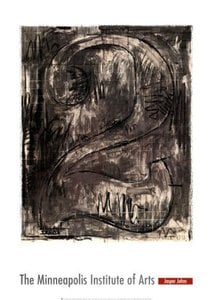
Jasper Johns’ ‘Numbers in Color’ is a chaotic abstract expressionist masterpiece featuring layered red & blue squares, evoking data & unsettling visuals. Explore this unique artwork.

Ο Jasper Johns (1930-): Ένας πρωτοπόρος της Pop & Abstract Expressionism! Δημιουργός των εμβληματικών έργων όπως το 'Φράγμα', χάρτες και στόχοι – επαναπροσδιορίζοντας την σύγχρονη τέχνη.

Αγοράστε μια ψηφιακή εικόνα υψηλής ανάλυσης και βελτιωμένης ποιότητας, πολύ ανώτερης από την προεπισκόπηση στο διαδίκτυο.

Κάθε αρχείο προετοιμάζεται σχολαστικά από τους ειδικούς μας, χρησιμοποιώντας προηγμένα εργαλεία και εξειδικευμένο χειροκίνητο ρετουσάρισμα. Εξασφαλίζουμε ότι κάθε εικόνα διαθέτει εξαιρετική ευκρίνεια, απόλυτη πιστότητα στο χρώμα και λεπτομερή ανάδραση των λεπτομερειών.

Το τελικό αρχείο παραδίδεται μέσω email εντός 72 ωρών, βελτιστοποιημένο για άμεση χρήση σε επαγγελματικά, εκδοτικά και έντυπα περιβάλλοντα. Πρόκειται για την ίδια ποιότητα που εμπιστεύονται κορυφαία studios σχεδιασμού, εκδότες και γκαλερί.

Ψηφιακή εικόνα

Κατεβάστε ένα αρχείο υψηλής ανάλυσης για προσωπική χρήση, εκτύπωση και δημιουργικά έργα.

Συνολική Τιμή

$9.99

Περιλαμβάνεται σε κάθε αγορά ψηφιακής εικόνας

Επαγγελματική Ψηφιακή Παράδοση, Με Εγγύηση

Όταν επιλέγετε το WahooArt.com, δεν αποκτάτε απλώς μια εικόνα – λαμβάνετε ένα επαγγελματικά αναβαθμισμένο ψηφιακό έργο τέχνης, δημιουργημένο με ακρίβεια και με εγγύηση ικανοποίησης. Δείτε όλα όσα περιλαμβάνονται στην παραγγελία σας, αυτόματα:

shipping_icon
Άμεση αποστολή μέσω email

Το ψηφιακό σας αρχείο εικόνας υψηλής ανάλυσης θα σας σταλεί μέσω email εντός 72 ωρών από την παραγγελία σας — έτοιμο για άμεση χρήση.

canvas_icon
Ψηφιακό Αρχείο με Τεχνητή Νοημοσύνη

Το έργο σας βελτιστοποιείται επαγγελματικά με τη χρήση προηγμένων εργαλείων Τεχνητής Νοημοσύνης και χειροκίνητης επεξεργασίας, εξασφαλίζοντας μέγιστη λεπτομέρεια, ευκρίνεια και ακρίβεια χρωμάτων.

insurance_icon
Δωρεάν επανεκδόσεις مدى ζωής

Απώλησες ή διαγράψατε κατά λάθος το αρχείο σας; Μην ανησυχείτε — θα σας το ξαναστείλομε οποιαδήποτε στιγμή, δωρεάν.

tax_icon
Χωρίς Τελωνειακούς Φόρους - Ποτέ

Απολαύστε αμέσως τα έργα τέχνης σας χωρίς δασμούς, φόρους ή έξοδα αποστολής - οι ψηφιακές λήψεις είναι πάντα αφορεশিপτεία.

color_icon
Εγγύηση Ακριβούς Χρωματισμού

Εξασφαλίζουμε ότι η ψηφιακή σας εικόνα αποτυπώνει τα αυθεντικά χρώματα όσο το δυνατόν πιστότερα, χρησιμοποιώντας επαγγελματικά εργαλεία και διαχείριση χρωμάτων.

return_icon
Εγγύηση Ικανοποίησης 60 Ημερών

Εάν δεν είστε ικανοποιημένοι με την ψηφιακή σας εικόνα, θα την αναθεωρήσουμε ή θα σας επιστρέψουμε το 100% της αξίας της εντός 60 ημερών - χωρίς κανένα ερώτημα.

guarantee_icon
100% Εγγύηση Επιστροφής Χρήματος

Δεν είστε ικανοποιημένοι; Λάβετε πλήρη επιστροφή των χρημάτων σας εντός 60 ημερολογιακών ημερών από τη λήψη του ψηφιακού σας αρχείου — χωρίς κανένα ερώτημα.

discount_icon
Εκπτώσεις για Μαζικές Παραγγελίες

Αγοράστε 3 εικόνες, κάντε εξοικονόμηση 10% - Αγοράστε 5, κάντε εξοικονόμηση 15% - Αγοράστε 10+, κάντε εξοικονόμηση 20%. Ιδανικό για δημιουργικά έργα, γκαλερί και agencies.

Σημαντικά στοιχεία

  • Title: Number
  • Movement: Abstract Expressionism
  • Subject or theme: Symbolic representation
  • Location: National Gallery of Art
  • Year: 1966
  • Artist: Jasper Johns
  • Influences: Minimalism

Περιγραφή Συλλεκτικού Αντικειμένου

A Bold Statement in Gray: Examining Jasper Johns’ “Number”

Jasper Johns' "Number," created in 1966, stands as a deceptively simple yet profoundly resonant exploration of abstraction and the visual language of everyday objects. This artwork embodies Johns’s signature approach – transforming familiar symbols into canvases brimming with intellectual curiosity and artistic innovation. Initially conceived during the burgeoning Pop Art movement, “Number” simultaneously rejects its preoccupation with consumer culture while retaining an undeniable connection to American iconography, cementing Johns's place as a pivotal figure in redefining what constitutes meaningful art.

Composition and Technique: Layers of Texture and Repetition

The artwork’s core is dominated by a large, stylized numeral ‘0,’ positioned centrally against a densely patterned background composed of numerous small circular shapes. This deliberate arrangement immediately establishes a visual hierarchy, emphasizing the numeral's presence while simultaneously inviting contemplation of its surroundings. Johns skillfully employs a printing technique – likely screenprinting – to achieve remarkable precision and consistency in the repetition of these circles. The resulting texture is palpable; the background appears to be built up from layered elements, creating a tactile impression that mimics the physicality of the printed surface. This textural richness contributes significantly to the artwork’s overall impact, mirroring the artist's fascination with exploring materiality and process.

Symbolism Beyond Calculation: Exploring Void and Completion

Beyond its literal representation of ‘0,’ “Number” operates on multiple symbolic levels. The repetition of circular shapes – a motif frequently revisited by Johns – evokes feelings of confinement or overwhelming complexity, hinting at anxieties surrounding control and order within an increasingly fragmented world. Simultaneously, the numeral itself can be interpreted as representing wholeness, completion, or perhaps even a deliberate embrace of emptiness—a concept central to existentialist thought and powerfully conveyed through Johns’s minimalist aesthetic. This duality underscores the artwork's capacity to provoke introspection and resonate with viewers on an emotional level.

Historical Context: Bridging Abstraction and Pop Art

“Number” emerged during a period of intense artistic experimentation following World War II, marking a crucial juncture between Abstract Expressionism’s emotive outpouring and Pop Art’s embrace of popular culture imagery. Johns deliberately distanced himself from the dominant trends of his time, prioritizing conceptual rigor alongside formal innovation. He sought to challenge viewers' perceptions of art by juxtaposing recognizable symbols—in this case, the numeral ‘0,’ a ubiquitous element of mathematics and language—with abstract forms. This strategic maneuver exemplifies Johns’s commitment to pushing artistic boundaries while simultaneously engaging with broader cultural dialogues.

A Legacy of Quiet Intensity: Why “Number” Remains Relevant Today

Despite its apparent simplicity, "Number" continues to captivate audiences today due to its masterful execution and enduring symbolic power. It serves as a testament to Johns's ability to distill complex ideas into visually arresting compositions—a skill that aligns perfectly with the principles of modern art. Its understated elegance invites viewers to consider fundamental questions about representation, perception, and the relationship between form and content. As a reproduction, “Number” offers an opportunity to experience firsthand the quiet intensity of Johns’s artistic vision, preserving its legacy for generations to come.

Παρόμοια Έργα Τέχνης


Βιογραφικό Καλλιτέχνη

A Life Painted in Symbols: The World of Jasper Johns

Jasper Johns emerged as a pivotal figure in the landscape of American art, bridging the emotive intensity of Abstract Expressionism with the burgeoning Pop Art movement that would soon redefine artistic boundaries. Born in Augusta, Georgia, in 1930, his early life was marked by a sense of displacement following his parents’ divorce, an experience that perhaps subtly informed his later explorations of identity and belonging within the context of American iconography. His formative years unfolded across various schools before he briefly attended the University of South Carolina, but it wasn't until his move to New York City in 1949 that Johns truly began to forge his artistic path. A period of service during the Korean War further shaped his perspective, exposing him to a world far removed from the burgeoning art scene he was eager to embrace upon his return. This early exposure to conflict and displacement undoubtedly contributed to the introspective nature of much of his later work, prompting him to examine themes of perception, representation, and the complexities of American identity.

Breaking with Abstraction: The Dawn of a New Visual Language

The post-war American art world was dominated by Abstract Expressionism—a style characterized by spontaneous gesture and deeply personal emotional expression. While initially influenced by this movement, Johns felt compelled to move beyond its purely non-representational approach. He sought a new visual language, one that incorporated recognizable imagery not as illustrations but as vehicles for deeper contemplation. This wasn’t simply about *depicting* the world; it was about questioning how we perceive and interpret symbols within it. Key influences guided his departure: Marcel Duchamp's radical readymades challenged conventional notions of art-making, demonstrating that everyday objects could be elevated to the status of art through their presentation, while the emphasis on materiality in Abstract Expressionism informed Johns’ early techniques. However, it was the everyday objects and potent symbols of American culture—flags, targets, maps, numbers—that truly became central to his artistic vocabulary. He wasn't interested in escaping representation; he wanted to dissect it, layer it with meaning, and ultimately reveal its inherent ambiguities. This shift marked a significant departure from the subjective emotionalism of Abstract Expressionism, prioritizing intellectual engagement and symbolic exploration over raw feeling.

Iconic Images: Flags, Targets, and the Language of Symbols

Johns’ breakthrough works arrived in the mid-1950s, instantly establishing him as a force to be reckoned with. His paintings of flags, most notably *Flag* (1954–55), were not patriotic declarations but rather investigations into the very nature of representation. Rendered in a semi-abstract style, using encaustic—pigment mixed with hot wax—and collage techniques, these flags weren’t simply images; they were textured surfaces laden with symbolic weight. The *Flag* series wasn't about celebrating American nationalism, but rather questioning the act of seeing and representing – what does it mean to depict something so familiar? Similarly, his target paintings, beginning in 1958, explored themes of chance, accuracy, and the relationship between perception and reality. These works, often executed with a deceptively simple palette, invited viewers to consider the inherent contradictions within seemingly straightforward images. *Map* (1961), with its fragmented and layered depictions of the United States, delved into themes of geography, identity, and the complexities of national representation. Works like *False Start* (1959) demonstrated his experimentation with language and visual codes, creating complex compositions that challenged viewers to decipher their underlying meanings. Even *White Flag* (1955), a seemingly simple monochrome canvas, prompted profound questions about absence, surrender, and the very act of seeing.

Technique and Materials: Encaustic, Collage, and Beyond

Jasper Johns’ artistic process was characterized by meticulous attention to detail and an innovative use of materials. He frequently employed encaustic—a mixture of pigment and hot wax—to create textured surfaces and layered effects, lending a tactile quality to his paintings. Collage techniques were also integral to his work, incorporating elements such as newspaper clippings, maps, and found objects into his compositions. This layering of different media created visual complexity and invited multiple interpretations. Johns’ use of numbers, particularly in works like *Numbers 1-10* (1958), demonstrated a fascination with mathematical precision and the inherent order within seemingly chaotic arrangements. He also experimented with printmaking techniques, producing lithographs and screenprints that further explored his symbolic vocabulary. The deliberate choice of materials—encaustic, collage, found objects—was not merely decorative; it was a fundamental aspect of Johns’ artistic language, contributing to the layered meanings embedded in his work.

Recognition and Enduring Impact

Throughout his illustrious career, Jasper Johns has received numerous accolades, including a Golden Lion at the Venice Biennale in 1988, the National Medal of Arts in 1990, and the Presidential Medal of Freedom in 2011. His works are held in major museum collections worldwide—the Museum of Modern Art, the Whitney Museum of American Art, the Metropolitan Museum of Art in New York, and Tate Modern in London, to name just a few. He has been the subject of countless exhibitions, cementing his position as one of the most important figures in 20th-century art. Beyond his paintings, Johns’ contributions extend to sculpture and printmaking, demonstrating his versatility and unwavering commitment to artistic innovation. His enduring legacy lies not only in the iconic images he created but also in the profound questions he raised about the nature of representation, symbolism, and the very essence of what it means to be an artist in a rapidly changing world. Johns continues to create art today, pushing the boundaries of his practice while retaining the core principles that have defined his career.

Jasper Johns

Jasper Johns

1930 - , Ηνωμένες Πολιτείες της Αμερικής

Σύντομα στοιχεία

  • Artistic Movement Or Style: Pop & Abstr Expres
  • Artists Or Movements Influenced By This Artist:
    • Warhol
    • Lichtenstein
  • Artists Who Influenced This Artist: ['Duchamp']
  • Date Of Birth: 15 Μαΐου 1930
  • Full Name: Jasper Johns
  • Nationality: Αμερικανός
  • Notable Artworks:
    • Flag
    • Target
    • Map
  • Place Of Birth: Augusta, ΗΠΑ