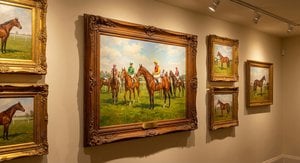
James Ward: Ένας Καλλιτέχνης της Άγουστής Αγγλίας
Ο Τζέημς Γουάρντ (1769-1859) υπήρξε ένας σημαντικός Βρετανός ζωγράφος, γνωστός για τα συναρπαστικά έργα του με ζώα, τις ρομαντικές τοπικές απεικονίσεις και τους ενδιαφέροντες πορτρέτα. Παρά το γεγονός ότι συχνά παραγκωνιζόταν από τους συνομήλους του, ο μοναδικός του στυλ και η δεξιοτεχνία του είχαν σημαντικό αντίκτυπο στην εξέλιξη της βρετανικής τέχνης κατά τον 19ο αιώνα.
Πρώτα Χρόνια και Εκπαίδευση
Γεννήθηκε στις 23 Οκτωβρίου 1769, στο Λονδίνο, στην Αγγλία, ο Τζέημς Γουάρντ ήταν ο νεότερος αδελφός του γλύπτη και χαρακτικής καλλιτέχνη William Ward. Οι πρώιμες καλλιτεχνικές του τάσεις αναπτύχθηκαν σε ένα δημιουργικό οικογενειακό περιβάλλον. Ενώ έλαβε κάποια επίσημη εκπαίδευση, η ανάπτυξή του ήταν κυρίως αυτοδιδακτική και επηρεάστηκε έντονα από την παρατήρηση και την πρακτική.
Ανάπτυξη Στυλ και Επιρροές
Η καλλιτεχνική πορεία του Γουάρντ μπορεί να χωριστεί σε δύο ξεχωριστά περιόδους, ανάλογα με τις επιρροές. Αρχικά, μέχρι το 1803, τα έργα του έφεραν ισχυρή επίδραση από τον συγγενικό του γλύπτη, George Morland, χαρακτηριζόμενα από σκηνές της καθημερινής ζωής και εστίαση στην απλή ζωή. Μετά από αυτήν την περίοδο, εμπνεύστηκε βαθιά από τον Μπαρόκ μάστορα Peter Paul Rubens, υιοθετώντας μια πιο δυναμική σύνθεση, πλούσια παλέτα χρωμάτων και δραματική χρήση φωτός και σκιάς.
Σημαντικά Έργα και Καλλιτεχνικός Στυλ
Ο μοναδικός στυλ του Γουάρντ τον ξεχώρισε από πολλούς συνομήλους. Ανέπτυξε δεξιότητες σε διάφορα είδη, συμπεριλαμβανομένων της ιστορικής ζωγραφικής, του πορτρέτου, του τοπίου και της τέχνης των ζώων. Μερικά από τα πιο γνωστά έργα του περιλαμβάνουν:
- Gordale Scar (1814/15): Θεωρείται το κύριο έργο του, μια δραματική απεικόνιση ενός Yorkshire gorge που αποτελεί παράδειγμα των ρομαντικών ιδιαιτεροτήτων της Αγγλίας.
- The Deer Stealer (1823): Δόθηκε ως δώρο στον Theophilus Levett, αυτό το έργο παρουσιάζει την ικανότητα του Γουάρντ στην ιστορία και την αναπαράσταση των ζώων.
- John Levett Hunting at Wychnor, Staffordshire (1817): Ένα πορτρέτο ενός από τους χορηγούς του, που αποδεικνύει την ικανότητά του να συλλαμβάνει τόσο την ομοιότητα όσο και την ατμόσφαιρα.
Τα έργα του χαρακτηρίζονται από προσεκτική προσοχή στη λεπτομέρεια, ιδιαίτερα στην απεικόνιση των ζώων, σε συνδυασμό με μια ρομαντική προσέγγιση που τονίζει την ομορφιά και τη δύναμη της φύσης.
Επιravings και Εκθέσεις
Ο Γουάρντ απολάμβανε χορηγίες από σημαντικές προσωπικότητες, όπως ο Theophilus Levett, με αποτέλεσμα πολλές παραγγελίες. Συχνά εκθέτευε τα έργα του στην Ακαδημία Βασιλικής Τέχνης, κερδίζοντας αναγνώριση για την ικανότητά του και την πρωτοτυπία του. Η ανάμειυσή του ως μέλος το 1811 σταθεροποίησε τη θέση του στον βρετανικό καλλιτεχνικό χώρο.
Μετέωρη Ζωή και Κληρονομιά
Ο Γουάρντ συνέχισε να ζωγραφίζει παραγωγικά μέχρι το 1855, όταν ένας εγκεφαλικός επεισόδιο περιορισμού της καριέρας του. Πέθανε στις 17 Νοεμβρίου 1859, σε σχετικά φτωχική κατάσταση παρά την προηγούμενη επιτυχία του.
Παρά τις οικονομικές δυσκολίες που αντιμετώπισε αργότερα στη ζωή του, η επιρροή του Τζέημς Γουάρντ στην αγγλική τέχνη παραμένει αναμφισβήτητη. Ο μοναδικός συνδυασμός ρεαλισμού και ρομαντισμού του άνοιξε τον δρόμο για τις μετέπειτα γενιές ζωγράφων ζώων και τοπικών καλλιτεχνών. Τα έργα του φυλάσσονται σήμερα σε σημαντικές συλλογές, όπως η Tate Britain και το Yale Center for British Art.
Ιστορική Σημαντικότητα
Ο Τζέημς Γουάρντ καταλαμβάνει μια σημαντική θέση στην μετάβαση από την Νεοκλασική στην Ρομαντική εποχή της αγγλικής τέχνης. Συνδύασε το παραδοσιακό είδος ζωγραφικής με το αναδυόμενο ενδιαφέρον για το τοπίο και τον ρεαλισμό, αφήνοντας πίσω του ένα συναρπαστικό κληροδιάδοτο που συνεχίζει να εμπνέει και να διασκεδάζει.



 Προεπισκόπηση
 Μετάβαση σε Εκτυπώσεις
 Αποστολή
 Κοινοποίηση
 Λεπτομέρειες
 Οδηγός

 Λήψη
Λήψη
 Παρόμοια αντικείμενα συλλογής
 Ακτινογραφία
 Παρουσίαση
 Στατιστικά


 Περισσότερα λεπτομέρεια






































 Η επιλογή με γυαλί είναι διαθέσιμη μόνο για μεγέθη κάτω από 110 εκ.