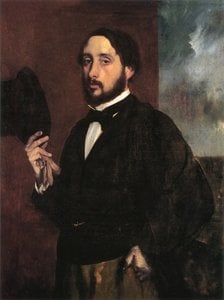
Βιογραφικό Καλλιτέχνη
Ένας Ζωγράφος της Κίνησης: Η Αινιγματική Ζωή του Ένγκαρ Ντέγκας
Ο Ένγκαρ Ντέγκας, γεννημένος στο Παρίσι το 1834, υπήρξε ένας καλλιτέχνης με συναρπαστικές αντιθέσεις. Συχνά συνδέεται με τους Ιμπρεσιονιστές – όπως ο Μονέ, ο Ρενώ και άλλοι που επαναστατικοποίησαν τη ζωγραφική στα τέλη του 19ου αιώνα – όμως αρνιόταν ενεργά αυτή την ταυτοποίηση, επιλέγοντας να αυτοπροσδιοριστεί ως ένας ρεαλιστής. Αυτή η δέσμευσή του βασιζόταν στην ακριβή παρατήρηση του κόσμου γύρω του και στην αφοσίωσή του στην απεικόνιση αυτού με ειλικρίνεια. Η παιδική του εποχή ήταν άνετη, ανήκει σε μια μέτρια τάξη, ο πατέρας του ήταν τραπεζικός και η μητέρα του προερχόταν από μια κρεολική οικογένεια στην Νέα Ορλεάνη. Αυτό το υπόβαθρο του προσέφερε πρόσβαση στην εκπαίδευση και την καλλιτεχνική κατάρτιση, αν και συχνά τον ταλαιπωρούσε οι ακαδημαϊκές καταστάσεις. Αρχικά εγγράφηκε στο Λύκειο Λουίς-λε-Γκραντ, αλλά η πραγματική του εκπαίδευση ξεκίνησε όταν άρχισε να αντιγράφει έργα στο Λούβρο, τελειοποιώντας τις δεξιότητές του και ανάφλεξη μιας αιώνιας αγάπης για την κλασική τέχνη. Ωστόσο, ο δρόμος του Ντέγκας δεν ήταν μια αυστηρή τήρηση των παραδόσεων· χαρακτηρίστηκε από συνεχή αμφισβήτηση και αναθεώρηση των καλλιτεχνικών κανόνων. Είχε μια ανεξάρτητη σκέψη που θα διαμόρφωνε ολόκληρη την καριέρα του.
Πέρα από τους Ιμπρεσιονιστές: Μια Μοναδική Καλλιτεχνική Όραση
Ενώ οι συνομήλους του, όπως ο Μονέ, κυνηγούσαν τις φευγαλέες επιδράσεις του φωτός έξω, ο Ντέγκας εργαζόταν κυρίως εντός των τειχών του εργαστηρίου του, κατασκευάζοντας μεθοδικά σκηνές από παρατήρηση και μνήμη. Το θέμα της τέχνης του ήταν ξεκάθαρα σύγχρονο – μια απόκλιση από τα ιστορικά ή μυθολογικά θέματα που προτιμούσαν πολλοί ακαδημαϊκοί ζωγράφοι. Βρήκε έμπνευση στις καθημερινές ζωές των Παριζητών: λινάριδες, τραγουδίστριες καμπαρέ, μετασκευαστές κοσμημάτων και, πιο διάσημα, χορεύτριες του μπαλέτου. Αυτή η εμμονή με το μπαλέτο ορίζει σε μεγάλο βαθμό το έργο του. Ο Ντέγκας δεν ζωγράφιζε απλώς όμορφες χορεύτριες· αποτύπωνε την αγριότητα της επαγγελματικής τους ύπαρξης – τις ατελείωτες δοκιμές, την σωματική καταπόνηση, τις φευγαλέες στιγμές χάρης μέσα σε έναν κόσμο σκληρής δουλειάς. Οι συνθέσεις του συχνά ήταν ασυνήθιστες, τοποθετώντας τους ανθρώπους με απροσδόκητους τρόπους και χρησιμοποιώντας ασύμμετρες διατάξεις που δημιουργούν μια αίσθηση δυναμισμού και άμεσης εμπρόσθιας παρουσίασης. Δεν ενδιαφερόταν για την επιφανειακή ομορφιά· αναζητούσε την αλήθεια κάτω από την επιφάνεια.
Επιρροές και Καλλιτεχνική Ανάπτυξη
Η καλλιτεχνική πορεία του Ντέγκας διαμορφώθηκε από μια ποικιλία επιρροών. Η αρχική του εκπαίδευση έμφαση σε κλασικές αρχές, ιδιαίτερα το έργο του Ζαν-Ογουστά-Ντιμπουά Μπωγκάρ, ο οποίος υπογράμμισε την ακρίβεια και τη λεπτομέρεια. Ωστόσο, ο Ντέγκας θαύμαζε τους Ρεαλιστές, όπως ο Γουσταβός Κορμπέ, οι οποίοι αμφισβήτησαν τις ακαδημαϊκές συμβάσεις και υπερασπίστηκαν την απεικόνιση της σύγχρονης ζωής. Ένα καθοριστικό σημείο στην εξέλιξή του ήταν η σύνδεσή του με τον Καμίλ Πισαρό, έναν κορυφαίο Ιμπρεσιονιστή που τον εισήγαγε σε άλλους καλλιτέχνες και τον ενθάρρυνε να πειραματιστεί με νέες τεχνικές. Έμεινε σαγηνευμένος από τα ιαπωνικά έργα τέχνης – ουκιγιό-ε – που επηρέασαν τη χρήση του ασύμμετρων συνθέσεων, των επίπεδων προοπτικών και των τολμηρών μοτίβων. Επίσης, υιοθέτησε την φωτογραφία, αναγνωρίζοντας τις δυνατότητές της ως εργαλείο μελέτης της κίνησης και αποτύπωσης φευγαλέων στιγμών. Αυτή η προθυμία να ενσωματώσει διαφορετικές επιρροές στην τέχνη του είναι αυτό που τον ξεχωρίζει και συνεισφέρει στον μοναδικό χαρακτήρα της τέχνης του. Δεν φοβόταν να δανείζεται από διάφορες πηγές, συνθέτοντας τις με έναν εντελώς νέο τρόπο.
Σημαντικά Επιτεύγματα και Ιστορική Σημασία
Ο Ένγκαρ Ντέγκας πέθανε στο Παρίσι το 1917, αφήνοντας πίσω του ένα σώμα εργασίας που συνεχίζει να γοητεύει και να εμπνέει το κοινό σήμερα. Η καινοτόμος προσέγγισή του στη σύνθεση, η μαεστρική του τεχνική και η ειλικρινής απεικόνιση της σύγχρονης ζωής είχαν μια βαθιά επίδραση στην πορεία της τέχνης. Άνοιξε τον δρόμο για τις μελλοντικές γενιές καλλιτεχνών που αναζητούσαν να ξεπεράσουν τις παραδοσιακές συμβάσεις και να εξερευνήσουν νέους τρόπους απεικόνισης του κόσμου γύρω τους. Η επιρροή του είναι εμφανής στη δουλειά του Πάμπλο Πικάσο και Ενρίκο Μανέ, μεταξύ άλλων. Τα μουσεία σε όλο τον κόσμο – συμπεριλαμβανομένου του Μουσείου Ορσέ και του Μουσείου της Ορανζέ στο Παρίσι – στεγάζουν σημαντικές συλλογές των ζωγραφικών του έργων, των σχεδίων και των γλυπτών του, διασφαλίζοντας ότι η κληρονομιά του θα επιβιώσει για τις επόμενες γενιές. Ο Ντέγκας δεν ήταν απλώς ένας ζωγράφος χορευτριών ή ιπποδρομέων· ήταν ένας παρατηρητής της ανθρώπινης φύσης, ένας μάστορας της μορφής και της κίνησης και ένας αληθινός πρωτοπόρος που επαναδιαμόρφωσε τις δυνατότητες της τέχνης.



 Προεπισκόπηση
 Αγορά χειροποίητου πίνακα
 Αποστολή
 Κοινοποίηση
 Λεπτομέρειες
 Οδηγός

 Λήψη
Λήψη
 Παρόμοια αντικείμενα συλλογής
 Ακτινογραφία
 Παρουσίαση
 Στατιστικά

 Περισσότερα λεπτομέρεια






































 Η επιλογή με γυαλί είναι διαθέσιμη μόνο για μεγέθη κάτω από 110 εκ.