


 Oil On CanvasWallArtNorthern Renaissance
 65.0 x 53.0 cm
Εκτύπωση giclée ή σε καμβά ποιότητας μουσείου με γρήγορη παραγωγή και ευέλικτες επιλογές φινιρίσματος. ( Αγορά χειροποίητου πίνακα Αγορά ψηφιακής εικόνας)





























Επιλέξτε από τις προκαθορισμένες διαστάσεις μας που διατηρούν τις αρχικές αναλογίες του έργου τέχνης.

Μπορείτε να εισαγάγετε δικές σας διαστάσεις ώστε να ταιριάξουν με ένα συγκεκριμένο πλαίσιο ή χώρο. Εάν το επιλεγμένο μέγεθος δεν συμπίπτει με τις αναλογίες της πρωτότυπης εικόνας, θα κόψουμε το έργο τέχνης ή θα επεκτείνουμε την εικόνα με καθρεφτισμένη ή μονόχρωμη ατέλεια. Θα σας αποσταλεί ένα ψηφιακό mockup για έγκρισή σας πριν από την έναρξη της παραγωγής.
Παρακαλούμε σημειώστε ότι η προεπισκόπηση στην οθόνη δεν αντικατοπτρίζει την πραγματική κοπή ή επέκταση. Μόνο το mockup θα δείξει με ακρίβεια την τελική σύνθεση.
Παρόλο που είναι διαθέσιμες προσαρμοσμένες διαστάσεις, προτείνουμε την επιλογή μιας διάστασης από τη προκαθορισμένη λίστα για τη διατήρηση των αρχικών αναλογιών.
Παγκόσμια Αποστολή () σε 2 εβδομάδες αντί για τις συνήθεις 4/5 εβδομάδες. (7 Σεπτέμβριος)


The Conjuror
Διαστάσεις Αναπαραγωγής
Hieronymus Bosch remains one of art history's most perplexing figures, an artist whose unsettling visions continue to captivate audiences centuries after his death in 1516. Born around 1450 in ’s-Hertogenbosch, Brabant—a region grappling with religious anxieties and burgeoning societal change—Bosch’s oeuvre defies easy categorization, presenting a landscape of grotesque figures, fantastical creatures, and meticulously rendered details that simultaneously repel and intrigue.
“The Conjurer,” painted circa 1502, exemplifies Bosch's distinctive style. Executed in oil on wood, the painting depicts a man dressed in scarlet robes standing beside a table laden with symbolic objects: a tennis racket, a bowl containing fruit, a wine glass, and two clocks—one positioned prominently near the upper left corner, the other lower right.
The symbolism embedded within “The Conjurer” is multilayered and profoundly disturbing. The tennis racket represents manipulation and deceit—a tool wielded by the conjurer to control his audience. The fruit symbolizes temptation and decay, mirroring Bosch’s preoccupation with themes of mortality and corruption. Crucially, the clocks serve as potent reminders of time's relentless passage and the inevitability of judgment.
More than just a visual spectacle, “The Conjurer” operates on an emotional level, provoking feelings of unease and apprehension. Bosch’s masterful use of color—particularly scarlet—intensifies the painting’s unsettling atmosphere, drawing viewers into a realm where rationality yields to irrationality and beauty is subsumed by grotesquery. It's a work that compels contemplation, prompting us to confront uncomfortable truths about human nature and the perils of spiritual complacency.
Ultimately, Bosch’s “The Conjurer” transcends its historical context, resonating with viewers across generations due to its enduring exploration of fundamental anxieties concerning faith, morality, and the human condition. It stands as a cornerstone of Northern Renaissance art—a chilling reminder that beauty can coexist with terror and that true understanding requires venturing beyond the confines of conventional perception.


1450 - 1516 , Ολλανδία
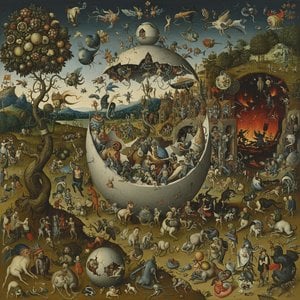
Ανακαλύψτε τα 25 κορυφαία έργα τέχνης του Ιερόνυμου Μπος! Εξερευνήστε τον συμβολισμό, την τεχνική και την ιστορία των πιο εμβληματικών πίνακων της φλαμανδικής Αναγέννησης. Βρείτε αναπαραγωγές υψηλής ποιότητας για διακόσμηση στο WahooArt.com.

Explore the captivating world of Hieronymus Bosch! Delve into the symbolism, religious context, and artistic innovation of this Netherlandish master with WahooArt's expert analysis. Discover his iconic paintings & lasting influence.

Explore the captivating world of Magic Realism! Discover its origins, key artists like García Márquez & Colunga Marín, and how it blends reality with the fantastical. Expert insights & high-quality art reproductions at WahooArt.

Ανακαλύψτε τους 25 κορυφαίους πίνακες του Museo del Prado! Velázquez, Goya, El Greco και άλλοι μεγάλοι ζωγράφοι ζωντανεύουν. Έμπνευση για διακόσμηση σπιτιού & υψηλής ποιότητας αναπαραγωγές τέχνης. Εξερευνήστε την πλήρη συλλογή στο WahooArt.com
Ανακαλύψτε τα 10 αριστουργήματα που καθόρισαν την Πρώιμη Φλαμανδική Ζωγραφική! Jan van Eyck, Rogier van der Weyden & άλλοι δάσκαλοι. Ιστορία τέχνης, συμβολισμός και τεχνικές σε καμβά. Βρείτε πίνακες για διακόσμηση στο WahooArt.com.

 Δείτε σε πραγματικό χώρο
 Αποστολή
 Κοινοποίηση
 Λεπτομέρειες

 Λήψη
Λήψη
 Παρόμοια αντικείμενα συλλογής
 Ακτινογραφία
 Παρουσίαση
 Διαβάστε περισσότερα







 Η επιλογή με γυαλί είναι διαθέσιμη μόνο για μεγέθη κάτω από 110 εκ.


