Βιογραφικό Καλλιτέχνη
A Netherlandish Enigma: The Life and Art of Hieronymus Bosch
Hieronymus Bosch, ή Jheronimus van Aken όπως ήταν το πραγματικό του όνομα, παραμένει ένας από τους πιο συναρπαστικούς και μυστηριώδεις καλλιτέχνες της ιστορίας της τέχνης. Γεννήθηκε γύρω στο 1450 στην πολυσύχναστο πόλη του ’s-Hertogenbosch, στα νότια της Ολλανδίας – τότε μέρος της Βραβόντιας – και η ζωή και το έργο του παραμένουν περιτριγυρισμένα από αμφιβολίες και εικασίες. Η ιστορία του είναι ένα μυστήριο που συνεχίζει να προκαλεί ενθουσιασμό, καθώς οι λεπτομέρειες της ζωής του είναι εξαιρετικά σπάνιες και συχνά αντιφατικές. Ήταν γιος ενός καλλιτέχνη, Anthonius van Aken, και μεγάλωσε σε μια οικογένεια με μακρά παράδοση στην ζωγραφική – ο παππούς του, Jan van Aken, και ο θείος του, επίσης καλλιτέχνες. Αυτή η καταγωγή τον έβαλε σε ένα περιβάλλον όπου η τέχνη ήταν καθημερινότητα, πιθανότατα λαμβάνοντας τις πρώτες του γνώσεις και τεχνικές από την οικογενειακή εργαστήριο. Ακόμα και στα πρώιμα χρόνια του, φάνηκε να αποκλίνει από τις καθιερωμένες πρακτικές, υποδηλώνοντας την εξαιρετική φαντασία που θα διακρινόταν αργότερα στην καλλιτεχνική του πορεία. Οι βιογραφικές πληροφορίες είναι εξαιρετικά ελλιπείς – τα αρχεία είναι ατελείωτα και γεμάτα κενά, αφήνοντας πολλά ανοιχτά στην ερμηνεία και την υποθέση, ενισχύοντας έτσι το μυστήριο που περιβάλλει τον ίδιο τον άνθρωπο και το έργο του. Παντρεύτηκε την Aleyt Goyaerts van den Meerveen γύρω στο 1481, μια ένωση που προσέφερε κάποια οικονομική ασφάλεια μέσω των περιουσιακών στοιχείων της οικογένειάς της, αλλά λίγα άλλα.
Fantastical Visions and Symbolic Depths
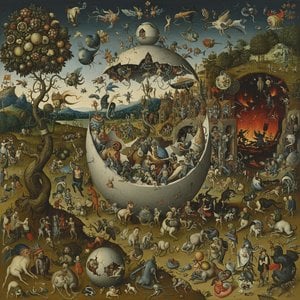
Το καλλιτεχνικό στυλ του Bosch είναι αμέσως αναγνωρίσιμο – ένας συναρπαστικός συνδυασμός λεπτομερούς ακρίβειας και τυφλής φαντασίας. Κύριος ήταν ο τρόπος με τον οποίο εργαζόταν, χρησιμοποιώντας κυρίως λάδι σε παλέτες οξιάς, επιδεικνύοντας μια εξαιρετική ικανότητα στον χειρισμό του μέσου και επιτυγχάνοντας φωτεινούς χρωματισμούς και περίπλοκες υφές. Ενώ τα πρώιμα έργα του παρουσιάζουν επιρροές από την παραδοσιακή ολλανδική ζωγραφική, ιδιαίτερα στον ρεαλισμό και την προσοχή στη λεπτομέρεια, γρήγορα μεταβίκηκε πέρα από την απλή μίμηση, αναπτύσσοντας μια βαθιά πρωτότυπη όραση. Τα έργα του δεν είναι απλώς αναπαραστάσεις της πραγματικότητας, αλλά εικονογραφίες που φιλοξενούν παράξενους πλάσματα, υβριδικές οντότητες και ανησυχητικές σκηνές που μοιάζουν να έχουν ξεπηδήσει από τα όνειρα – ή τις εφιαλτικές τους εκδοχές. Η θρησκευτική θεματολογία αποτελεί τον πυρήνα πολλών από τα έργα του, αλλά σπάνια παρουσιάζεται με άμεσο τρόπο. Αντίθετα, ο Bosch χρησιμοποιεί σύμβολα για να εξερευνήσει σύνθετες ηθικές και θεολογικές έννοιες, εστιάζοντας συχνά στους κινδύνους του αμαρτήματος, την εύθραυστη φύση των γλωσσικών ευχαρισίων και την αναπόφευκτη θρησκευτική κρίση. Τα πλάσματα που δημιουργεί – τρομεροί δαίμονες, φανταστικά ζώα και παράξενοι ανθρώπινοι χαρακτήρες – δεν είναι απλώς διακοσμητικά στοιχεία, αλλά εκδηλώσεις της αμαρτίας, της παρενόχλησης και της πνευματικής διαφθοράς. Ο συνδυασμός του ιερού και του προσβλητικού, του όμορφου και του δειλινού δημιουργεί ένα μοναδικό και ανησυχητικό αποτέλεσμα που συνεχίζει να γοητεύει τους θεατές αιώνες αργότερα.
Major Works and Symbolic Interpretations
Μερικά από τα πιο διάσημα έργα του Bosch είναι η Κήπος της Γης των Ονείρων (c. 1490-1510), ένα τριπτυχό έργο που παραμένει μία από τις πιο αινιγματικές και συζητημένες δημιουργίες στην ιστορία της τέχνης, η Επτά Θάνατοι (c. 1490-1515) και η Χριστός που μεταφέρει τον σταυρό (c. 1490). Το τριπτυχό έργο του *Κήπου της Γης των Ονείρων* είναι ένα πανοραμικό όραμα του Παράδεισου, της γήινης ζωής και του Κάτω Χώρου – μια σύνθετη εικονογραφία που αντιπροσωπεύει την ανθρώπινη πτώση. Όταν ανοίγει, παρουσιάζει έναν κήπο γεμάτο φανταστικά πλάσματα και εξωφρενικά φυτά στην αριστερή πλευρά, έναν κόσμο κατακλυμένο από αισθήσεις και απεριόριστη επιθυμία στη μεσαία πλευρά και μια τρομακτική ματιά στον Κάτω Χώρο στις δεξιές. Η Επτά Θάνατοι είναι μια λεπτομερής απεικόνιση των επτά αμαρτιών, ένα έργο τέχνης που εξερευνά την ανθρώπινη φύση και τις ηθικές επιλογές. Η Χριστός που μεταφέρει τον σταυρό παρουσιάζει τον Χριστό να κουβαλάει τον σταυρό του, ένα σύμβολο θυσίας και ελπίδας μέσα από μια πολύπλοκη και γεμάτη συμβολισμούς παράσταση.
Influences and Legacy
Η προσπάθεια να εντοπιστούν οι άμεσες επιρροές του Bosch είναι μια δύσκολη υπόθεση, δεδομένη της πρωτοτυπίας της όρασης του. Οι ιστορικοί υποθέτουν πιθανές συνδέσεις με τη μεσαιωνική λαϊκή παράδοση, θρησκευτικά κείμενα – ιδιαίτερα αυτά που τονίζουν τις αποκαλυπτικές θεματικές και τις ανησυχίες της εποχής, συμπεριλαμβανομένων των φόβων για την αιρέση και τις κοινωνικές αναταραχές. Ωστόσο, είναι σαφές ότι συνδύαζε αυτά τα στοιχεία σε κάτι εντελώς νέο και μοναδικό. Η επιρροή του στον επόμενο καλλιτεχνικό κόσμο είναι αδιαμφισβήτητη. Ο Πιέτερ Μπρούγκελ ο Παλαιότερος ακολούθησε άμεσα τα βήματά του, υιοθετώντας παρόμοιες θεματικές και συνθετικές τεχνικές, ενώ αργότερα κινήματα όπως το Σουρεαλισμός επίσης αντλούν έμπνευση από την ονειρική του απεικόνιση και την εξερεύνηση του υποσυνείδητου. Καλλιτέχνες όπως οι Salvador Dalí και Max Ernst αναγνώριζαν ανοιχτά τον δανεισμό του. Ακόμα και σήμερα, το έργο του Bosch συνεχίζει να προκαλεί ενθουσιασμό και συζήτηση, εξασφαλίζοντας τη διαρκή του κληρονομιά ως έναν από τους πιο μοναδικούς και αξέχαστους καλλιτέχνες της ιστορίας της τέχνης. Τα έργα του προσφέρουν πολύτιμες πληροφορίες για το θρησκευτικό, κοινωνικό και ψυχολογικό κλίμα της μετα-15ου α



 Προεπισκόπηση
 Μετάβαση σε Εκτυπώσεις
 Αποστολή
 Κοινοποίηση
 Λεπτομέρειες
 Οδηγός

 Λήψη
Λήψη
 Παρόμοια αντικείμενα συλλογής
 Ακτινογραφία
 Παρουσίαση
 Στατιστικά


 Περισσότερα λεπτομέρεια






































 Η επιλογή με γυαλί είναι διαθέσιμη μόνο για μεγέθη κάτω από 110 εκ.