A Master of the Silent Feast: The Life and Legacy of Gottfried Libalt
In the quiet, shadowed corners of seventeenth-century European art, few painters captured the tactile splendor of the material world as intimately as Gottfried Libalt. Born around 1610 in the bustling Hanseatic city of Hamburg, Libalt emerged during a transformative era where the boundaries between German, Dutch, and Flemish traditions were fluid and vibrant. While his life remains partially veiled by the mists of history—with much of his personal narrative known only through fragmented archives—his brushwork speaks with an unmistakable clarity. A master of the still life, Libalt possessed a rare ability to breathe life into the inanimate, transforming simple arrangements of game birds, ripe fruits, and garden vegetables into profound meditations on abundance, mortality, and the fleeting nature of time.
Libalt’s artistic evolution was deeply shaped by the cultural currents of the Dutch Golden Age. Though he was a German painter, his style reflects the meticulous realism and sophisticated compositional principles found in the works of masters like Jan Le Ducq and Isaac Massa. His early training under the Hamburg painter Johann Georg Falke provided him with a rigorous foundation in perspective and the dramatic interplay of chiaroscuro. As his career progressed, Libalt’s reach extended far beyond the borders of Germany; his travels through Kraków and Vienna, and perhaps even a formative period in Flanders alongside figures such as Philips Wouwerman, infused his work with a cosmopolitan elegance. This movement across Europe allowed him to blend the somber, spiritual depth of German Baroque art with the luminous, observational precision characteristic of the Low Countries.
The Art of Observation: Technique and Subject Matter
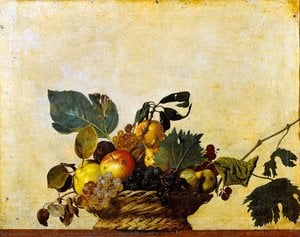
To gaze upon a Libalt masterpiece is to enter a sensory experience where texture and light reign supreme. He was particularly renowned for his elaborate hunting and kitchen still lifes, genres that allowed him to showcase an extraordinary command over diverse surfaces. One can almost feel the coarse feathers of a fallen pheasant, the waxy skin of a ripening pear, or the cold, damp surface of a ceramic vessel. His technique relied heavily on a careful, almost scientific observation of nature, yet he never allowed mere realism to overshadow the emotional resonance of his compositions.
Beyond the celebrated still lifes, Libalt demonstrated a remarkable versatility that touched upon the sacred and the panoramic:
- Religious Devotion: His religious reliefs and oil paintings, such as The Dream of Jacob and The Birth of Christ housed in Hamburg’s Saint-Petri-Kirche, reveal a profound mastery of color and texture used to evoke spiritual fervor.
- Landscape and Vista: Though less frequent than his still lifes, his landscapes—including a notable panoramic view of Kraków painted in 1652—demonstrate an ability to capture the atmospheric grandeur of the European landscape.
- Portraiture: While rare, his foray into portraiture, such as the evocative Youth with Monkey, showcases a more intimate, character-driven side of his artistic persona.
Historical Significance and Enduring Influence
The significance of Gottfried Libalt lies not only in the beauty of his individual works but in his role as a bridge between regional styles. By synthesizing the meticulous detail of the Dutch tradition with the dramatic intensity of the German Baroque, he helped create a unique visual language that resonated with the aristocratic and ecclesiastical patrons of Central Europe. His ability to personalize commissions for high-ranking clients, such as Archduke Leopold Wilhelm of Austria, ensured that his art was woven into the very fabric of European political and religious life.
Though much of his oeuvre remains scattered across private collections and distant churches, Libalt’s legacy endures through the profound stillness of his paintings. He remains a pivotal figure for anyone seeking to understand the 17th-century obsession with the beauty of the ephemeral. In every meticulously rendered leaf and every shadowed wing, Libalt reminds us that there is a sacred dignity to be found in the most humble objects of our world, capturing a moment of perfection before it inevitably fades into history.



 Προεπισκόπηση
 Μετάβαση σε Εκτυπώσεις
 Αποστολή
 Κοινοποίηση
 Λεπτομέρειες
 Οδηγός

 Λήψη
Λήψη
 Παρόμοια αντικείμενα συλλογής
 Ακτινογραφία
 Παρουσίαση
 Στατιστικά
 Περισσότερα λεπτομέρεια