Δείτε σε πραγματικό χώρο Προεπισκόπηση σε AR Μετάβαση σε Εκτυπωση Αγορά χειροποίητου πίνακα Αποστολή
Λεπτομέρειες Προσθήκη στα αγαπημένα Λήψη Παρόμοια αντικείμενα συλλογής Ακτινογραφία Παρουσίαση Στατιστικά

Self-Portrait

Explore Frederick Carl Frieseke's captivating 1938 'Self-Portrait.' This Impressionist oil painting reveals the artist’s contemplative nature amidst his studio, showcasing masterful technique and intimate detail.

Ο Frederick Carl Frieseke (1874-1939) ήταν ένας σημαντικός Αμερικανός ζωγράφος της περιόδου του Ιμπρεσιονισμού, γνωστός για τις γλυκές τοπικές σκηνές και τα γυναικεία πρόσωπα. Ανακαλύψτε την τέχνη του!

Αγοράστε μια ψηφιακή εικόνα υψηλής ανάλυσης και βελτιωμένης ποιότητας, πολύ ανώτερης από την προεπισκόπηση στο διαδίκτυο.

Κάθε αρχείο προετοιμάζεται σχολαστικά από τους εξειδικευμένους συνεργάτες μας, με τη χρήση προηγμένων εργαλείων και χειροκίνητου ρετουσαρίσματος υψηλής ακρίβειας. Εξασφαλίζουμε ότι κάθε εικόνα προσφέρει εξαιρετική ευκρίνεια, απόλυτη πιστότητα στο χρώμα και λεπτομερή ανάδραση των λεπτομερειών.

Το τελικό αρχείο παραδίδεται μέσω email εντός 72 ωρών, βελτιστοποιημένο για άμεση χρήση σε επαγγελματικά, εκδοτικά και έντυπα περιβάλλοντα. Πρόκειται για την ίδια ποιότητα που εμπιστεύονται κορυφαία studios σχεδιασμού, εκδότες και γκαλερί.

Ψηφιακή εικόνα

Κατεβάστε ένα αρχείο υψηλής ανάλυσης για προσωπική χρήση, εκτύπωση και δημιουργικά έργα. ( Μετάβαση σε Εκτυπωση Αγορά χειροποίητου πίνακα)

Συνολικό Κόστος

$ 24,90

Περιλαμβάνεται σε κάθε παραγγελία ψηφιακής εικόνας

Επαγγελματική Ψηφιακή Παράδοση με Εγγύηση

Όταν επιλέγετε το WahooArt.com, δεν αποκτάτε απλώς μια εικόνα – λαμβάνετε ένα επαγγελματικά αναβαθμισμένο ψηφιακό έργο τέχνης, δημιουργημένο με ακρίβεια και με εγγύηση ικανοποίησης. Δείτε όλα όσα περιλαμβάνονται στην παραγγελία σας, αυτόματα:

shipping_icon
Άμεση αποστολή μέσω email

Το ψηφιακό σας αρχείο εικόνας υψηλής ανάλυσης θα σας σταλεί μέσω email εντός 72 ωρών από την παραγγελία σας — έτοιμο για άμεση χρήση.

canvas_icon
Ψηφιακό Αρχείο με Τεχνητή Νοημοσύνη

Το έργο σας βελτιστοποιείται επαγγελματικά με τη χρήση προηγμένων εργαλείων Τεχνητής Νοημοσύνης και χειροκίνητης επεξεργασίας, εξασφαλίζοντας μέγιστη λεπτομέρεια, ευκρίνεια και ακρίβεια χρωμάτων.

insurance_icon
Δωρεάν επανεκδόσεις مدى ζωής

Απώλησες ή διαγράψατε κατά λάθος το αρχείο σας; Μην ανησυχείτε — θα σας το ξαναστείλομε οποιαδήποτε στιγμή, δωρεάν.

tax_icon
Χωρίς Τελωνειακούς Φόρους - Ποτέ

Απολαύστε αμέσως τα έργα τέχνης σας χωρίς δασμούς, φόρους ή έξοδα αποστολής - οι ψηφιακές λήψεις είναι πάντα αφορεশিপτεία.

color_icon
Εγγύηση Ακριβούς Χρωματισμού

Εξασφαλίζουμε ότι η ψηφιακή σας εικόνα αποτυπώνει τα αυθεντικά χρώματα όσο το δυνατόν πιστότερα, χρησιμοποιώντας επαγγελματικά εργαλεία και διαχείριση χρωμάτων.

return_icon
Εγγύηση Ικανοποίησης 100 Ημερών

Εάν δεν είστε ικανοποιημένοι με την ψηφιακή σας εικόνα, θα την τροποποιήσουμε ή θα σας επιστρέψουμε το 100% εντός 100 ημερών - χωρίς κανένα ερώτημα.

guarantee_icon
100% Εγγύηση Επιστροφής Χρήματος

Δεν είστε ικανοποιημένοι; Λάβετε πλήρη επιστροφή των χρημάτων σας εντός 100 ημερών από τη λήψη του ψηφιακού σας αρχείου - χωρίς κανένα ερώτημα.

discount_icon
Εκπτώσεις για μαζικές παραγγελίες

Αγοράστε 3 εικόνες, κάντε εξοικονόμηση 10% - Αγοράστε 5, κάντε εξοικονόμηση 15% - Αγοράστε 10+, κάντε εξοικονόμηση 20%. Ιδανικό για δημιουργικά έργα, γκαλερί και agencies.

Γρήγορα στοιχεία

  • Artistic style: Realism and Impressionism blend
  • Title: Self-Portrait
  • Influences: Renoir
  • Subject or theme: Artist's contemplation
  • Artist: Frederick Carl Frieseke
  • Notable elements or techniques:
    • Soft brushstrokes
    • Vivid colors

ΚВИΖ Τέχνης

Για κάθε ερώτηση υπάρχει μόνο μία σωστή απάντηση.

Ερώτηση 1:
Who is the artist of the Self-Portrait?
Ερώτηση 2:
In what year was the 'Self-Portrait' created?
Ερώτηση 3:
What artistic movement is Frederick Carl Frieseke most associated with?
Ερώτηση 4:
According to the image description, what is a prominent feature of the lighting in the artwork?
Ερώτηση 5:
What materials were used to create this artwork?

Self-Portrait by Frederick Carl Frieseke: A Glimpse into an Artist's World

The Self-Portrait by Frederick Carl Frieseke, created in 1938, is a captivating oil on canvas piece that showcases the artist's unique style and technique. As an expert in art and a salesman at https://WahooArt.com, I am delighted to delve into the intricacies of this artwork.

The Artist: Frederick Carl Frieseke – A Decorative Impressionist

Frederick Carl Frieseke (1874-1939) was a prominent American artist celebrated for his contributions to the Impressionist movement. Born in Owosso, Michigan, he spent much of his career as an expatriate in France, where he refined his artistic skills and developed a distinctive style often described as "decorative impressionism." Frieseke’s work is characterized by its luminous quality, serene landscapes, and intimate depictions of female subjects, all bathed in dappled sunlight. His early training included studies at the Art Institute of Chicago and the Académie Julian in Paris, where he was influenced by masters like Jean-Joseph Benjamin-Constant and Jean-Paul Laurens.

Analyzing the Self-Portrait: Technique and Composition

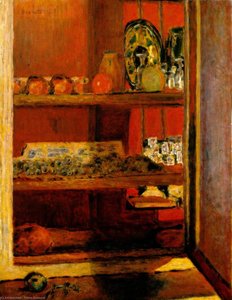
This self-portrait offers a rare glimpse into Frieseke’s personal world. The painting depicts the artist seated within his studio, surrounded by the tools of his trade – vases, bowls, and a chair—creating an atmosphere of quiet contemplation. He is shown wearing glasses and holding a brush, seemingly lost in thought as he gazes at his reflection in a mirror. Frieseke masterfully employs Impressionist techniques to capture the scene's essence. Soft brushstrokes and vivid colors create a sense of depth and dimensionality, while the muted backdrop enhances the overall feeling of calm. The artist’s attention to detail is evident in the intricate rendering of the objects and the subtle play of light and shadow, particularly noticeable on the surfaces of the paintings visible in the background.

Symbolism and Emotional Impact

Beyond a mere likeness, this self-portrait delves into themes of introspection and artistic creation. The studio setting symbolizes Frieseke’s dedication to his craft, while the objects surrounding him represent the inspiration and materials that fuel his creativity. The mirror serves as a symbolic portal, reflecting not only the artist's physical appearance but also his inner thoughts and emotions. The muted color palette contributes to a contemplative mood, inviting viewers to share in Frieseke’s moment of quiet solitude and focused concentration. It is an intimate portrayal of an artist at work, revealing a sense of humility and dedication.

Own a Piece of Art History: Handmade Reproductions

Handmade oil painting reproductions of the Self-Portrait are available at https://WahooArt.com, allowing art enthusiasts to own a piece of history. These meticulously crafted reproductions capture the original artwork's beauty and significance, bringing Frieseke’s vision into your home or office. For more information on Frederick Carl Frieseke and his works, visit /art/list/?Filter=frederick+carl+frieseke,frederick,carl,frieseke&. The Mead Art Museum, located in Amherst, Massachusetts, is also a great resource for learning about American art and artists like Frederick Carl Frieseke.


Βιογραφικό Καλλιτέχνη

A Life Bathed in Sunlight: The Artistic Journey of Frederick Carl Frieseke

Born in the small Michigan town of Owosso on April 7, 1874, Frederick Carl Frieseke embarked on a path that would ultimately establish him as one of America’s most celebrated Impressionist painters. His early life, shaped by a move to Florida following his mother's untimely passing and nurtured by an artistically inclined aunt, instilled within him a profound sensitivity to light and form – qualities that would become the defining characteristics of his unique artistic vision. Despite initially being involved in his family’s brick manufacturing business, Frieseke’s true passion lay in the realm of art, ignited by a transformative visit to the 1893 World’s Columbian Exposition in Chicago. This pivotal experience fueled his determination to pursue formal training and ultimately led him to relocate to Paris in 1898 – a decision that irrevocably altered the course of his artistic life. It was in France that Frieseke truly discovered his voice, immersing himself in the vibrant Parisian art scene and absorbing the influences of masters like Whistler, Monet, and Renoir, which would coalesce into his distinctive “decorative impressionism.”

The Giverny Influence: A Synthesis of Styles

Paris proved to be more than just a place of study; it became Frieseke’s adopted home, a sanctuary where he could refine his technique and explore his artistic sensibilities with unparalleled freedom. The proximity to Claude Monet's legendary garden at Giverny was particularly influential. In 1906, Frieseke rented a house adjacent to Monet’s estate, becoming part of a thriving artistic community and directly experiencing the magic of capturing light and color in nature. This intimate connection profoundly shaped his style, leading him to develop what is often described as “decorative impressionism.” Unlike some Impressionists who favored spontaneous brushwork, Frieseke meticulously crafted his paintings with a refined elegance – characterized by luminous colors, dappled sunlight filtering through foliage, and an emphasis on graceful female figures. His compositions weren’t merely fleeting impressions; they were carefully constructed scenes of serene beauty, imbued with a sense of intimate tranquility and often featuring rounded forms reminiscent of Pierre-Auguste Renoir. He skillfully blended the vibrant palette and atmospheric effects of Impressionism with the more structured composition and decorative elements of Post-Impressionism, creating works that possessed both immediacy and sophistication.

Themes and Techniques: Capturing Light and Femininity

Frieseke’s artistic focus consistently revolved around two central themes: the captivating effects of light and the portrayal of women. He was particularly fascinated by how sunlight transformed ordinary scenes into moments of ethereal beauty, meticulously capturing this interplay in his paintings. His female subjects – often depicted in idyllic gardens or intimate interiors – are not simply portraits but embodiments of grace, sensuality, and quiet contemplation. *Hélène*, painted in 1901, stands as a prime example of this approach – a captivating portrait that masterfully blends realism with Impressionistic beauty and intimate detail. Frieseke’s technique involved layering delicate brushstrokes to create a shimmering effect, evoking the sensation of sunlight dancing on skin and foliage. He frequently incorporated geometric elements – parasols, patterned fabrics – to provide contrast and enhance the visual harmony of his compositions. His dedication to capturing these nuances earned him widespread recognition; *Before the Glass* (1904) was purchased by the French Government and displayed at the Luxembourg Gallery, a testament to his growing reputation.

Notable Works and Recognition

Throughout his career, Frieseke garnered numerous accolades that reflected the esteem in which his work was held. He received a silver medal at the St. Louis Exposition in 1904, the Temple Gold Medal from the Pennsylvania Academy of Fine Arts in 1913, and the Grand Prize at the Panama-Pacific International Exposition in 1915. His painting *Torn Lingerie* (1920) achieved particular acclaim, winning two gold medals and the popular prize at the Chicago Art Institute – a remarkable achievement that underscored his enduring appeal to both critics and the public. Frieseke’s work was exhibited extensively throughout Europe and America, solidifying his place as a leading figure in the American Impressionist movement. Despite his growing fame, he remained a committed expatriate, preferring the artistic freedom he found in France and eventually settling in Normandy after World War I, where he continued to paint until his death on August 24, 1939.

Legacy and Influence

Frederick Carl Frieseke’s legacy extends far beyond his individual paintings. He played a crucial role in establishing American Impressionism as a distinct artistic movement, demonstrating the potential for capturing light and color with both sensitivity and technical skill. His “decorative impressionism” – characterized by its luminous palette, graceful figures, and carefully constructed compositions – continues to inspire artists today. Frieseke’s work serves as a poignant reminder of the power of art to transport us to idyllic realms bathed in sunlight and filled with grace, solidifying his place as one of America's most beloved Impressionist painters.
Frederick Carl Frieseke

Frederick Carl Frieseke

1874 - 1939 , Ηνωμένες Πολιτείες της Αμερικής

Γρήγορα στοιχεία

  • Artistic Movement Or Style: Αμερικανική Εμπνευστικότητα
  • Artists Or Movements Influenced By This Artist:
    • Εμπνευστικότητα
    • Αμερικανική Εμπνευστικότητα
  • Artists Who Influenced This Artist:
    • Ρενώρ
    • Βαν Γκογκ
    • Ντίκε
  • Date Of Birth: 7 Απρ 1874
  • Date Of Death: 24 Αυγ 1939
  • Full Name: Frederick Carl Frieseke
  • Nationality: Αμερικανός
  • Notable Artworks:
    • Κήπος στην Γιβερόνε
    • Γυναίκα στον Κήπο
    • Πριν το Βάζο
    • Μπλε Λινάρι
  • Place Of Birth: Owosso, ΗΠΑ