Βιογραφικό Καλλιτέχνη
Μια Ζωή Βυθισμένη στο Αισθητικό
Ο Φράνσις Μπέικον, ένα όνομα συνώνυμο με την ωμότερη συναισθηματικότητα στην τέχνη του 20ού αιώνα, γεννήθηκε στο Δουβλίνο της Ιρλανδίας το 1909. Ωστόσο, το καλλιτεχνικό του πνεύμα βρήκε την πληρέστερη έκφρασή του στον ταραγμένο κόσμο της μεταπολεμικής Βρετανίας. Η παιδική του ηλικία ήταν γεμάτη αστάθεια· οι συχνές μετακινήσεις λόγω της υγείας της μητέρας του καλλιέργησαν μια αίσθηση εκτοπισμού που θα διαμόρφωνε βαθιά την κοσμοθεωρία του και, τελικά, θα διείσδυε στους πίνακές του. Μια περίπλοκη σχέση με τον αυστηρό πατέρα του και ένας στενός δεσμός με τη νταντά του, Τέσι Λάιτφουτ, χρωμάτισαν περαιτέρω το συναισθηματικό έδαφος των πρώτων του χρόνων. Αρχικά γοητευμένος από τους ιπποδρομίες και μια ζωή στον τζόγο, ο Μπέικον περιπλανήθηκε σε διάφορα επαγγέλματα πριν αφιερωθεί τελικά στη ζωγραφική στα τέλη της δεκαετίας του εικοστού – μια καθυστερημένη έναρξη που ίσως ενέτεινε την επείγουσα και έντονη φύση των μεταγενέστερων έργων του. Δεν είχε επίσημη εκπαίδευση, αλλά χαράραξε τη δική του πορεία, απορροφώντας επιρροές από διάφορες πηγές και αναπτύσσοντας μια μοναδικά ανησυχητική οπτική γλώσσα.
Η Κρίσιμη Φάση των Πρώιμων Επιρροών
Η καλλιτεχνική αφύπνιση του Μπέικον δεν ήταν άμεση, αλλά μάλλον μια σταδιακή συσσώρευση εντυπώσεων. Τα έργα του Πάμπλο Πικάσο, ιδιαίτερα οι παραμορφωμένες φιγούρες της πρώιμης Κυβιστικής περιόδου του, αποδείχθηκαν καθοριστικά στην απελευθέρωσή του από την παραδοσιακή αναπαράσταση. Βρήκε περαιτέρω έμπνευση στη στοιχειώδη φωτογραφία του Έγκον Σίλε, οι εκφραστικές στρεβλώσεις των ανθρώπινων μορμών του οποίου συνέηχαν με τη δική του αυξανόμενη γοήτεια για την ευθραυστότητα και την ευαλωτότητα της ύπαρξης. Ωστόσο, ήταν μια τυχαία συνάντηση με την ταινία *Θωρηκτό Ποτέμκιν* του Σεργκέι Αϊζενστάιν που αποτέλεσε έναν κρίσιμο καταλύτη. Η ζωηρή εικονογραφία της ταινίας, ιδιαίτερα ένα κοντινό πλάνο ενός ουρλιάζοντος προσώπου, έγινε ένα διαρκές μοτίβο στο έργο του Μπέικον, αντιπροσωπεύοντας τον πρωταρχικό τρόμο και τα βάθη των ανθρώπινων ταχυτήτων. Θαύμαζε επίσης τους Παλιούς Δασκάλους, ιδιαίτερα τον Ντιέγκο Βελάσκεθ, του οποίου ο *Πορτρέτο του Πάπα Ιννοκέντιου Χ* θα αναερμήνευε διάσημα κατά τη διάρκεια της καριέρας του, μεταμορφώνοντας την αυταρχική παπική μορφή σε ένα βασανισμένο φάντασμα. Αυτές οι επιρροές δεν ήταν απλώς στυλιστικές προσαρμογές· απορροφήθηκαν και μεταμορφώθηκαν μέσα από τη μοναδική ευαισθησία του Μπέικον, με αποτέλεσμα ένα καλλιτεχνικό όραμα που ήταν ταυτόχρονα βαθιά προσωπικό και παγκοσμίως ηχηρό.
Δημιουργώντας μια Χαρακτηριστική Φόρμα: Παραμόρφωση και Απομόνωση
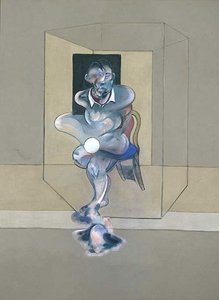
Η ανακάλυψη του Μπέικον ήρθε με το *Τρία Σχέδια για Φιγούρες στη Βάση ενός Σταυρού* (1944), ένα έργο που συγκλόνισε και γοήτευσε το κοινό στο μεταπολεμικό Λονδίνο. Αυτός ο τρίπτυχος καθιέρωσε το χαρακτηριστικό του στυλ – παραμορφωμένες, κατακερματισμένες φιγούρες απομονωμένες σε κλειστοφοβικούς χώρους. Δεν ήταν απεικονίσεις θρησκευτικού μαρτυρίου αλλά μάλλον ζωηρές εξερευνήσεις ανθρώπινης οδύνης, γυμνές από οποιαδήποτε παρηγορητική αφήγηση ή πνευματική ανακούφιση. Οι πίνακές του συχνά διαθέτουν θολές ή διαλυόμενες μορφές, μεταφέροντας μια αίσθηση ψυχολογικής αναταραχής και σωματικής ευαλωτότητας. Χρησιμοποιούσε συχνά γεωμετρικές δομές – κλουβιά, κουτιά – για να περιορίσει τα θέματά του, τονίζοντας την απομόνωσή τους και την ανικανότητά τους. Η παλέτα του Μπέικον ήταν συνήθως αμβλεία και ζοφερή, αντανακλώντας τα σκοτεινά θέματα που εξερευνούσε, αν και με εκλάμψεις έντονου χρώματος που ενέτειναν τον συναισθηματικό αντίκτυπο. Η χρήση αυτών των κλουβιών δεν ήταν απλώς μια σύνθεση· συμβόλιζε τους εγγενείς περιορισμούς και τις καταναγκασίες που επιβάλλονται στην ανθρώπινη ύπαρξη. Επιδίωξε να συλλάβει όχι μόνο *πως* φαίνονταν τα πράγματα αλλά *πώς ένιωθαν*, μεταφράζοντας εσωτερικές καταστάσεις άγχους, φόβου και απελπισίας στον καμβά με ωμή ειλικρίνεια.
Θέματα Θνητότητας, Οδύνης και της Ανθρώπινης Κατάστασης
Καθ' όλη τη διάρκεια της παραγωγικής του καριέρας, ο Μπέικον επέστρεφε επανειλημμένα σε ορισμένα μοτίβα: η σταύρωση ως σύμβολο ταχυτήτων· πορτρέτα που εμβάθυναν στην ψυχολογική ένταση των θεμάτων του, συχνά φίλων και εραστών όπως ο Τζορτζ Ντάιερ· και αυτοπροσωπογραφίες που χρησίμευσαν ως ενδοσκοπικές εξερευνήσεις της ταυτότητας και της θνητότητος. Η σειρά *Μελέτη Μετά τον Πορτρέτο του Πάπα Ιννοκέντιου Χ* του Βελάσκεθ (1953) είναι ίσως ένα από τα πιο εμβληματικά επιτεύγματά του, μεταμορφώνοντας το αξιοπρεπές πορτρέτο του Βελάσκεθ σε μια ουρλιαχτή μορφή, ενσωματώνοντας υπαρξιακό τρόμο. Τα πορτρέτα του Τζορτζ Ντάιερ, του ασταθούς εραστή του, είναι ιδιαίτερα συγκινητικά, αποτυπώνοντας τόσο την ένταση της σύνδεσής τους όσο και τη ζοφερή σκιά της τραγωδίας. Το έργο του Μπέικον δεν αφορούσε την απεικόνιση συγκεκριμένων ατόμων· αφορούσε την εξερεύνηση καθολικών θεμάτων ανθρώπινης ευαλωτότητας, απομόνωσης και αναπόφευκτου θανάτου. Δεν απέφυγε τις σκοτεινότερες πτυχές της ύπαρξης αλλά αντιμετώπισε κατά μέτωπο, αναγκάζοντας τους θεατές να αντιμετωπίσουν τη δική τους θνητότητα και άγχος.
Μια Διαρκής Κληρονομιά: Προκαλώντας Συμβάσεις
Ο αντίκτυπος του Φράνσις Μπέικον στην τέχνη του 20ού αιώνα είναι αναμφ



 Προεπισκόπηση
 Αγορά χειροποίητου πίνακα
 Αποστολή
 Κοινοποίηση
 Λεπτομέρειες
 Οδηγός

 Λήψη
Λήψη
 Παρόμοια αντικείμενα συλλογής
 Ακτινογραφία
 Παρουσίαση
 Στατιστικά

 Περισσότερα λεπτομέρεια






































 Η επιλογή με γυαλί είναι διαθέσιμη μόνο για μεγέθη κάτω από 110 εκ.