

Εκτύπωση giclée ή σε καμβά ποιότητας μουσείου με γρήγορη παραγωγή και ευέλικτες επιλογές φινιρίσματος. ( Αγορά χειροποίητου πίνακα Μετάβαση σε Ψηφιακή Αποτέλεσμα)





























Επιλέξτε από τις προκαθορισμένες διαστάσεις μας που διατηρούν τις αρχικές αναλογίες του έργου τέχνης.

Εισάγετε το πλάτος και το ύψος που επιθυμείτε, ώστε να ταιριάζουν στο κάδሮ ή στον τοίχο σας. Μια εκτύπωση μπορεί μόνο να υποστεί κοψίμό και ποτέ να μην γίνει μεγαλύτερη από την αρχική εικόνα, επομένως η επιλογή μεγέθους με διαφορετικό σχήμα συνεπάγεται απώλεια ενός μέρους της εικόνας. Σας στέλνουμε ένα ψηφιακό mockup για έγκριση πριν προχωρήσουμε σε οποιαδήποτε εκτύπωση. Η εικόνα που εμφανίζεται σε αυτή τη σελίδα δεν δείχνει την πραγματική κοπή — μόνο το mockup την παρουσιάζει.
Παγκόσμια Αποστολή () σε 2 εβδομάδες αντί για τις συνήθεις 4/5 εβδομάδες. (10 Νοέμβριος)
The field trip
Διαστάσεις Αναπαραγωγής
Fernand Léger’s “The Field Trip,” completed in 1925, stands as an emblem of Surrealist innovation and a profound reflection on the anxieties and aspirations of the interwar period. More than just a depiction of schoolchildren embarking on a journey to observe a locomotive, Léger's canvas embodies a radical reimagining of artistic representation—a deliberate rejection of illusionism in favor of a visual language that prioritizes geometric abstraction and conveys an overwhelming sense of movement.
“The Field Trip” emerged during a period of intense social and technological upheaval. The rapid industrialization of Europe—fueled by advancements in steam power, metallurgy, and transportation—was reshaping urban landscapes and altering the rhythms of daily life. Artists responded to these changes with diverse strategies, ranging from outright rejection of modernity to attempts to synthesize its principles with traditional forms. Léger’s Surrealist approach distinguishes itself through a calculated embrace of abstraction—a deliberate distortion of reality intended not merely to shock but also to provoke contemplation about the nature of perception and representation.
Beyond its literal depiction of schoolchildren and locomotives, “The Field Trip” is laden with symbolic significance. Léger’s use of repetitive geometric shapes—particularly rectangles—represents the relentless march of industrial progress, mirroring the rhythmic pulsations of the locomotive engine. The flattened picture plane symbolizes a rejection of illusionism and an insistence on confronting viewers with the raw materiality of the artwork. Furthermore, Léger subtly transforms recognizable elements—faces, bodies—into stylized abstractions, suggesting that artistic representation transcends mere imitation of nature.
"The Field Trip" evokes a complex emotional response in the viewer. The painting’s assertive color palette and dynamic brushstrokes convey an underlying sense of anxiety—a reflection of the uncertainties surrounding the future. Yet, simultaneously, Léger imbues his artwork with moments of wonder—captured in the expressive faces of the children and the luminous glow emanating from the locomotive. Ultimately, Léger's masterpiece compels us to reconsider our relationship with both the physical world and artistic expression—challenging us to embrace abstraction as a tool for conveying profound truths about human experience.
Το έργο "The field trip" απεικονίζει τα landscape, truck, people, conversation, modernity, geometry, form, industrial, ενώ τα αναγνωρίσιμα θέματα του Φρανς Λέγκερ είναι τα geometric abstraction, industrial age, societal change, form exploration, léger’s legacy. Η σύγκριση των δύο αναδεικνύει τον τρόπο με τον οποίο το έργο συνδέεται με τα συνηθισμένα θέματα του καλλιτέχνη.
Η χρωματική ανάλυση του έργου "The field trip" του Φρανς Λέγκερ αποτυπώνει μια Statement αντίθεση και μια Softly Mixed Palette αρμονία.
Η προτεινόμενη διαρρύθμιση για το "The field trip" του Φρανς Λέγκερ: μια εκτύπωση μεγέθους Large σε έναν/μια Living Room.


Explore 10 iconic artworks that define the industrial aesthetic. From gritty urban landscapes to metallic textures, discover the stories behind these timeless masterpieces. Find museum-quality art reproductions and curated decor inspiration. Explore the full collection on WahooArt.com.

Explore the vibrant world of Fernand Léger. Discover how his 'Tubism' and Machine Age aesthetics redefined modern art, offering profound inspiration for discerning collectors seeking geometric beauty and industrial dynamism.
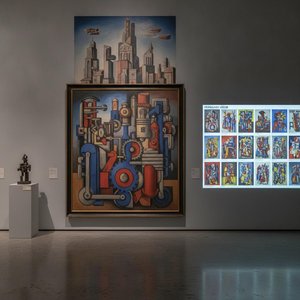
Immerse yourself in the vibrant world of Fernand Léger. Explore 25 iconic masterpieces of Cubism and Tubism, from bold geometric forms to machine-age energy. Find inspiration for your decor with museum-quality reproductions. Discover all masterpieces on WahooArt.com.

Explore the profound depth of Color Field painting. Our expert guide delves into the mastery of Morris Louis and Jules Olitski, offering sophisticated insights for discerning collectors seeking to understand the psychological power and aesthetic elegance of chromatic abstraction.
 Προεπισκόπηση σε πραγματική κλίμακα
 Αποστολή
 Κοινοποίηση
 Λεπτομέρειες
 Οδηγός

 Λήψη
Λήψη
 Παρόμοια αντικείμενα συλλογής
 Ακτινογραφία
 Παρουσίαση
 Ερωτήσεις & Απαντήσεις
 Στατιστικά
 Περισσότερα









 Η επιλογή με γυαλί είναι διαθέσιμη μόνο για μεγέθη κάτω από 110 εκ.


