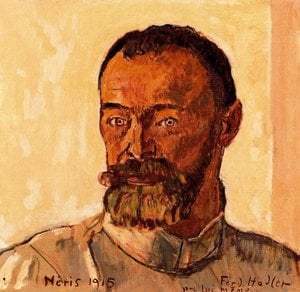
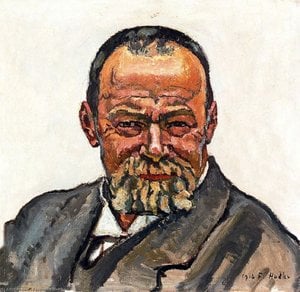
Βιογραφικό Καλλιτέχνη
A Life Etched in Symbolism: The World of Ferdinand Hodler
Ferdinand Hodler, ένα όνομα άρρηκτα συνδεδεμένο με το τοπίο της Ελβετικής ζωγραφικής και την ισχυρή γλώσσα του συμβολισμού, ανέβηκε από τα σχετικά скромные beginnings σε έναν από τους σημαντικότερους καλλιτέχνες στα τέλη του 19ου και στις αρχές του 20ού αιώνα. Γεννήθηκε στη Βέρνη, στην Ελβετία, το 1853, η ζωή του διαμορφώθηκε βαθιά από τις πρώτες απώλειες – ένα επαναλαμβανόμενο θέμα που θα διέτρεχε την καλλιτεχνική του όραση. Οι πρόωρες θάνατοι του πατέρα και των δύο νεότερων αδελφών του πριν φτάσει στην εφηβεία του έριξαν μια μακρά σκιά, ενσταλάζοντας μέσα του μια βαθιά μελέτη της θνητότητας και της περαστικότητας της ύπαρξης. Αυτές οι εμπειρίες, συνδυασμένες με την έντονη ευαισθησία του στη ομορφιά και τη δύναμη του φυσικού κόσμου, έγιναν κεντρικές αρχές της εξελισσόμενης καλλιτεχνικής του δουλειάς. Αρχικά εκπαιδευμένος ως διακοσμητικός ζωγράφος, το ταλέντο του Hodler ξεπέρασε γρήγορα την απλή τεχνική δεξιοτεχνία· επιθυμούσε μια επίσημη εκπαίδευση και καλλιτεχνική εξερεύνηση πέρα από τους περιορισμούς της εμπορικής εργασίας. Αυτός ο φιλοδοξία τον οδήγησε στη Γενεύη το 1871, όπου βυθίστηκε στην μελέτη, παρακολουθώντας διδακτέες επιστημονικών θεμάτων παράλληλα με την ακριβή αντιγραφή έργων τέχνης στο μουσείο της πόλης – μια αυστηρή εκπαίδευση που θεμελίωσε το μέλλον των καινοτομιών του.
From Realism to ‘Parallelism’: Forging a Unique Vision
Το καλλιτεχνικό ταξίδι του Hodler χαρακτηριζόταν από συνεχή εξέλιξη και αδιάκοπη επιδίωξη της εκφραστικής δύναμης. Τα πρώτα του έργα αντικατοπτρίζονταν στο κυρίαρχο ρεαλιστικό στυλ της εποχής – πορτρέτα, τοπία και είδη σκηνών που εκτελούνταν με ακρίβεια λεπτομέρειας. Ωστόσο, σύντομα ανακάλυψε ότι περιοριζόταν από αυτές τις συμβάσεις, αναζητώντας έναν τρόπο να μεταφέρει βαθύτερες συναισθηματικές αλήθειες και φιλοσοφικές ιδέες. Αυτή η επιδίωξη οδήγησε τον Hodler προς τον Συμβολισμό, μια κίνηση που απέρριπτε την ρεαλιστική αναπαράσταση υπέρ της υποκειμενικής εμπειρίας και της προκλητικής εικόνας. Ωστόσο, ο Hodler δεν απλώς υιοθέτησε τις αρχές του Συμβολισμού· αντίθετα, διαμόρφωσε το δικό του μοναδικό δρόμο, αναπτύσσοντας αυτό που ονόμασε “parallelism”. Αυτός ο ιδιαίτερος στυλ περιλάμβανε τη διάταξη των μορφών και των σχημάτων σε ρυθμικές, σχεδόν γεωμετρικές μοτίβα, δημιουργώντας μια αίσθηση τόσο αρμονίας όσο και έντασης – μια οπτική αναπαράσταση της διασυνδεσιμότητας. Ήταν μια προσπάθεια να απεικονιστούν όχι μόνο *τι* έβλεπε αλλά *πώς* ένιωθε – οι υποκείμενες συναισθηματικές ροές που συνδέουν όλα τα πράγματα. Το *Διάρκεια της Νύχτας* (1890), ένα από τα πιο σημαντικά έργα του, σηματοδότησε την οριστική του στροφή προς συμβολιστικές εικόνες και πυροδότησε σημαντικό ενδεχόμενο αντιπαράθεση με το έργο του. Παρά τις αρχικές κριτικές, το έργο αυτό απέκτησε αναγνώριση στο Παρίσι, καθιερώνοντας την φήμη του Hodler πέρα από τα σύνορα της Ελβετίας και σηματοδοτώντας την άφιξη μιας πραγματικά πρωτότυπης φωνής.
Landmarks in Paint: Key Works and Their Significance
Κατά τη διάρκεια της παραγωγικής καριέρας του, ο Hodler δημιούργησε ένα αξιοσημείωτο σώμα έργων τέχνης που συνεχίζουν να αντηχούν στους θεατές σήμερα. Το *Ημέρα* (1893), ένα από τα πιο φιλόδοξα και εμβληματικά του επιτεύγματα, είναι μια τεράστια ιστορική ζωγραφική που αποδεικνύει την τεχνική του δεξιοτεχνία και τον συμβολισμό. Τοποθετημένο στο Kunsthaus Zürich, αυτό το έργο τέχνης αποτελεί μια ισχυρή μελέτη για τη ζωή, τον θάνατο και την αναγέννηση, απεικονιζόμενο με έναν εντυπωσιακό συνδυασμό ρεαλισμού και οραματισμού. Το τεράστιο μέγεθος και το συναισθηματικό βάρος του *Ημέρας* σφράγισαν τη θέση του Hodler ως κορυφαίου καλλιτέχνη στην Ευρώπη. Άλλα σημαντικά έργα περιλαμβάνουν πολλά τοπία των Ελβετικών Αλπών, γεμάτα μια αίσθηση ενθουσιασμού και μεγαλείου, και πορτρέτα που αποκαλύπτουν την βαθιά κατανόησή του για την ανθρώπινη ψυχολογία. Συχνά επανέλαβε θέματα απώλειας και πένθους, ίσως αντικατοπτρίζοντας τις δικές του παιδικές τραυματικές εμπειρίες, αλλά πάντα τα ενσωμάτωσε με μια αίσθηση αξιοπρέπειας και ανθεκτικότητας. Τα έργα τέχνης του δεν ήταν απλώς αναπαραστάσεις· ήταν συναισθηματικά τοπία, προσκαλώντας τους θεατές να προβληματιστούν για τις θεμελιώδεις ερωτήσεις της ύπαρξης. Έργα όπως το *Αλήθεια II* (1897) αποδεικνύουν την ικανότητά του να συνδυάζει κλασικές μορφές με σύγχρονες τάσεις, δημιουργώντας εικόνες που είναι ταυτόχρονα διαχρονικές και εντυπωσιακά σύγχρονες – μια μαρτυρία της καινοτόμου πνεύματός του.
A Lasting Legacy: Influence and Historical Context
Η επιρροή του Ferdinand Hodler επεκτάθηκε πέρα από τα σύνορα της Ελβετίας. Η καινοτόμος χρήση συμβολισμού και η ανάπτυξη του “parallelism” ανοίγουν το δρόμο για τον Έκφρατισμό, με έμφαση στην υποκειμενική συναισθηματική εμπειρία και τις παραμορφωμένες μορφές. Οι καλλιτέχνες που ακολούθησαν το βήμά του αναγνώρισαν τον Hodler ως προάγγελο της δικής τους εξερεύνησης των εσωτερικών τους κόσμων. Η δουλειά του επίσης αντηχούσε με ευρύτερες πολιτιστικές ρευματικές της μεταγενέστερης δεκαετίας του 19ου και αρχές του 20ού αιώνα – μια περίοδο που χαρακτηριζόταν από ταχεία κοινωνική αλλαγή, επιστημονικά επιτεύγματα και αυξανόμενη συναισθηματική ανησυχία. Τα έργα τέχνης του παρείχαν μια οπτική γλώσσα για την αντιμετώπιση αυτών των περίπλοκων ζητημάτων, παρέχοντας παράσταση και γνώση σε έναν ολοένα και πιο αβέβαιο κόσμο. Σήμερα, τα έργα του Hodler φυλάσσονται σε σημαντικά μουσεία σε όλη την Ευρώπη και πέρα από αυτήν, διασφαλίζοντας ότι το καλλιτεχνικό του οράμα συνεχίζει να εμπν



 Προεπισκόπηση
 Μετάβαση σε Εκτυπώσεις
 Αποστολή
 Κοινοποίηση
 Λεπτομέρειες
 Οδηγός

 Λήψη
Λήψη
 Παρόμοια αντικείμενα συλλογής
 Ακτινογραφία
 Παρουσίαση
 Στατιστικά


 Περισσότερα λεπτομέρεια






































 Η επιλογή με γυαλί είναι διαθέσιμη μόνο για μεγέθη κάτω από 110 εκ.