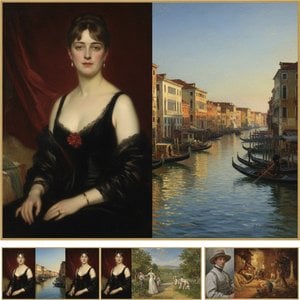
Ένας Φερραρεζικός Μάستερ: Η Ζωή και η Τέχνη του Ercole de' Roberti
Ο Ercole de’ Roberti, γεννημένος στη Φεράρα γύρω στο 1451, παραμένει μια κάπως αινιγματική μορφή στον πάνθεο των καλλιτεχνών της Αναγέννησης. Η σχετικά σύντομη ζωή του – πέθανε το 1496 – κρύβει πίσω της μια βαθιά επίδραση στη φερραρεζική ζωγραφική και ένα διακριτικό στυλ που ανάμειξε την προσεκτική λεπτομέρεια με μια σχεδόν μυστικιστική ένταση. Σε αντίθεση με πολλούς συνemporους του, οι οποίοι επωφελούνταν από εκτενή εκπαίδευση σε εργαστήρια ή δίκτυα προσήλωσης, η πορεία του de’ Roberti προς την καλλιτεχνική δόξα φαίνεται σε μεγάλο βαθμό αυτοκαθορισμένη, τροφοδοτούμενη από το έμφυτο ταλέντο και μια έντονη παρατήρηση του κόσμου γύρω του. Η Φεράρα εκείνη την εποχή βρισκόταν υπό τη διακυβέρνηση της οικογένειας Este, γνωστής για την εκλεπτυσμένη αυλή της και το αναδυόμενο ενδιαφέρον για τις ανθρωπιστικές ιδέες· ωστόσο, ο de’ Roberti δεν φαίνεται να ήταν άμεσα συνδεδεμένος με τη δουκική προσήλωση όπως ορισμένοι άλλοι καλλιπτέχνοι. Αντ' αυτού, απέκτησε παραγγελίες από σημαντικές τοπικές οικογένειες και θρησκευτικά ιδρύματα, κερδίζοντας φήμη για πορτρέτα που δεν ατελείτευαν μόνο την ομοιότητα, αλλά και την ψυχολογική βάθος.
Πρώιτες Επιδράσεις και Καλλιτεχνική Ανάπτυξη
Ο προσδιορισμός των πρώιμων επιδράσεων του de’ Roberti είναι δύσκολος λόγω της έλλειψης τεκμηριωμένης εκπαίδευσης. Πιστεύεται ότι αρχικά εργάστηκε ως χρυσοπλάστης, μια ιδιοτέλεια που αναμφίβολα εκწვάτισε την ακρίβειά του και το μάτι του για τη λεπτομέρεια – ποιοτητες που θα γίνονταν χαρακτηριστικά του ζωγραφικού του στυλ. Η επίδραση του Cosmè Tura, ενός ακόμη κορυφαίου φερραρεζικού καλλιτέχνη γνωστού για τις δραματικές συνθέσεις και τα περίπλοκα μοτίβα του, είναι εμφανής στα πρώιμα έργα του de’ Roberti. Ωστόσο, ο de’ Roberti ξεπέρασε γρήγορα την απλή μίμηση, αναπτύσσοντας μια μοναδική προσέγγιση που χαρακτηριζόταν από ένα μαλακότερο μοντελοποίηση των σχημάτων, μια πιο φυσιοκρατική απόδοση των λοξίδων υφασμάτων και μια αυξημένη έμφαση στην συναισθηματική έκφραση. Η παλέτα του, αν και ακόμα πλούσια και ζωντανή, τά하던 προς πιο ψυχρές αποχρώσεις σε σχέση με τις συχνά φλογερές αποχρώσεις του Tura. Επίσης, επέδειξε μια γοητεία με τη βορειοευρωπαϊκή ζωγραφική, ιδιαίτερα με το έργο του Jan van Eyck, γεγονός που είναι εμφανές στην προσεκτική του προσοχή στην υφή και το φως. Αυτή η σύνθεση διαφορετικών επιδράσεων οδήγησε σε ένα στυλ που ήταν ξεχωριστά φερραρεζικό, αλλά μοναδικά δικό του για τον de’ Roberti.
Μεγάλα Επιτεύγματα: Πορτρέτα και Πολυπτύχια
Ο De’ Roberti είναι καλύτερα γνωστός για τα πορτρέτα του, τα οποία αποτελούν αξιοσημείωτα επιτεύγματα στη ζωγραφική της Αναγέννησης. Το
Πορτρέτο της Ginevra Bentivoglio, που ζωγραφίστηκε γύρω στο 1475-80, ενσαρκώνει την ικανότητά του να μεταφέρει τόσο την αριστοκρατική τάξη του προσώπου όσο και τον εσωτερικό της κόσμο. Το βλέμμα του υποκειμένου είναι άμεσο και διαπεραστικό, υποδηλώνοντας νοημοσύνη και δύναμη, ενώ η λεπτομερής απόδοση των ρούχων και των κοσμημάτων της μαρτυρεί την πλούσια ζωή και την εκλεπτότητά της. Δεν περιορίστηκε μόνο στα πορτρέτα· διακρίθηκε επίσης σε περίπλοκες αλταρεπίνα. Το αριστούργημά του, το
Πολυπτύχιο Griffoni (1475-79), που παραγγέλθηκε για τον ναό του San Francesco στη Φεράρα, είναι ένα μνημονευτικό έργο που αναδεικνύει την τεχνική του δεξιοτεχνία και την δημιουργικότητα στη σύνθεση. Το πολυπτύχιο απεικονίζει σκηνές από τη ζωή του Αγίου Φραγκίσκου μαζί με πορτρέτα της οικογένειας Griffoni, ενσωματώνοντας άριστα το θρησκευτικό αφήγημα με τη secular μνημόˌσυνο. Οι περίπλοκες λεπτομέρειες του αρχιτεκτονικού περιβάλλοντος, τα εκφραστικά πρόσωπα των postaci και το αρμονικό χρωματικό σχήμα συμβάλλουν όλες στην αιώνια δύναμη του πολυπτύχιου. Ένα άλλο σημαντικό έργο είναι ο
Άγιος Ιωάννης ο Βαπτιστής, ένα έργο που αποκαλύπτει την κυριαρχία του στην ανατομία και την συναισθηματική ένταση.
Τεχνική και Συμβολισμός
Η τεχνική του De’ Roberti χαρακτηριζόταν από τη μελετημένη στρώση των χρωμάτων, δημιουργώντας μια φωτεινή επιφάνεια με λεπτές αποχρώσεις. Χρησιμογησε την τεμπέρα πάνω σε ξύλινη πλάκα ως κύριο μέσο, επιτρέποντας την ακριβή λεπτομέρεια και το ζωντανό χρώμα. Οι συνθέσεις του ήταν συχνά περίπλοκες και προσεκτικά σχεδιασμένες, αντικατοπτρίζοντας την ανθρωπιστική έμφαση στην τάξη και την αρμονία. Πέρα από την τεχνική δεξιοτεχνία, ο de’ Roberti γέμισε τα έργα του με συμβολικό νόημα. Τα αντικείμενα που απεικονίζονται στα πορτρέτα του – κοσμήματα, ρούχα, βιβλία – δεν ήταν απλώς διακοσμητικά, αλλά λειτουργούσαν ως δείκτες της κοινωνικής θέσης, των πνευματικών ενδιαφερόντων και του ηθικού χαρακτήρα του προσώπου. Στις θρησκευτικές του ζωγραφιές, βασίστηκε στην παραδοσιακή εικονογραφία, ενσωματώνοντας ταυτόχρονα σύγχρονο συμβολισμό, δημιουργώντας έναν πλούσιο ιστό νοήματος που αντηχούσε στο κοινό του. Έγινε γνωστός για τη χρήση των λοξίδων υφασμάτων για τη δημιουργία δυναμικών σχημάτων και την έκφραση συναισθήματος· οι πτυχές συχνά φαίνονται να κινούνται και να αναπνέουν, προσθέτοντας ζωή και ζωντάνια στις μορφές του.
Ιστορική Σημασία και Κληρονομιά
Παρά τη σχετικά σύντομη καριέρα του, ο Ercole de’ Roberti άφησε ένα αμείωτο σημάδι στη φερραρεζική ζωγραφική. Η επίδρασή του μπορεί να δειθεί στα έργα των επόμενων γενεών καλλιτεχνών, συμπεριλαμβανομένων των Francesco del Cossa και Lorenzo Costa. Βοήθησε στην καθιέρωση της Φεράρας ως σημαντικού κέντρου της τέχνης της Αναγέννησης, ανταγωνιζόμενη τη Φλωρεντία και την Βενετία στην καλλιτεχνική της καινοτομία. Παρόλο που η παραγωγή του ήταν περιορισμένη, η ποιότητα και η πρωτοτυπία των επιζώντων έργων του διασφαλίζουν τη θέση του ανάμεσα στους σημαντικότερους ζωγράφους του 15ου αιώνα.
- Επανεκκάλυση: Το έργο του De’ Roberti παρέμεινε σχετικά άγνωστο για αιώνες, αλλά έχει αναγνωριστεί αυξανόμενα τις τελευταίες δεκαετίες ως μια σημαντική προσφορά στην τέχνη της Αναγέννησης.
- Επίδραση στους Μετέπειτα Καλλιτέχνες: Η έμφασή του στον ψυχολογικό ρεαλισμό και τη μελετημένη λεπτομέρεια επηρέασε πολλούς επόμενους ζωγράφους.
- Διατήρηση Έργων: Η διατήρηση των κύριων έργων του, όπως το Πολυπτύχιο Griffoni, επιτρέπει τη συνεχή μελέτη και την εκτίμηση του καλλιτεχνικού του ιδιοφυΐας.
Εκπροσωπεί μια συναρπαστική τομή του βορειοευρωπαϊκού ρεαλισμού, της φερραρεζικής παράδοσης και των ανθρωπιστικών ιδεών, καθιστώντας τον μια μαγνητική μορφή στην ιστορία της ιταλικής τέχνης της Αναγέννησης.



 Δείτε σε πραγματικό χώρο
 Μετάβαση σε Εκτυπωση
 Αποστολή
 Κοινοποίηση
 Λεπτομέρειες

 Λήψη
Λήψη
 Παρόμοια αντικείμενα συλλογής
 Ακτινογραφία
 Παρουσίαση
 Στατιστικά


 Διαβάστε περισσότερα






































 Η επιλογή με γυαλί είναι διαθέσιμη μόνο για μεγέθη κάτω από 110 εκ.